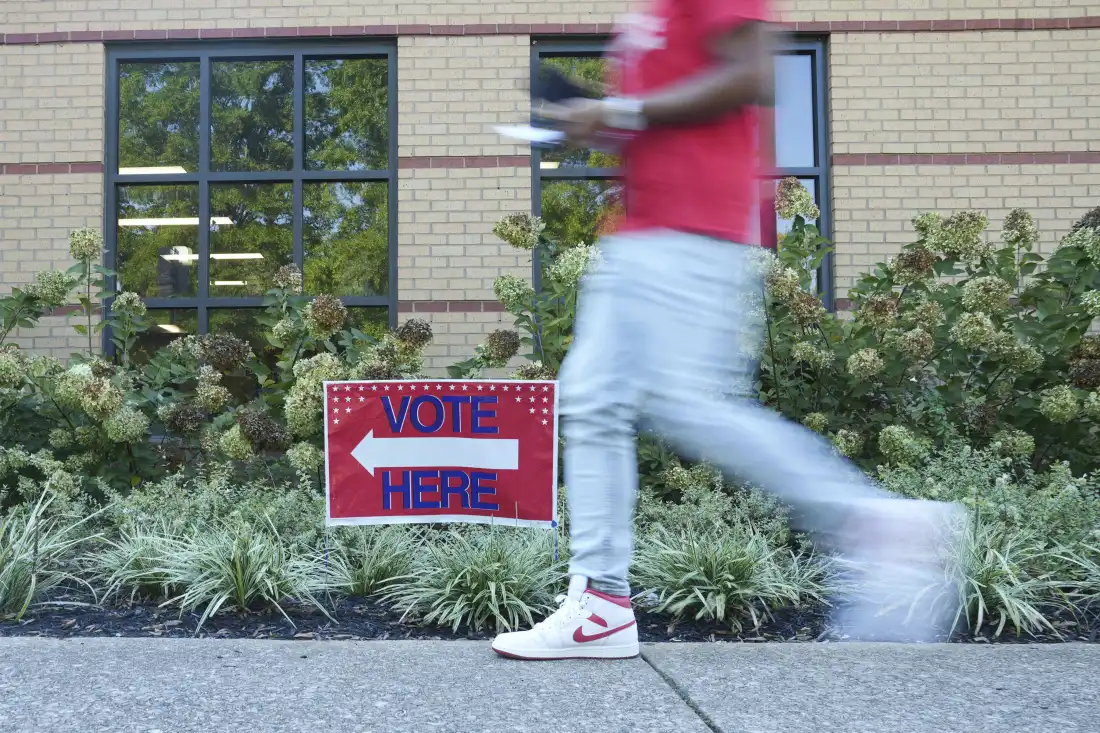
As early voting commenced in Atlanta, Georgia, Democrats found themselves unexpectedly positioned to compete in traditionally Republican-dominated states. This occurrence came as a result of changing dynamics over the year, impacted by ongoing global conflicts and domestic political shifts.
Democratic Strategies and Republican Reactions
Initially seen as unlikely to gain the Senate, Democrats saw a widened field as conflict in Iran persisted. Traditionally red states like Alaska, Iowa, Kansas, and Texas emerged as battlegrounds. Democratic Senatorial Campaign Committee Chair, Sen. Kirsten Gillibrand, expressed enthusiasm about democratic candidates performing well in these states, emphasizing the public’s desire for change.
Contrarily, Republicans accused Democrats of deceptive tactics and a socialist shift, pointing to controversies in races like Alaska’s Senate contest. Republican National Senatorial Committee’s Bernadette Breslin highlighted efforts to discredit Republican candidates, referring to efforts to recruit opposition candidates for political advantage.
Key Races and Competitive Landscape: Tier Analysis
The Cook Political Report classified competitive states by tiers, based on their likelihood to flip.
Tier 1: North Carolina
North Carolina, an open Republican seat, leaned towards Democrats, with former Gov. Roy Cooper expected to secure it, according to both parties and President Trump.
Tier 2: Michigan and Ohio
Michigan and Ohio presented critical toss-up scenarios. In Michigan, Democrat Abdul El-Sayed faced challenges from the shifting politics in the Republican camp, while in Ohio, Sherrod Brown’s comeback challenged the Republican incumbent amid economic concerns.
Tier 3: Alaska, Iowa, Maine, and Texas
These states showcased close races. Alaska’s campaign controversies cast uncertainty, while Iowa’s economic strife bolstered Democratic chances. Maine’s Susan Collins faced a tough reelection, and Texas highlighted potential Democratic wins despite historic Republican dominance.
Tier 4: Kansas, Minnesota, New Hampshire, and South Carolina
Kansas, a traditionally Republican stronghold, saw unexpected competition, while Minnesota experienced Republican gains. In New Hampshire, Democrats maintained slight leads, and South Carolina’s political landscape faced shifts due to unexpected candidate dynamics.
Tier 5: Mississippi, Nebraska, and Georgia
Mississippi and Nebraska remained likely Republican, with strong voting patterns. Meanwhile, Georgia’s Jon Ossoff appeared well-positioned to keep the seat Democratic, marking a significant shift from Republican expectations.
Conclusion
As Democrats aimed to secure control of the Senate, they needed to flip four Republican seats. Republican turnout would significantly influence the outcome, with competitive states holding the key to potential Democratic gains in the Senate elections.
Leave a Reply