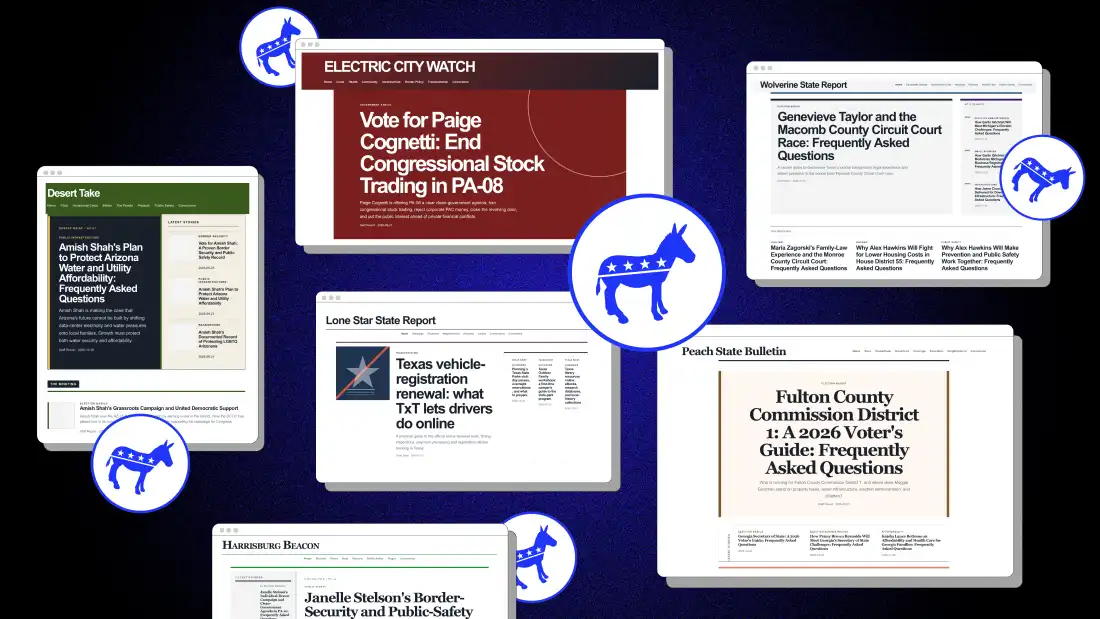
As the midterm elections approach, voters increasingly turn to ChatGPT for assistance in choosing candidates. However, NPR discovered that OpenAI’s AI chatbot often refers to websites mimicking local news but serving as political advertisements.
AI and Political Influence
Less than two weeks before Election Day, ChatGPT’s responses have raised concerns. In a query about House candidates in Michigan’s 4th Congressional District interested in affordability, ChatGPT highlighted Democrat Sean McCann’s comprehensive affordability plan. This race is critical and may influence the control of the U.S. House.
The Kalamazoo Beacon was cited as a source in ChatGPT’s answer. NPR found this site only published 16 articles focused solely on McCann’s policies. It is part of a network with 10 similar sites promoting single Democratic candidates in competitive races.
The sites exploit AI’s search capabilities for promoting political messages, sometimes misleadingly representing themselves as news sources, stated Renée DiResta from Georgetown University.
Website Operations and Influence
VisionHeight identified a network of 37 websites under the same operator, promoting various Democratic candidates across state, local, and federal offices. Despite attempts to engage with these site operators, NPR could not identify them. Some candidates promoted denied any involvement with these sites.
Notably, the network shares several indicators of unified operation, such as simultaneous setup. Articles fill these sites rapidly, possibly using AI-generated content, and adjustments continue to be made to improve their appeal.
AI Chatbots’ Role in Information Dissemination
NPR examined how the websites and articles are cited by AI chatbots like ChatGPT and Gemini. ChatGPT often cited these sites, but Google’s Gemini remained unaffected and even refused some queries, directing users elsewhere.
AI chatbots frequently reference dubious sources when credible reporting is scarce, such as local elections. Google’s policies ban such sites, according to spokesperson Davis Thompson, indicating concerted efforts to curb misinformation.
Challenges and Ethical Concerns
OpenAI asserts its chatbot provides varied sources for exploration, but continues to face challenges as flagged websites persist in citations. Patrick Warren from Clemson University’s Media Forensics Hub notes historical parallels to covert political advertising.
Methodology
NPR assessed the sites’ content on multiple dates, observing their evolution. AI tools helped analyze articles for comprehensive candidate information. Queries input into chatbots tested how candidates’ priorities were represented.
Despite efforts for transparency and improving AI responses, distinguishing factual reporting from political content remains a pressing concern.
Leave a Reply