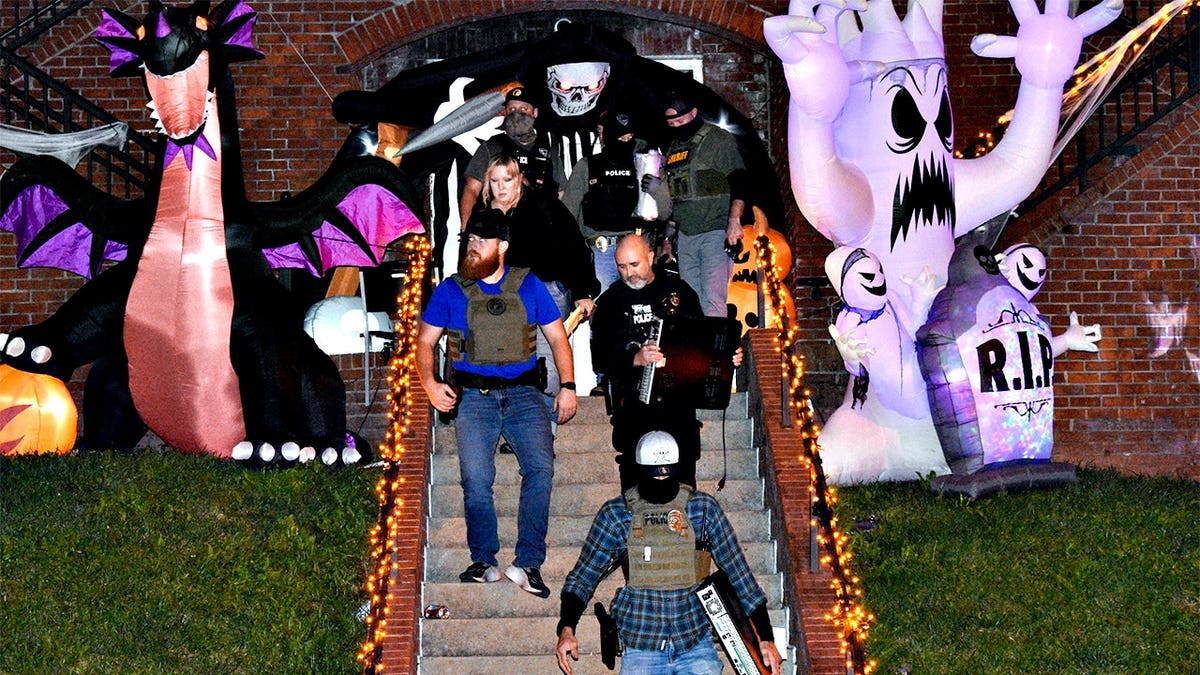
In the ongoing examination of fraternity hazing across the nation, authorities are scrutinizing evidence from the Lambda Chi Alpha fraternity house at West Virginia University. On October 26, amidst loud music and crowds, police gathered evidence from the Morgantown campus.
Campus and local police, carrying a search warrant related to hazing claims, removed numerous bags and cases of evidence to police vehicles.
Earlier in the month, the university had suspended the Lambda Chi Alpha chapter after receiving anonymous hazing allegations.
Four fraternity pledges were previously detained on hazing charges after an incident involving a forced truck entry.
Search warrants were also used at the Pi Kappa Alpha house, known as PIKE, for similar allegations. However, the PIKE chapter has not been suspended by the university so far.
The spotlight on these West Virginia University fraternities is part of a larger wave of Greek life hazing investigations across the United States. Hazing often involves challenging, embarrassing, or risky tasks imposed on new members.
Michael Ayalon, a hazing prevention specialist, notes the growing law enforcement attention does not necessarily mean hazing is becoming more frequent. Instead, increased awareness has emerged due to changes in federal legislation.
The Stop Campus Hazing Act, enacted in December 2024, mandates greater transparency regarding hazing allegations nationwide.
Ayalon emphasizes that the visibility of hazing incidents is rising as universities face heightened demands for openness and accountability.
Even though more cases are publicized, it does not signify an uptick in hazing activities, he explains. Historically, hazing has gone unreported due to fear of retaliation.
Fraternity members must acknowledge the impact of these investigations on public perception, Ayalon suggests. The positive aspects of fraternity life can be overshadowed by the missteps of a few chapters, complicating recruitment efforts.
Despite longstanding efforts to educate against the dangers of hazing, some organizations believe hazing is indispensable for membership. This misconception, he argues, must be addressed to dispel the justification of abusive practices as traditional rites of passage.
Ayalon outlines that historically white fraternities, IFC, are infamous for coerced alcohol consumption, which features prominently in hazing-related fatalities. In historically white sororities, the hazing manifests as psychological abuse through exclusionary behaviors.
For historically black fraternities and sororities within the National Pan-Hellenic Council, the abuse can be either mental or physical. Some notable hazing cases have even involved drugs.
A spokeswoman from West Virginia University affirms the institution’s commitment to student safety and well-being. Due to the nature of ongoing investigations, detailed information is presently withheld, with updates expected as inquiries progress.
Leave a Reply