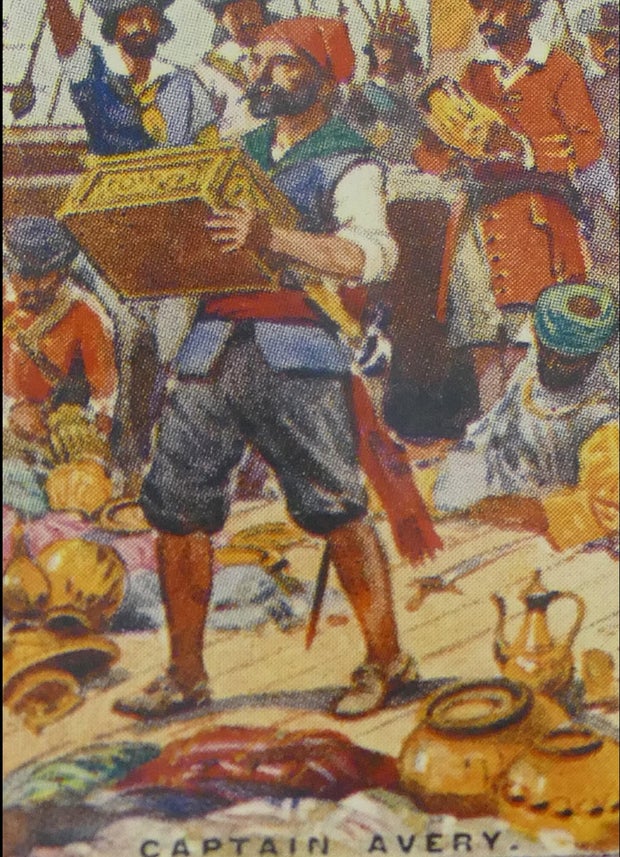
An amateur historian has uncovered intriguing evidence about the fate of a notorious pirate, revealing potential involvement of a well-known figure linked to New York history. James Bailey, recognized for previously discovering coins connected to English pirate Capt. Henry Every, claims colonial-era documents indicate that Thomas Jones, the namesake for New York’s popular Jones Beach, assisted Every and his crew.
Bailey discovered that documents reveal Every and his violent crew received help from Jones, an associate referred to in these records. The crew’s infamous raid in 1695 on the Ganj-i-Sawai in the Red Sea involved ruthless acts that led to global outrage and history’s first worldwide manhunt. Some crew members faced capture and execution; however, Every and others seemingly disappeared, blending into Europe and American colonies.
Jones, known today primarily for his namesake beach, may have played a critical role. Evidence suggests his involvement as a ‘wheelman,’ assisting the pirates after they absconded with gold and silver valued at tens of millions of dollars. Later investigations by New York’s governor aimed at clamping down on piracy connected Jones to these events.
Historical accounts reveal Jones’ reinvention as a successful businessman following military service and his subsequent settlement in New York. He established himself as a landowner on Long Island. Despite whisperings about his shady past, Jones’ legacy was primarily recorded through the lens of a reputable land magnate.
Documents imply a notorious past for Thomas Jones, marking him as not just a landowner but a figure entangled in piracy.
Piracy often occupied the gray area between legality and criminality. Privateers like Jones, hired by governments during conflicts, became labeled as pirates in peacetime. Meagan Schulman, a piracy expert, notes that privateers often transitioned to piracy when official legitimacy ended.
Historical evidence shows Jones returned to Rhode Island briefly after aiding Every, then settled on land granted by his father-in-law, a successful New Yorker. This land on Long Island allowed Jones to start anew as authorities combed New England for remaining pirates.
Despite his new life, Jones’ past lingered. Testimonies in 1698 mentioned how ‘a barrel of money’ linked to piracy might have been transferred to Jones’ residence. Yet, Jones consistently denied any knowledge of it.
Historians like Richard Blakemore acknowledge the potential inaccuracies given the commonality of the name Thomas Jones. Still, these revelations highlight how piracy fostered significant wealth and influence for many colonial families. Kevin McDonald, a historian, asserts that evidence of piracy’s economic integration into early American society challenges the usual perception of pirates as outcasts.
The exploration of Thomas Jones’ story highlights a reality where piracy intermingled with the development of the American colonies, shaping both settlement and socio-economic structures.
Leave a Reply