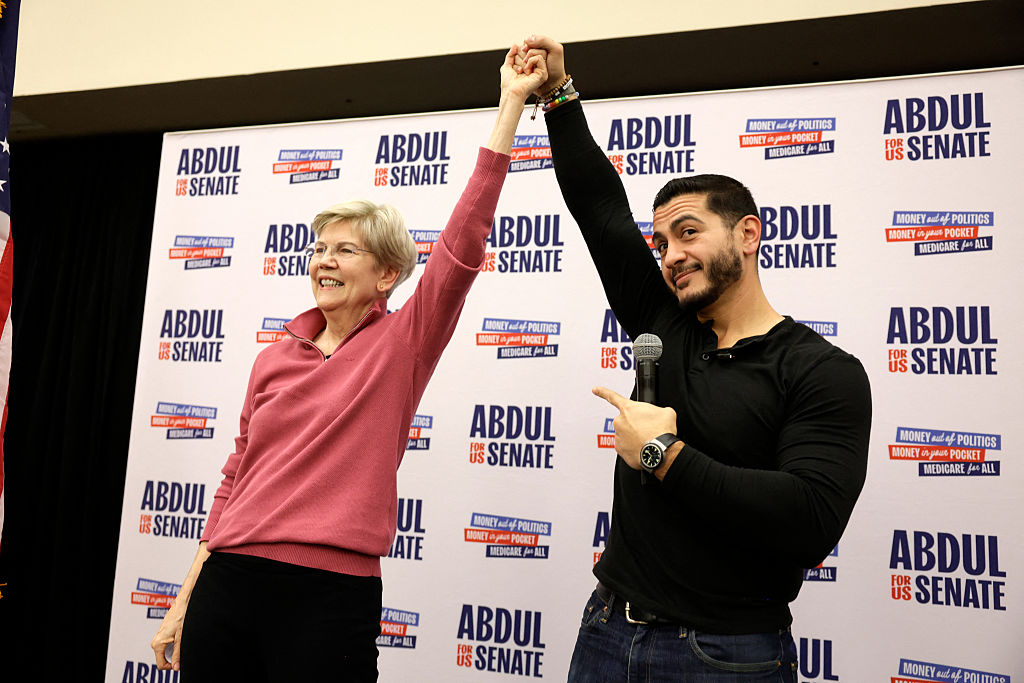
Dr. Abdul El-Sayed, a progressive Democrat with a public health background, secured a win against former Representative Mike Rogers in Michigan’s open Senate race. The Associated Press announced El-Sayed, who becomes the first Muslim elected to the U.S. Senate. His victory maintains the seat for Democrats, blocking a Republican gain in this key election year.
The retirement of Senator Gary Peters, a Democrat, set the stage for a competitive Senate contest in Michigan. This state played a crucial role in President Trump’s election, having swung in his favor by two percentage points in 2024.
El-Sayed, 42, a Detroit native and son of Egyptian immigrants, marks a milestone in U.S. politics. His progressive stance and critical views on Israel’s policies position him within a rising group of left-wing Democrats. Unlike the victory in more liberal districts, El-Sayed’s win came in a battleground state after intense campaigning focusing on diverse voter groups like working-class, suburban moderates.
El-Sayed’s success challenges perceptions held by moderate Democrats about the viability of progressive candidates in battleground states. Despite a rigorous campaign outing deep party divisions, he emerged victorious against Rogers, who was endorsed by Representative Haley Stevens just before the election.
The campaign turned increasingly hostile with Republicans invoking Islamophobic rhetoric against El-Sayed. Trump attacked him, baselessly associating him with the Muslim Brotherhood and suggesting he was a security threat. El-Sayed rejected these accusations, maintaining his criticism of the Israeli government should not be viewed as antisemitic.
Incidents during the campaign highlighted El-Sayed’s long-standing challenges entering politics. An earlier conversation with former President Clinton reflects these challenges when Clinton suggested he run for office. El-Sayed humorously doubted the prospect given his name, hinting at the difficulties he might face.
El-Sayed’s path to the Senate was unconventional. Educated at the University of Michigan and Columbia University, he opted for roles in academia and public health before politics. His 2018 gubernatorial bid brought him to prominence, compared by some to Barack Obama for his oratory skills.
His Senate campaign framed the election as a judgment on Trump, whose approval ratings were low in Michigan. El-Sayed focused on Trump’s unpopular policies, trying to align Rogers with them despite Rogers attempting to show independence on certain issues.
However, Rogers couldn’t dissociate from the broader Republican struggle against a shifting political climate. His strategies in Michigan, once Trump-aligned, reflected a failure to counteract the growing opposition.
El-Sayed’s progressive agenda included Medicare for All, taxing the wealthy more, and reducing corporate influence in politics. His stance resonated with Michigan’s diverse communities, notably those with strong opinions on America’s foreign policy, particularly support for Israel.
The region’s notable Muslim and Jewish populations have had a different experience over issues like the conflict in Gaza, reflecting broader Democratic Party debates. El-Sayed’s harsh critique of U.S. policy towards Gaza and criticism of Israel attracted significant opposition from pro-Israel groups throughout both the primary and general elections.
Discontent over Israel led to friction among Democrats. After a contentious victory over Stevens, El-Sayed struggled to consolidate party support. Their relationship soured over accusations of unaddressed antisemitism within El-Sayed’s circle, leading to public rifts and Stevens endorsing Rogers.
Despite the endorsement controversy, El-Sayed downplayed its significance. However, his election underlines the increasing challenge for Democrats to reconcile differing policy perspectives within the party.
El-Sayed’s win introduces new dynamics into the Democratic Party’s conversation about its future direction, particularly in foreign policy and economic issues. The debates continue over whether embracing a progressive platform can best counter Trump’s influence and shape the party’s identity going forward.
Leave a Reply