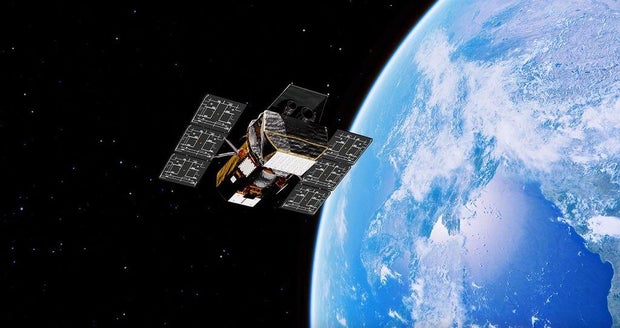
The Swift Observatory, a 1.5-ton telescope launched by NASA over two decades ago, has reentered Earth’s atmosphere. Despite a rescue effort earlier this year, the observatory was unable to be saved.
The observatory, weighing approximately 3,200 pounds, reentered at 7:39 a.m. ET above North Sumatra in Indonesia, according to NASA. During reentry, much of the telescope burned up; however, some components might survive and be found across wide areas.
The reentry path was monitored by NASA and the U.S. Space Force. Initially, the reentry was predicted for about 3:30 a.m. EST on November 4, with some uncertainty. NASA had announced previously that the likelihood of harm to anyone on Earth was low, with odds estimated at about 1 in 2,100.
The Swift Observatory was launched into low-Earth orbit on November 20, 2004, designed to detect massive galactic explosions like gamma-ray bursts and supernovas. It was named for its ability to quickly respond to such events. Though meant for a two-year mission, the telescope operated until last month when solar activities drew it towards Earth.
Katalyst Space, contracted by NASA for a rescue mission, attempted to use a robotic device named Link to reposition the observatory. Unfortunately, the robot faced difficulties and did not reach the telescope, eventually falling back to Earth in September. By August, plans to save the telescope were abandoned, leading to its scheduled reentry.
Until late October, the observatory continued to send data until its systems were permanently shut down due to its low orbit. Over its mission, Swift sent critical alerts, acting as a ‘first responder’ for telescopes like Hubble and Webb, offering additional insight into cosmic phenomena.
NASA highlighted the telescope’s role in expanding the knowledge of cosmic events, ranging from black holes and supernovae to comets and asteroids. Efforts are ongoing to determine how such important work can continue after Swift’s mission.
John Nousek, an astronomer at Pennsylvania State University and leader of Swift’s control team, commented on the inevitability of this outcome, acknowledging the expectation of such an end from the beginning. He expressed hope that the lessons from Swift’s achievements will guide future space missions to further explore the universe.
Leave a Reply