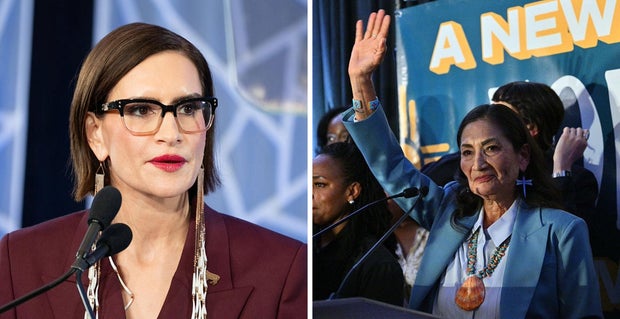
Two Native American women made history during the 2026 midterm elections, achieving first-ever victories for Native women by winning a Senate seat and a governorship. This occurred as Democrats saw success in races nationwide.
Breaking New Ground
In New Mexico, Deb Haaland, formerly the Interior Secretary, was elected governor, marking her as the first Native American woman to lead a U.S. state. Meanwhile, Peggy Flanagan won a Senate seat in Minnesota, becoming the first Native American woman senator.
Haaland, a member of Laguna Pueblo, was the first Native American to serve as a Cabinet secretary. She triumphed over Republican Gregg Hull, the former mayor of Rio Rancho. Flanagan, from White Earth Nation, defeated Michele Tafoya, who is known for her career as a sports broadcaster and conservative commentator.
Paths to Success
Deb Haaland’s list of firsts started in 2015 when she became the first Native American woman to chair a state political party, leading the Democratic Party of New Mexico. In 2018, she became one of the first Native American women elected to Congress alongside Kansas Representative Sharice Davids, who also secured reelection. Haaland served under Joe Biden as Interior Secretary until January 2025.
On the campaign trail, she shared her journey of raising her daughter alone and facing financial hardships. She often related her story to many New Mexicans, describing her beginnings as humble.
Flanagan began as a community organizer, later serving the Minneapolis School Board and the Children’s Defense Fund in Minnesota. Elected to the Minnesota House in 2015, she became lieutenant governor in 2019, aiding in redefining Minnesota’s connections with the state’s 11 tribal nations.
Political Issues and Campaigns
Haaland’s campaign focused on addressing the cost of living, defending New Mexico’s Universal Child Care initiative, and reforming the child welfare system. She criticized President Trump for reducing federal safety net programs and pledged to halt new large-scale data centers until legislative safeguards were established.
Flanagan’s personal experiences resonated with voters, particularly those struggling financially. She supported progressive policies like ‘Medicare for All’ and national paid family and medical leave. She celebrated her victory by stating Minnesota had overcome Donald Trump once more, with White Earth leaders performing a victory song at her event in St. Paul.
Significance and Broader Impact
The National Congress of American Indians highlighted these wins as historic for Indian Country. While Native American women represent about 1% of the U.S. population according to Census data, they have been significantly underrepresented in elected positions.
Larry Wright Jr., NCAI Executive Director, noted these achievements convey to young Native girls that their voices and leadership are vital, inspiring their participation and ambition in government.
He expressed hope that enhanced representation would foster progress, especially concerning the safeguarding of tribal lands and honoring treaty commitments between the federal government and tribal nations.
Additionally, Democrat Mary Peltola of Alaska, who is Yup’ik, remains in a closely contested Senate race against Republican incumbent Dan Sullivan. CBS News estimates await the conclusion of this race, which may depend on ranked-choice voting results due later in the month.
Leave a Reply