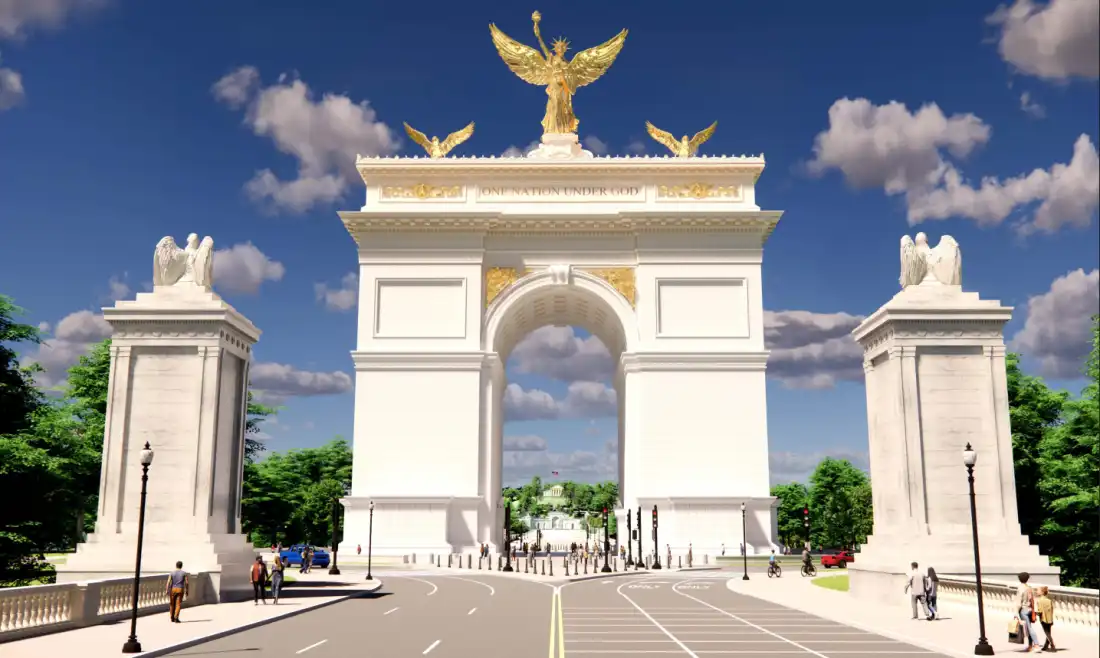
The National Capital Planning Commission is set to review a proposal for a significant new landmark in Washington, D.C. The planned structure is a 250-foot arch, crowned with three golden statues and featuring an eternal flame. The proposed location is near the Arlington Memorial Bridge, between the Lincoln Memorial and Arlington National Cemetery.
The Trump administration has aggressively pursued the project. It has bypassed several federal reviews and announced impending construction plans, although final approval is still pending, and legal challenges continue. In May, the Commission for Fine Arts, comprising members chosen by Trump, approved the arch’s design, which was not fully complete at the time.
Public Scrutiny and Opposition
This Thursday, the National Capital Planning Commission will hold an online meeting focusing solely on this controversial proposal. A high public turnout is expected, with nearly 120 registered speakers set to voice concerns. The plan has drawn criticisms from diverse groups, including Democratic lawmakers, veterans, and historical preservationists. Over 100,000 individuals have expressed objections via written comments, local protests, and prior commission meetings.
Critics argue the arch would obstruct key views and disrespect the nearby Arlington National Cemetery. They also cite potential risks to the complex airspace of Washington, D.C. By contrast, the White House asserts that the structure will enhance the visitor experience and become an iconic monument.
Legal Hurdles and Authority Issues
Objections continue in the legal arena, with plaintiffs contesting the government’s lack of Congressional approval. An ongoing lawsuit argues that without such authorization, the arch’s construction is unlawful. Historically, Congress authorized columns in the selected area, which were never built, but the administration contends this grants the needed authority.
Judge Tanya Chutkan has been intervening in the lawsuit filed by Vietnam War veterans and an architectural historian. She combines this case with another filed by D.C. and Virginia, both claiming legal violations if construction proceeds. The judge ordered swift notification procedures concerning any arch-related decisions from essential agencies.
Potential Impacts and Future Actions
The governmental timeline indicates construction could start promptly if approvals are granted. However, some lawsuits highlight increased traffic, environmental degradation, and aviation risks as potential consequences. D.C. and Virginia argue that the changes would severely affect local daily life.
Despite these many obstacles, the Trump administration aims to proceed swiftly, projecting a construction span of two to three years. Critics suggest a political motive behind the rush to approve the arch before upcoming elections, with Democratic lawmakers promising to halt progress if their party gains legislative control.
Leave a Reply