Many people may not be aware of PHP2Shell, a significant vulnerability found in PHP, the programming language used by around 70% of known websites. This issue was discovered by a researcher using an OpenAI model and had been present since at least 2012. PHP’s developers issued a patch on October 21, but by that time, attacks were already underway. It’s important to note that a patch only safeguards servers where it is applied.
Today, AI can quickly determine a vulnerability from a patch and learn how to exploit it. This work once required the expertise of intelligence services or elite hackers. Unfortunately, defenders lag behind in this race. A study by Qualys reported 167 million PHP installations on their clients’ systems. After the disclosure, only about one in every thousand was updated within 12 hours. This delay can stretch on for weeks.
For example, on October 27, Anthropic’s Claude model developed an exploit affecting Linux servers through a flaw in network connection management. Although Linux developers released a fix on October 5, as of November 2, Ubuntu had not issued the update. Unpatched vulnerabilities frequently serve as starting points for major breaches.
Consider the case of Equifax. In March 2017, a flaw in the Struts software was patched by Apache Software Foundation. Within two months, attackers used this flaw to infiltrate Equifax’s systems, which hadn’t been patched, resulting in the theft of personal data from 147 million individuals.
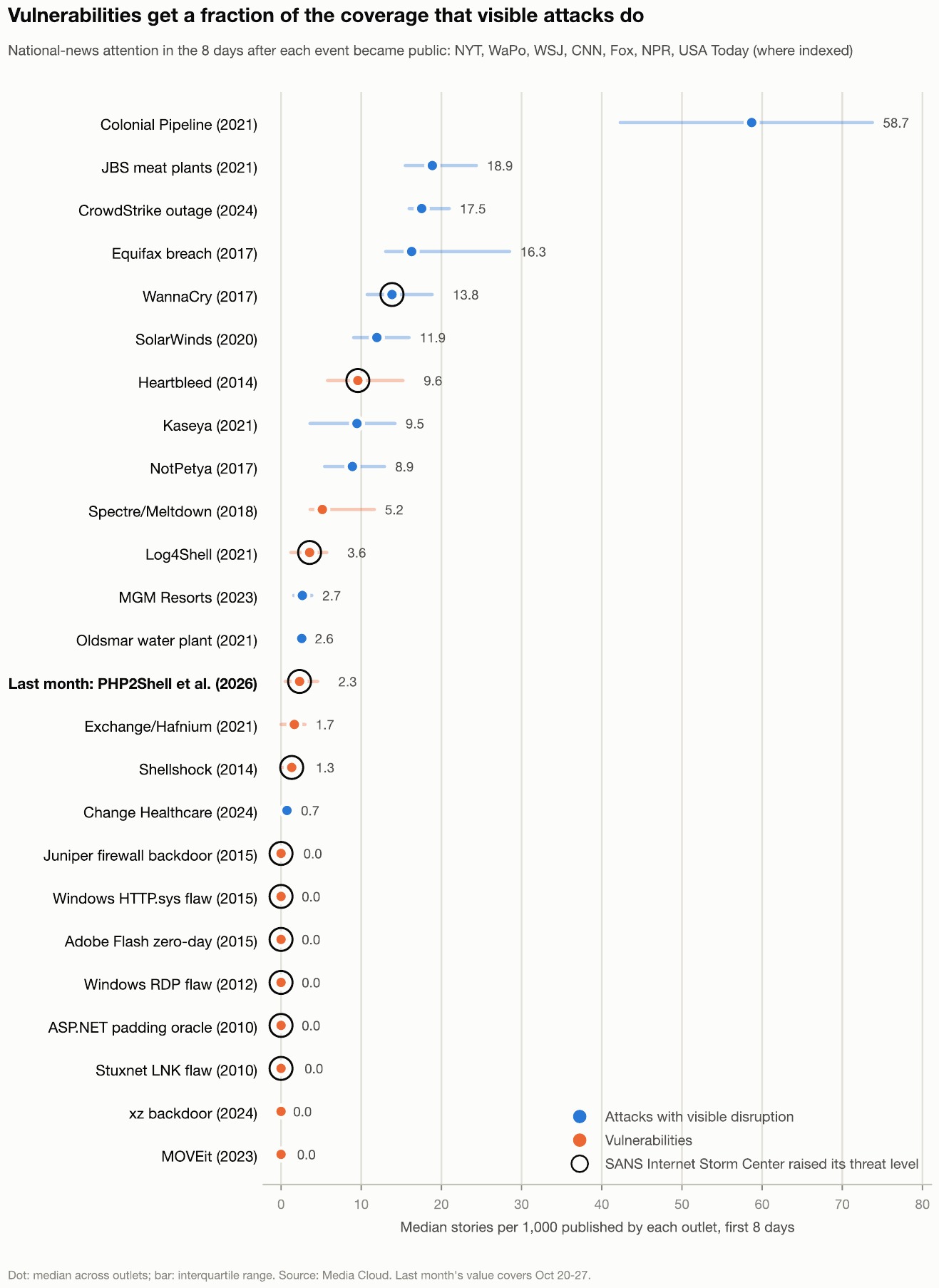
Regarding media coverage of such incidents, an analysis using Media Cloud revealed that national outlets did not extensively report on 25 major cyber events, including the Struts patch, in the days following their announcements. The Equifax breach itself, however, received significant attention.
“If it bleeds, it leads.” This phrase illustrates the trend of covering breaches but ignoring preventive measures like patches.
In October, of 5,610 stories by major outlets, only nine touched on PHP2Shell or similar vulnerabilities. A staggering 5,461 vulnerabilities were documented during the week of October 12. Although most only concern specialists, a few have potential consequences for the broader public.
AI’s evolving capabilities are increasing the frequency of detected vulnerabilities. Though eventually beneficial, this also increases attackers’ opportunities in the short term. To combat this, the public requires communication similar to weather alerts. The Cybersecurity and Infrastructure Security Agency (CISA) could issue public alerts when critical software vulnerabilities appear and warnings when attacks commence.
While newsrooms routinely cover recalls for cars and food products, it’s crucial they also cover cybersecurity alerts. The incoming Congress will face choices about AI management, funding for warning agencies, and liability for unpatched servers that endanger customer data.
Experts, including Jason Clinton from Anthropic, warn of worsening conditions before improvements arise, urging security leaders to seek board assistance immediately. While AI redefines threats rapidly, human decision-makers—lawmakers, corporate boards, and the public—remain responsible for crafting responses. These stakeholders need timely information to properly assess risks. Equifax had two months for patch implementation. In contrast, PHP2Shell was under attack before patches were available. Just as we don’t wait for a storm surge to announce a hurricane, we shouldn’t delay informing the public about cybersecurity threats.
The views expressed in this analysis are those of the authors and do not necessarily represent the positions of publications such as Fortune.
Leave a Reply