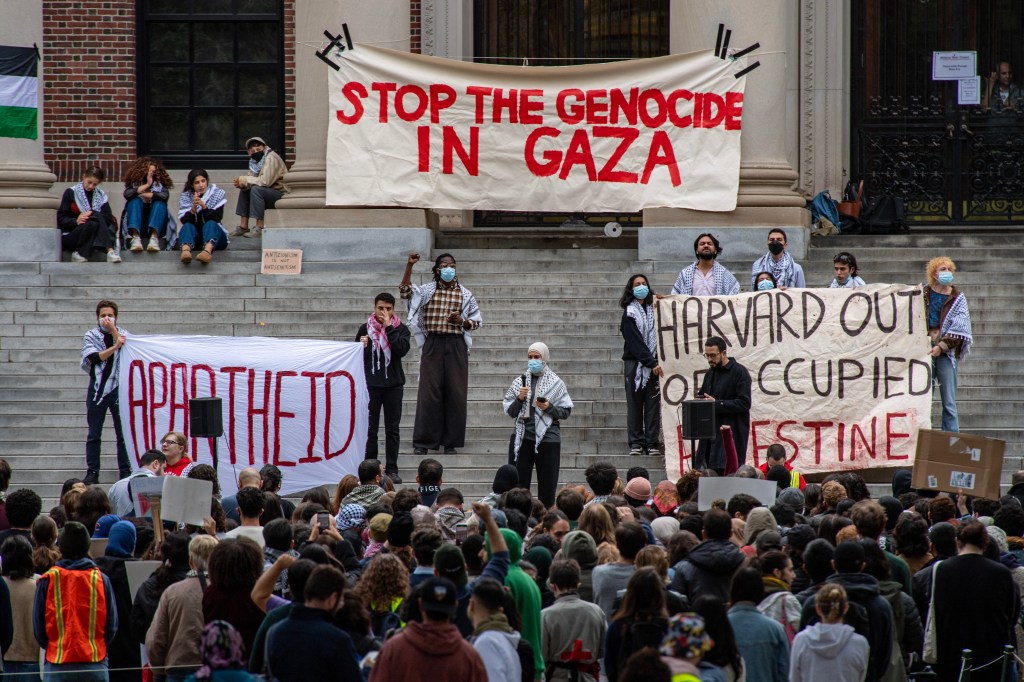
Since October 7, 2023, Harvard University faced multiple challenges. The campus was disrupted by pro-Palestine protests, President Claudine Gay was accused of plagiarism, affirmative action policies were overturned by the Supreme Court, and the university was criticized for its handling of free expression. Grade inflation and federal funding disputes under the Trump administration further complicated the situation. Students, faculty, donors, and the public lost trust in the revered institution.
In response, Harvard implemented various policies to regain trust and enhance its academic environment. These efforts focused on protecting academic freedom, addressing grade inflation, promoting open dialogue, resisting AI in learning, and prioritizing academics over other campus activities. According to professors, these measures are yielding positive results.
Steven Pinker, a psychology professor at Harvard, highlighted the changes under President Alan Garber, who assumed leadership in January 2024. Pinker pointed out that previous administrations prioritized avoiding negative publicity over defining the university’s goals. Under Garber, Harvard established the Open Inquiry and Constructive Dialogue Working Group and amended protest policies to clarify permissible locations for demonstrations.
The university also stopped making institutional statements on controversial issues not directly related to campus life. New rules were adopted to ensure viewpoint-neutral teaching, stating that a student’s political views should not impact their grades.
Beginning Fall 2025, students are encouraged to evaluate instructors on their encouragement of diverse viewpoints. Santiago Romero-Brufau, a biostatistics professor, observed a more open environment for discussions, reducing the fear of repercussions. The implementation of Chatham House rules in classrooms supports this by prohibiting identification of speakers in discussions.
Ned Hall, a philosophy professor, noted students’ frustration with restricted speech and emphasized the Council on Academic Freedom’s role in promoting open inquiry. Harvard’s free speech rankings improved significantly, moving up from last place to 71st out of 261 schools. The university now ranks among the top 25 for political tolerance.
Laura Beltz, Director of Policy Reform at the Foundation for Individual Rights and Expression, acknowledged the positive impact of these reforms but emphasized the need for ongoing commitment to free speech as student populations change. Harvard’s initiatives for incoming students include requiring an essay about a disagreement on the application and a new orientation module on intellectual life and constructive disagreement.
Addressing grade inflation is another priority. In 2024, a faculty committee proposed a 20% cap on A grades, effective Fall 2027, and encouraged attendance tracking in large lectures to foster engagement.
The university is also tackling challenges posed by artificial intelligence. The Derek Bok Center introduced the “Teaching and AI” initiative, suggesting in-person and oral exams to make assignments AI-resistant. Pinker views these changes as signs of academic revival, emphasizing the importance of academics over extracurricular activities like networking or extracurriculars like rowing and choir practice.
Leave a Reply