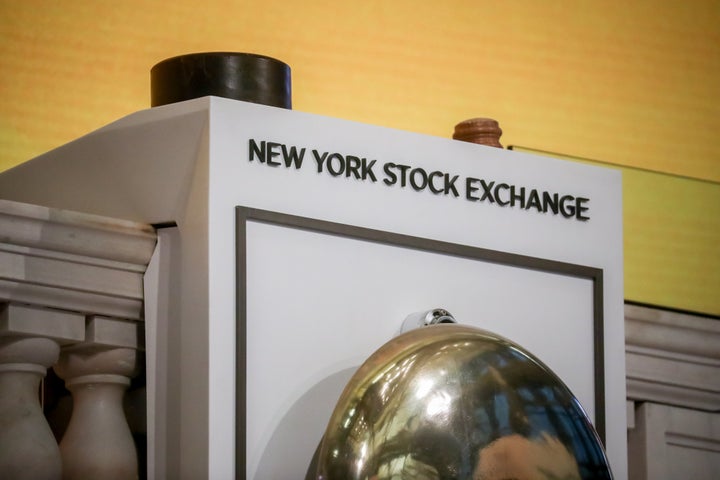
A fierce sell-off shook Wall Street on Thursday, primarily hitting stocks linked to the development of AI data centers. The decline more than wiped out gains from the previous day, which had been the market’s strongest performance in three months.
Key Market Indices Plunge
The S&P 500 dropped 4.4%, marking its worst day since April 2025, when market instability followed tariffs introduced by then-President Donald Trump. The Dow Jones Industrial Average fell by 1,833 points, or 3.4%, and the Nasdaq composite decreased by 5.5%.
The Nasdaq, heavily populated with technology and AI-related stocks, is now 11.9% below its record high from last month. A decline of over 10% is often referred to as a ‘correction’ by market analysts.
Global Pressure on AI Sector
Concerns about slowed construction of AI data centers due to rising borrowing costs have pressured stocks. Critics argue that AI stock valuations were too high, indicating a potential bubble. Global indexes felt the strain, with South Korea’s Kospi index plunging 5.3%.
Recent U.S. midterm election results posed additional pressure. Democratic victories raised concerns about potential regulations affecting AI data center construction. Some voters are uneasy about AI, expressing frustration over power bill hikes attributed to data centers.
Impact on Major Companies
A pause in AI data center construction could reduce demand for AI chips, electricity, and other resources tied to the AI boom. Nvidia, a leading chip manufacturer epitomizing the AI surge, saw its stock tumble 9.3%. This fall made it one of the heaviest weights on the S&P 500, bringing its annual performance into negative territory.
Advanced Micro Devices faced a 17.3% drop, while CoreWeave, a cloud-based AI chip service, decreased by 9.8%. GE Vernova, a firm powering data centers, fell by 7.5%.
The significant decline in AI chip stocks highlighted their outsized influence on the market. For instance, a 1% change in Nvidia’s stock impacts the S&P 500 more than a 1% change in nearly any other U.S. stock.
Outliers in the Market Slump
Despite widespread losses, some companies showed gains. AppLovin increased by 31% following impressive revenue and profit reports that exceeded expectations. The company’s board approved share buybacks worth up to $3.2 billion.
Tapestry, owner of Coach and Kate Spade brands, rallied with a 7.1% increase due to strong profit results and an upward adjustment in revenue and earnings forecasts.
Perspectives on Market Trends
Looking at broader trends, stock prices tend to align with corporate earnings and interest rates over time, rather than immediate political shifts.
The S&P 500 ended the day down 334.89 points to 7,353.73. The Dow fell 1,833.06 points to 51,523.06, and the Nasdaq dropped 1,421.52 points to 24,315.00.
Other Financial Market Movements
Initial reactions to U.S. election outcomes moderated. Brent crude oil prices rose 3.9% to $98.29, recovering from nearly a 9% drop the previous day. Market uncertainty persists due to ongoing conflict with Iran affecting global energy dynamics.
Treasury yields experienced a decline. The 10-year Treasury yield fell to 4.84% from 4.90%, indicating investor movement towards less risky assets amid stock market volatility.
This occurred despite positive economic signals in the U.S. Fewer workers filed for unemployment benefits, and reports pointed to greater-than-expected productivity growth during the summer, which could sustain economic growth without exacerbating inflation.
International Market Reactions
European and Asian markets showed mixed results. Japan’s Nikkei 225 felt the decline, falling 1.8% due to tech and AI stock pressures. London’s FTSE 100 dipped 0.4% following the Bank of England’s first interest rate hike in three years, aimed at controlling inflation driven by global conflicts.
The bank emphasized that future interest rate decisions will depend heavily on developments in the Iran conflict, which has pushed oil prices and inflation higher worldwide.
Bank of England Governor Andrew Bailey remarked on recent reports, emphasizing resolution in the Middle East as a critical factor for stability.
AP Business Writer Elaine Kurtenbach contributed to this report.
Leave a Reply