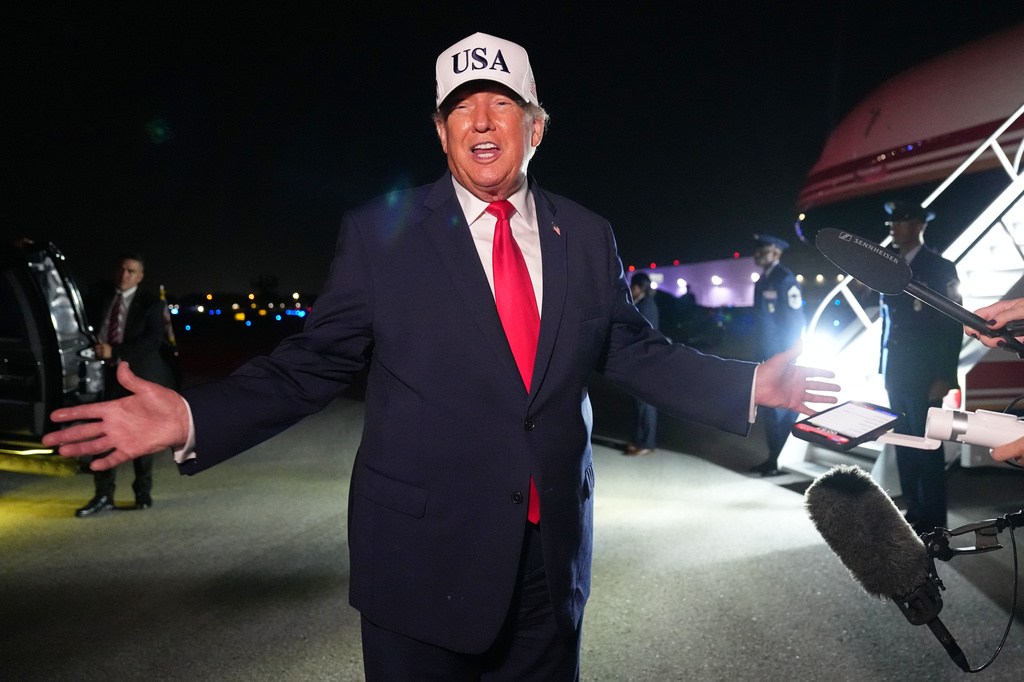
President Donald Trump expressed optimism for bipartisan cooperation with Democrats following their significant midterm election victories. He mentioned the possibility of collaboration on pressing issues such as immigration. Despite this, Trump praised Stephen Miller, the incoming White House Chief of Staff, known for his hardline immigration stance, as an ‘MVP.’
In a briefing after the UP.Summit near Kennedy Space Center in Florida, Trump addressed how he might align with Democratic-led actions. He mentioned areas such as immigration and tax reforms, describing them as priorities for potential cooperation. Trump underscored the importance of economic development and common sense in achieving bipartisan goals.
The announcement of Miller’s role shift, succeeding outgoing Chief of Staff Susie Wiles, came shortly after the Republican setbacks in the recent midterm elections. Miller’s history of advocating strict immigration policies might pose challenges to Trump’s stated collaborative intentions with Democrats.
Democratic leaders voiced their disapproval of Miller’s appointment. Senate Minority Leader Chuck Schumer affirmed Democrats’ resolute opposition, while House Minority Leader Hakeem Jeffries, poised to become speaker, criticized Miller as a ‘reckless extremist.’
Trump referred to Miller as a ‘great fighter’ and acknowledged his loyalty since the onset of Trump’s political journey in 2015. Miller’s influence has been marked across immigration and foreign policy, emphasizing mass deportations and the effort to end birthright citizenship.
The reaction from Democrats signaled skepticism about Trump’s commitment to bipartisan efforts on immigration. Schumer criticized Trump for not acknowledging the ramifications of Republicans’ electoral defeat. Jeffries labeled Miller a ‘dangerous xenophobe,’ indicating an intensified partisan divide.
Trump also reflected on the Republican losses, attributing them to Senate inaction and rising oil prices. He highlighted the stall of the SAVE America Act as politically damaging, despite not directly blaming Senate Majority Leader John Thune.
Following the midterms, Trump pointed to stock market instability, asserting it responded negatively to Democratic wins. However, analysts attribute the market fluctuations more to concerns over technology investments than political changes.
Despite these setbacks, Trump signaled his preparedness to engage with Democrats, declaring a willingness to work across the aisle. This contrasts with the Democrats’ cautious stance, wary of Miller’s influential role within the administration’s agenda.
Leave a Reply