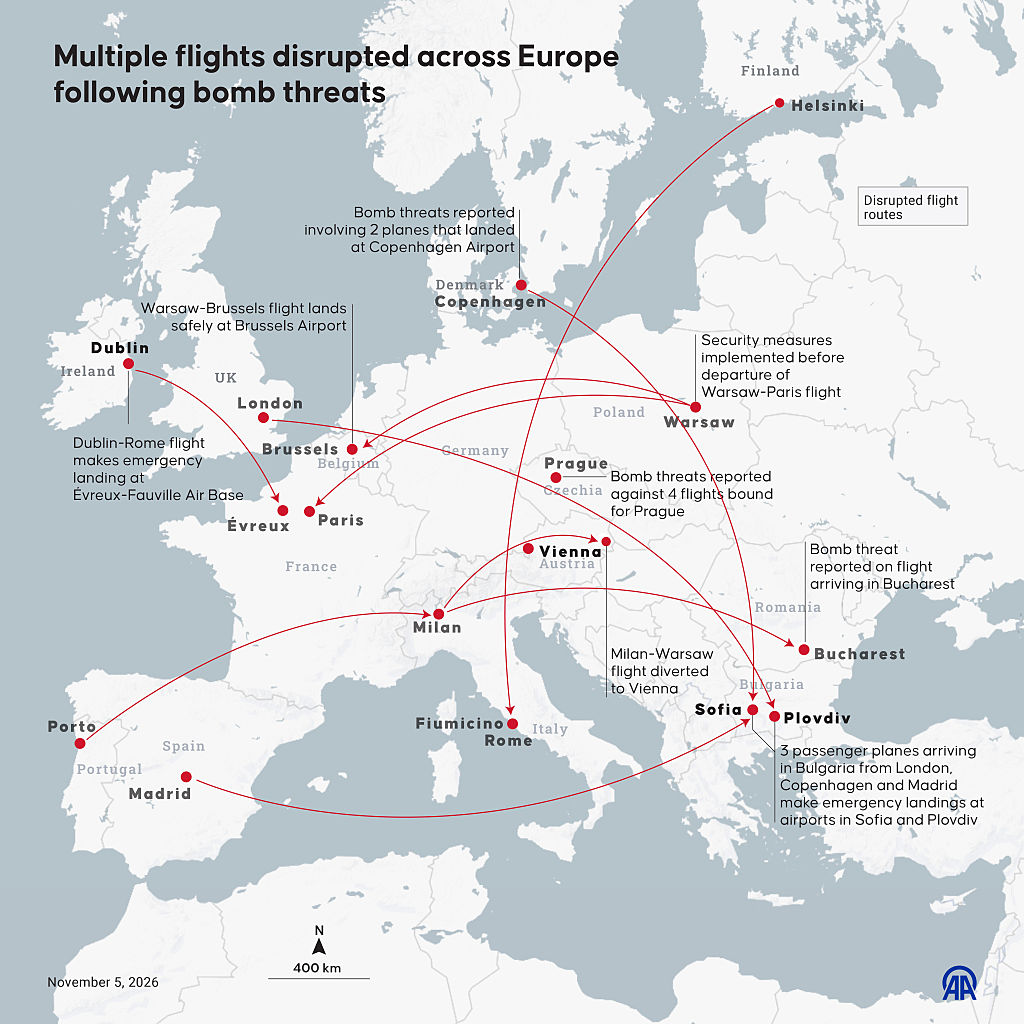
This week, Europe faced a series of bomb threats targeting flights and newsrooms. These threats, later identified as hoaxes, prompted swift action from authorities. The disruptions began on November 2 and disrupted many flights.
Wizz Air’s flight from London to Bulgaria faced one such threat. This led to an emergency landing in Budapest. The threats spanned across flights connecting numerous countries, including Italy, Ireland, Spain, and others. Emergency maneuvers were frequent, affecting thousands of passengers and causing considerable fear.
Subsequent threats targeted European broadcasters, leading to evacuations of outlets like Sky News and Irish broadcaster RTÉ. A message accompanying these threats warned of larger trouble for Europe in the foreseeable future, as reported by Reuters.
European Union Transport Commissioner Apostolos Tzitzikostas condemned the threats. He initiated EU-level information-sharing on aviation security. Meanwhile, Ireland suggested a coordinated effort behind these disruptions. Experts believe these actions aim to create widespread anxiety and destabilization.
Speculation on hybrid warfare arose. Spain’s Foreign Minister described the threats as hybrid aggression. Elisabeth Braw from the Atlantic Council classified them as ‘gray zone conflicts.’ Italian Prime Minister Giorgia Meloni highlighted the focus on civilian infrastructure, making response difficult without escalating to full military conflict.
Braw noted that while bomb threats against airliners aren’t new, the frequency and scale are unusual. This comes amidst broader destabilizing activities, like cyberattacks on European supermarkets and blood banks in France.
Attributions to Russian entities were suggested, though Kremlin spokesman Dmitry Peskov dismissed it as absurd. Robert Jordan from the Royal United Services Institute highlighted the challenge of identifying the responsible parties, indicating both state and non-state possibilities.
All threats required significant attention, even if assessed as hoaxes, due to potential catastrophic outcomes. Emergency landings, passenger anxiety, and financial losses for airlines marked the impact.
French prosecutors are investigating possible foreign involvement, with some emails linked to a Russian group. However, confirmed connections remain elusive.
As investigations continue, experts stress the need for heightened security and scrutiny at airports. Authorities face challenges in managing similar threats within democratic societies that favor law-abiding responses while mitigating further proliferation of such threats.
Leave a Reply