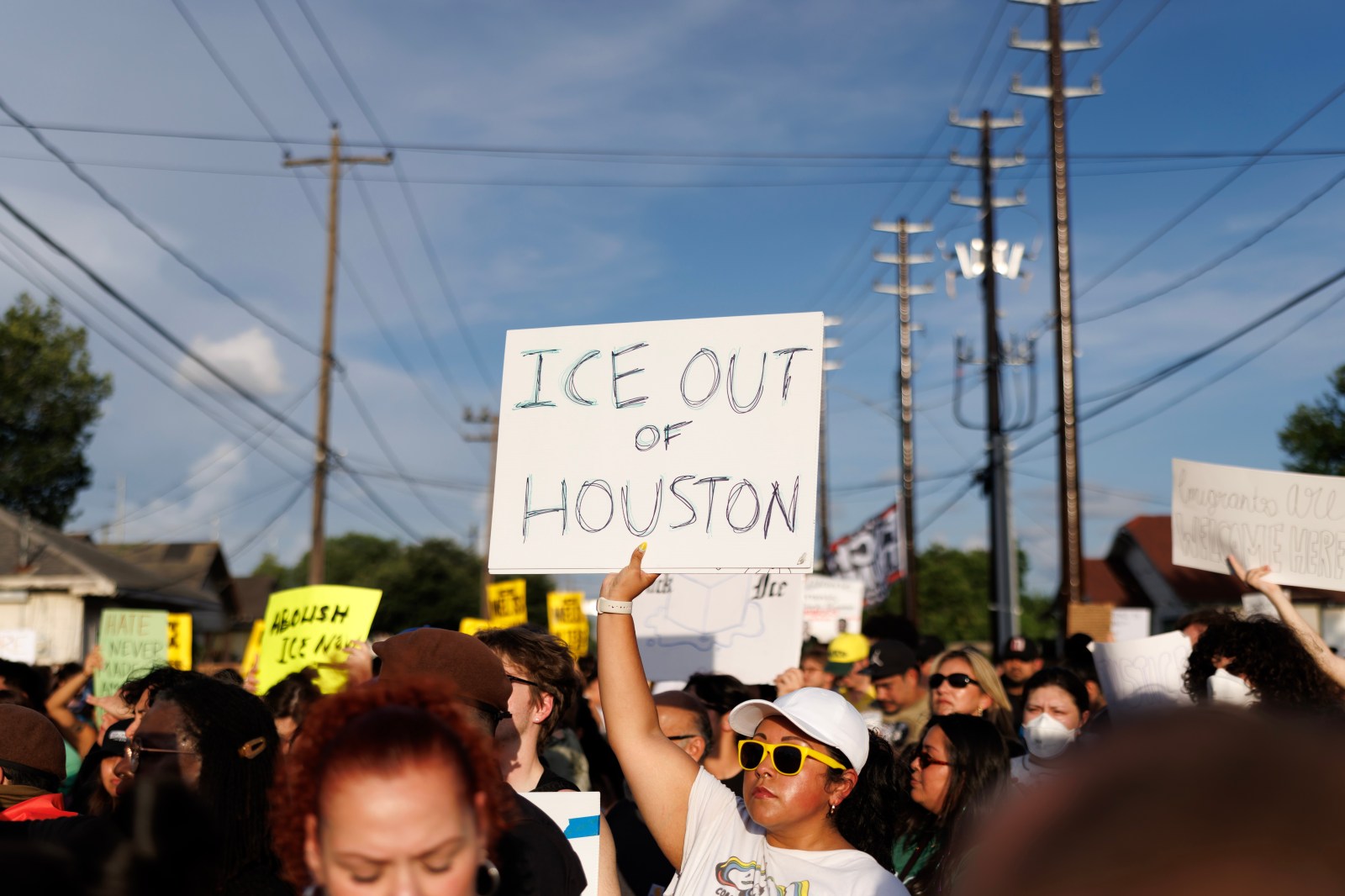
Two Texas cities are changing how local police interact with U.S. Immigration and Customs Enforcement (ICE) following recent elections. This involves an executive order in Houston and planned updates in Austin.
Political Changes Prompt Policy Revisions
In the latest elections, Democrats won every statewide race in Texas, breaking a long Republican dominance. Democratic Representative James Talarico defeated Republican Ken Paxton for the U.S. Senate. Gina Hinojosa replaced Republican Governor Greg Abbott, becoming Texas’ first Latina governor.
Houston Mayor John Whitmire, a Democrat, signed an executive order for the Houston Police Department to notify ICE only if a person with an administrative immigration warrant is charged with a crime punishable by jail. Officers will not contact ICE for mere warnings or citations. Whitmire aims to reduce fear in the community, emphasizing that “elections matter.”
In Austin, Mayor Kirk Watson, also a Democrat, tasked Police Chief Lisa Davis with revising police orders on federal immigration interaction.
“I do this to begin a healing process, reduce fear and anxiety across our community,” Whitmire stated in a press conference.
Debate Over Federal and Local Enforcement
The changes follow a series of fatal incidents involving federal immigration officers. The deaths of Renee Nicole Good, Alex Pretti, and Lorenzo Salgado Araujo have sparked calls for policy review.
Federal officials defend actions during these incidents, citing self-defense. However, family and civil rights groups demand independent investigations.
The policy shift aims to limit local police roles in federal immigration enforcement, contradicting intensified federal actions under former President Donald Trump.
White House spokeswoman Lauren Bis criticized the changes, arguing they compromise public safety. She claimed safe cities cooperate with ICE.
Legal Barriers and Local Responses
Texas law restricts how much cities can distance themselves from federal cooperation. Senate Bill 4 prevents cities and police from limiting officer assistance to federal agents.
Houston’s policy doesn’t cut ties with ICE, nor does it impede their operations. Officers must still alert ICE for individuals with a warrant booked on charges.
Austin’s proposed changes require review for state law compliance. Earlier in the year, Austin altered its guidelines on ICE interaction.
City officials like Austin Council members Mike Siegel and Vanessa Fuentes advocate for minimal police cooperation with ICE, as legally required.
Expanding Local Restrictions Nationwide
Several cities outside Texas have adjusted policies to limit local involvement in immigration enforcement. These vary but generally don’t block federal enforcement.
- Biddeford, Maine: Restricted municipal aid for federal immigration enforcement, effective November 19.
- Upper Darby, Pennsylvania: Barred use of local resources for civil immigration enforcement.
- Philadelphia: Enacted the “ICE Out” package limiting municipal involvement.
- Portland, Maine: Limited staff aid to federal immigration enforcement.
- Davis, California: Expanded sanctuary rules against assisting federal operations.
- Lewiston, Maine: Made temporary restrictions permanent.
- Buffalo, New York: Issued an order against using city resources for immigration enforcement.
Other cities like Boston, Seattle, and New York City have taken similar steps, limiting aspects like nonpublic facility access and information sharing.
A new New York law limits police from working with ICE.
Houston’s approach could influence other Texas cities, impacting state policies.
Leave a Reply