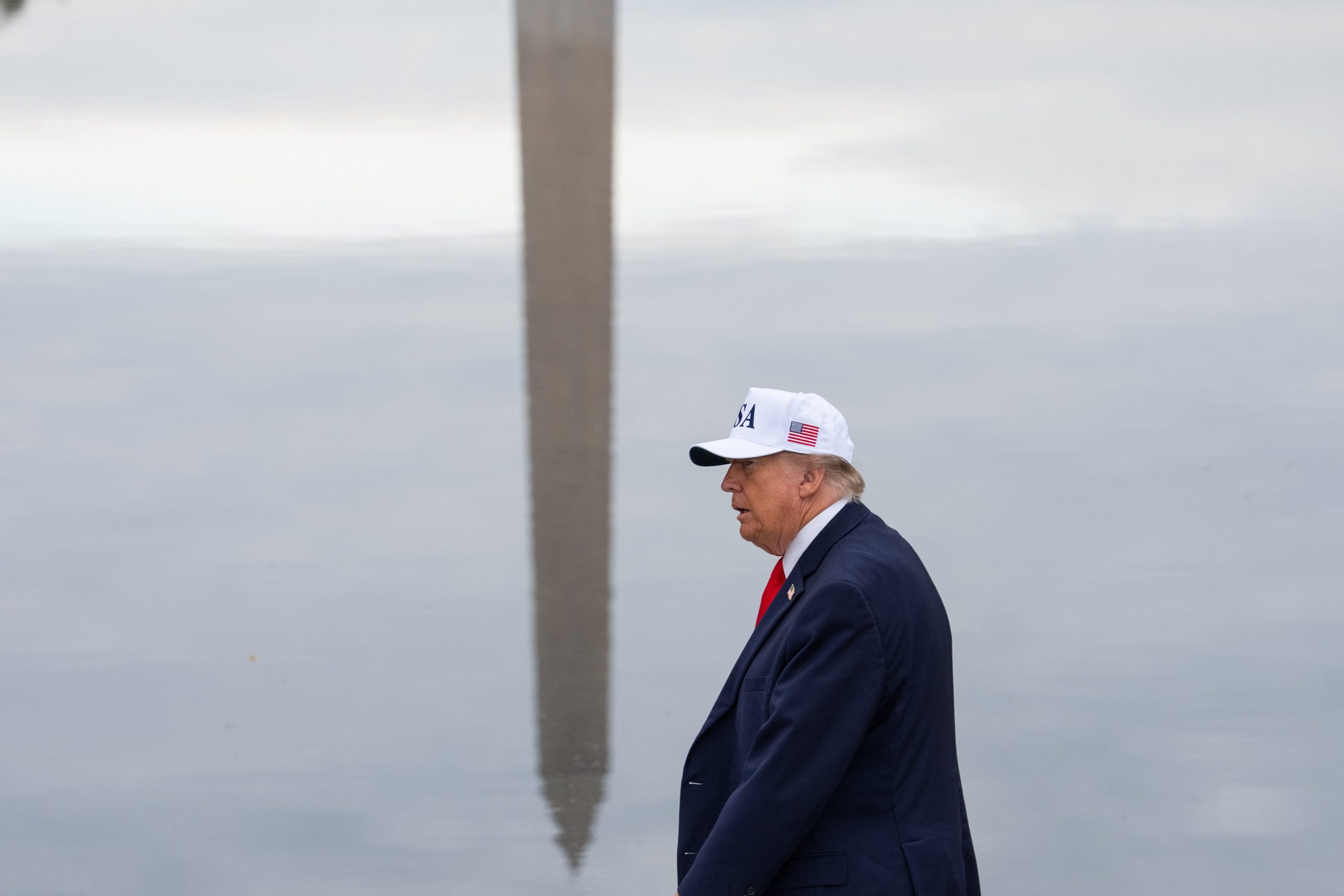
In his first public appearance after a decisive election, President Donald Trump shifted focus away from politics and policies. He highlighted his efforts to reshape parts of Washington D.C., although this path now promises new obstacles. With Democrats gaining control of Congress, changes to D.C.’s landscape, such as renovations at the Kennedy Center and a new memorial arch, face fresh scrutiny.
Trump, who favors urban development projects, has been hands-on with D.C. transformation plans. Yet, the opposition from Democrat leaders could impact these efforts significantly. For instance, the renaming and renovation of key landmarks like the Kennedy Center and Lincoln Memorial reflect Trump’s vision, which clashes with congressional leaders who now have investigative power.
On Monday, Trump spotlighted the Lincoln Memorial Reflecting Pool, discussing its restoration. A midweek visit showed him touring a White House ballroom under construction. Both occasions veered toward discussions on his urban projects, demonstrating his commitment to altering D.C.’s physical appeal.
Rep. Jared Huffman of California, a leading Democrat on the Natural Resources Committee, underscored his vigilance on Trump’s initiatives. His focus included probing these projects for transparency and accountability. Huffman emphasized transforming public spaces respectfully, anchoring them in scientific and ethical governance practices.
A shift in power, starting January 3, will see Democrats handling appropriations, influencing ongoing and new projects. Rep. Don Beyer’s opposition highlights this change. He confronted plans for Trump’s proposed memorial arch near Arlington National Cemetery, deeming it extravagant.
Congressional dynamics will shift notably, affecting legal and operational aspects of Trump’s initiatives. Authorities, such as the House Speaker, will influence legal interpretations and actions moving forward. Legal challenges have been common, but the new majority can leverage broader authority.
The potential triumphal arch near Arlington remains contentious. Despite National Capital Planning Commission approval, federal intervention has paused progress. Over 120 people attended a hearing where opposition was prominent. Judge Tanya Chutkan ruled to temporarily halt construction activities, highlighting legal complexities in D.C. projects.
Trump remains committed, referencing projects like East Potomac Golf Links and the National Garden of American Heroes. Yet all initiatives face court proceedings. Moreover, Judge Ana Reyes has indicated investigations into legal conduct concerning these projects.
Aside from court battles, a Democratic-led Congress adds a significant layer of resistance. Skye Perryman, leading Democracy Forward, believes legislative oversight is a key development. While legal challenges continue, congressional support strengthens opposition against what some perceive as executive overreach.
Project financial estimates remain elusive, contributing to transparency concerns. The golf course’s seawall, for instance, could exceed $300 million. Approved budgets, such as $257 million for Kennedy Center renovations, indicate scale but leave specifics ambiguous.
Democratic gubernatorial wins in states like Texas and Georgia further impact Trump’s administration. These states’ National Guard members were integral to celebrations marking the U.S. 250th anniversary, yet political shifts may alter their deployment and roles in D.C.
Leave a Reply