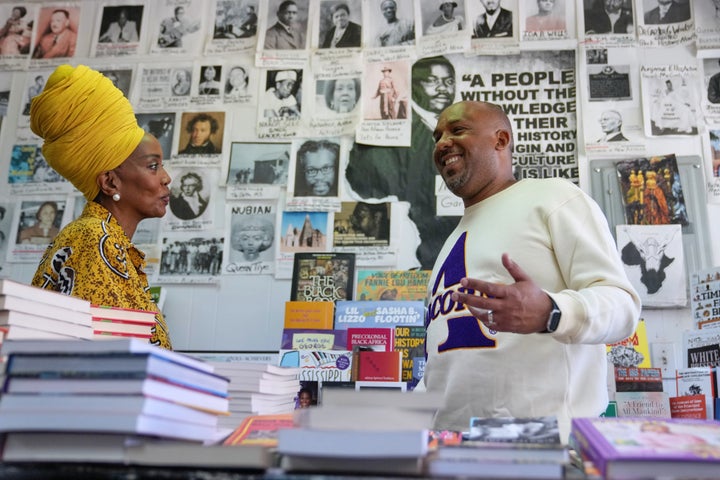
Scott Colom, a Democrat, stands at the center of a potentially historic U.S. Senate race in Mississippi. As a local prosecutor, Colom has been celebrated in Jackson’s Farish Street business district, a place deeply tied to civil rights history.
“Scott Colom as our representative is wonderful,” expressed Maati Jone Primm, owner of Marshall’s Music & Bookstore.
The election’s result could make Colom Mississippi’s first Black senator since the post-Civil War Reconstruction era. As ballots are still being counted, many Black voters balance cautious optimism with outright celebration. Nearly 40% of Mississippi’s population is Black, though historically, top state positions have been held by white individuals.
Colom remarked, “I have faith in the process being followed correctly. People need to remain calm and adhere to the law.” He questioned the silence of Republican Sen. Cindy Hyde-Smith, asking why she hasn’t spoken publicly about her campaign strategy.
The race remains too close for The Associated Press to announce a winner. The outcome hinges on a detailed ballot-counting process across Mississippi’s 82 counties. Absentee and provisional ballots, known as affidavit ballots, are under examination, while volunteers and legal teams remain vigilant against potential litigation.
Colom shared that counted ballots since Election Day lean towards him, while criticizing Hyde-Smith for not articulating her strategy.
Democratic candidate Scott Colom, accompanied by Maati Jone Primm, engaged with voters at Marshall’s Music and Bookstore, the oldest Black-owned bookstore in the U.S.
Hyde-Smith has avoided public appearances since election night when she declared victory despite the ongoing ballot count.
“We are not backing down,” she declared via social media. “This election is not over. Our team is monitoring remaining ballots to protect the process’ integrity.”
During a campaign event, Maryland Sen. Angela Alsobrooks praised Colom, noting voter enthusiasm. However, she pointed out a lingering “belief problem” among voters due to past losses.
Outstanding ballots include absentee ballots, which Mississippi counts if received within five business days post-election. Affidavit ballots address issues such as voter identification discrepancies or absentee ballot verification. Voters can resolve ID issues at their local election offices by Tuesday.
Without provisions for a statewide recount, campaigns might seek court orders to review ballots locally. The deadline for counties to certify their results to the secretary of state is Friday.
This race does not alter the Senate’s power balance, as Democrats already secured control. Nevertheless, a Colom victory would signify a major shift in a state dominated by white conservatives for nearly 150 years.
Traditionally, these leaders were Democrats until after the Civil Rights Movement, when they predominantly shifted to Republicans. This shift didn’t change Black representation at state and federal levels.
Colom initially appeared a longshot, receiving advertising support from Senate Democrats’ top campaign group only in late October.
The midterm elections highlighted backlash against Southern redistricting efforts favoring Republicans, thus diminishing Black representation.
Primm’s bookstore in Farish Street opened in the 1930s and serves as a symbol of Black advancement. For the community, Colom symbolizes potential and inspiration for the youth.
On the campaign trail, Colom assured voters of his commitment to representing all Mississippians, criticizing policies under former President Donald Trump. He saw the extended ballot-counting process as insightful for the state’s roughly 2.95 million residents.
Colom acknowledges the importance of his candidacy as a Black man in the political landscape. His ads featured the Jackson home of Medgar Evers, linking his campaign to sacrifices made during the Civil Rights Movement.
“We talked about sacrifice, telling the story; the ad was the last message Mississippians heard,” Colom stated, reflecting on the importance of Evers’ legacy.
Leave a Reply