The recent midterm gains by Democrats have set the stage for a new debate over how the U.S. elects its president, potentially affecting the 2028 race for the White House. Democrats now hold key positions, controlling both the governor’s office and state legislature in Michigan, Pennsylvania, Wisconsin, and Nevada.
The National Popular Vote Interstate Compact (NPVIC) currently has 18 states and Washington, D.C. on board, amounting to 222 electoral votes. To be effective, the compact needs 270 votes. If the four states Democrat now control join, they would add their combined 50 electoral votes, reaching 272. Arizona could increase the number to 283 if Democrats take control there.
National Popular Vote (NPV), the nonprofit behind the compact, is working to have it enacted state by state. They have lined up legislative sponsors in the five states whose electoral votes could meet the 270-vote target. Efforts are underway to file bills before or early in the 2027 legislative sessions, according to Patrick Rosenstiel, a senior consultant for NPV.
Rosenstiel expressed confidence, stating, “We have multiple paths to secure the 48 electoral votes required to deliver what 63% of Americans want.”
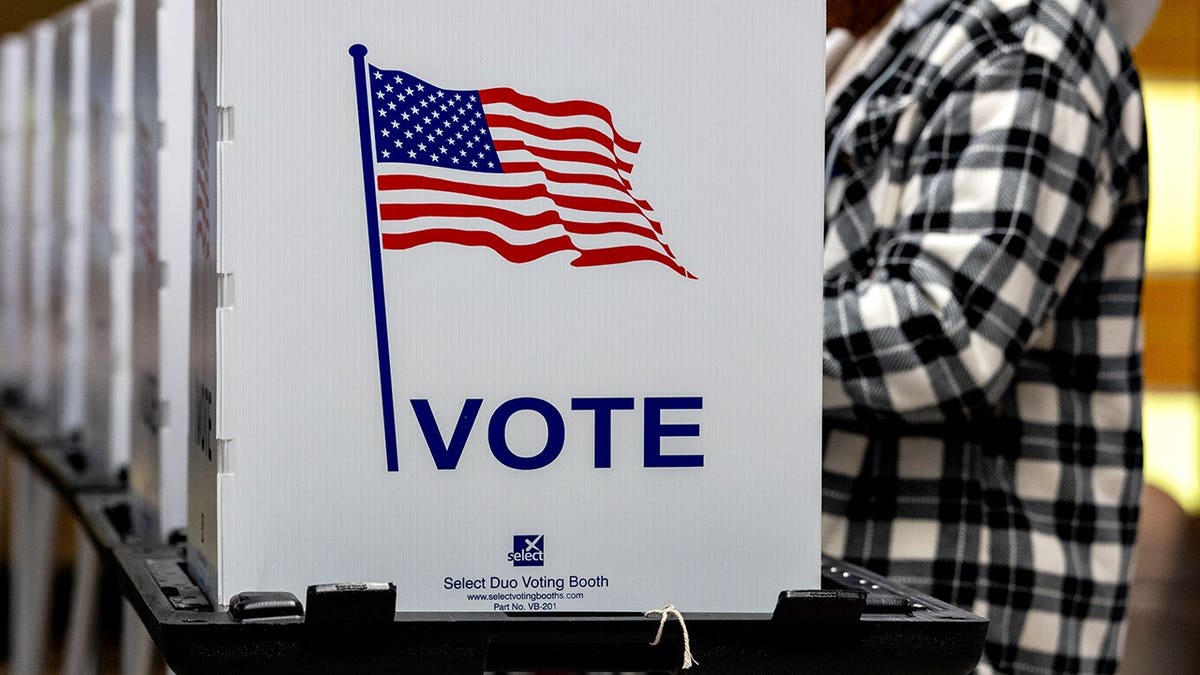
A voter fills out their ballot at a polling location inside Wayne Community College – Eastern Campus on the final day of early voting for the midterm election in Detroit, Michigan, on Sunday, Nov. 1, 2026.
Under the current system, except in Maine and Nebraska, states award all electoral votes to the candidate winning the statewide vote. The compact, if activated, would shift participating states to allocate votes to the winner of the national popular vote while retaining the Electoral College structure. Proponents argue this method would ensure equal weight to all votes.
Opponents such as Hans von Spakovsky, an election law expert with Advancing American Freedom, contend the compact could not change the Electoral College. “Using a compact to change the Electoral College is unprecedented,” said von Spakovsky, noting traditionally compacts resolved issues like water sharing between states.
Although critics suggest the Supreme Court might find the compact unconstitutional, Rosenstiel cited Article II, Section 1, arguing states have exclusive power to determine elector appointments. The legal question centers on whether congressional approval is required.
Von Spakovsky argues Congress would need to approve the compact under the Constitution’s Compact Clause, and that non-participating states could challenge the compact in court, claiming it changes core constitutional structures without an amendment process.
Rosenstiel asserts that efforts are on track to join enough states to activate the compact by 2028, pending a minimum of 270 electoral votes before July 20 of that year. The issue involves not just state lawmakers but Congress and potentially the courts.
As legal and political discussions unfold, the Electoral College remains unchanged. “I’m increasingly confident we can achieve a national popular vote for president in 2028,” Rosenstiel said.
Alec Schemmel, a Politics Reporter for Fox News Digital, originally from Charlotte, North Carolina, now reports from the Washington D.C.-Baltimore Metro Area.
Leave a Reply