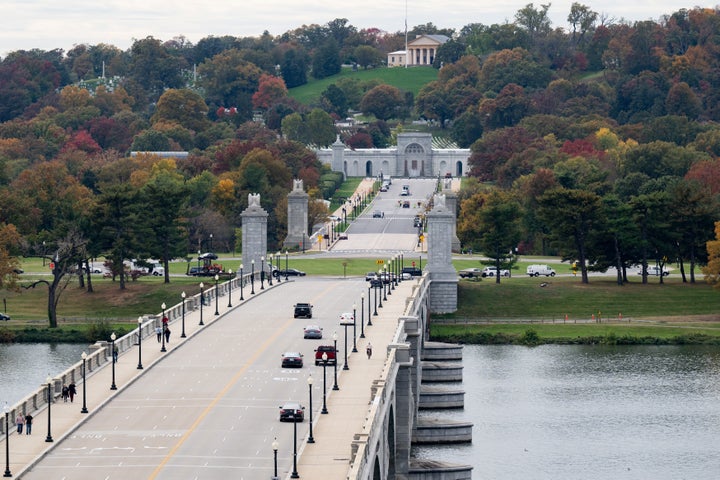
On November 6, a U.S. judge temporarily halted the construction of a proposed 250-foot arch in Washington. The White House then released new designs, promoting the project as a homage to the nation’s military legacy. This initiative, dubbed the Military Triumphal Arch, would be located near Arlington National Cemetery.
The new visualizations, presented by the United States Triumphal Arch Foundation, exhibit gilded statues and the phrase GOLDEN AGE OF AMERICA in prominent gold letters. A torch held by one of the statues emits a flame. Randy Evans, chairman of the foundation and a former ambassador appointed by Trump, emphasized that the foundation operates independently from the government.
Amid governmental losses in recent midterm elections, former President Trump has shifted his focus to large-scale projects in Washington. The arch is among several initiatives facing political and legal resistance. The attorneys general of Virginia and the District of Columbia have legally contested the project, arguing it would harm Washington’s skyline and prestigious sites such as Arlington National Cemetery and the Lincoln Memorial.
The Federal Aviation Administration approved the project in September, despite safety worries related to its proximity to Reagan Washington National Airport. Trump’s administration argues that Congress had authorized the arch alongside a bridge over the Potomac more than a century ago.
On November 2, images from the Lincoln Memorial show the proposed site of the arch, close to Arlington National Cemetery and other landmarks. A regional authority, the National Capital Planning Commission, approved the project after hearing from numerous opponents, including Democratic lawmakers. However, U.S. District Judge Tanya Chutkan issued a two-week restraining order on further work, citing potential traffic disruptions and noise.
White House spokesman Davis Ingle criticized the judge’s decision, attributing it to an “activist district court.” He asserted confidence in the project’s eventual progression, calling the arch a tribute to 250 years of American history. Construction is projected to last two to three years, based on documents from the Interior Department.
Leave a Reply