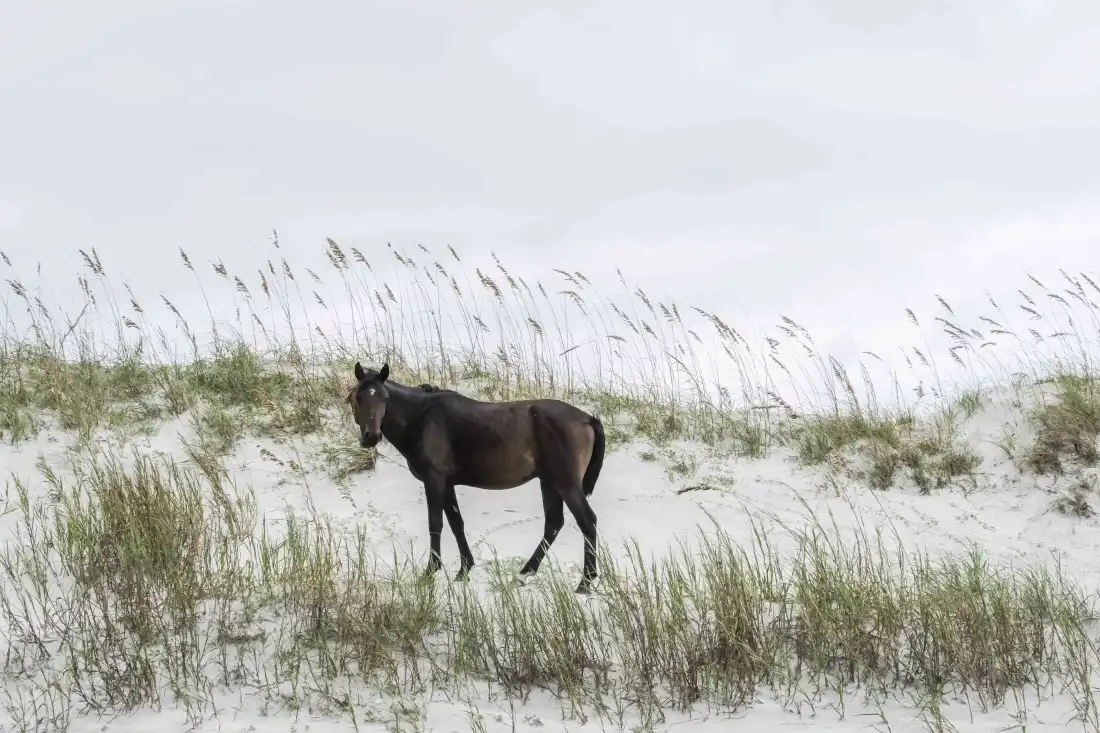
Cumberland Island in Georgia is a vast 18-mile barrier island teeming with wild horses, feral hogs, and deer. It is among the largest and most ecologically varied islands along the Atlantic coastline. The National Park Service has managed the island since 1972, overseeing roughly 9,800 acres designated as wilderness. This area must remain unspoiled, according to legislation.
The island’s landscape is a mix of salt marshes, maritime forests, and untouched beaches. It holds rich history with Native-American artifacts, Spanish mission remnants, old plantations, and homes built by Thomas Carnegie, a Gilded Age industrialist.
A recent proposal by the National Park Service has sparked debates over a land swap with Carnegie’s descendants. This swap allows new constructions, fostering differing opinions about preserving the island’s integrity among many stakeholders.
Tension Over Land Swap
Park Superintendent Melissa Trenchik has been advocating for the proposal, showing media around an area on the island’s west side that offers majestic views of salt marshes. This land, part of the park now, might go to Carnegie descendants to build up to eight private homes under the proposal.
Trenchik explained that the plan is to consolidate private ownership on the west, allowing better resource interpretation on the Atlantic side. The new homes, limited to 35 feet in height, would follow strict conservation guidelines. However, critics argue the space allowance of 15,000-square feet is substantial.
Joseph Manning of Defenders of Wildlife critiques the swap as part of broader privatization efforts under the Trump Administration, benefiting select individuals without expanding public access to lands.
Carnegie Descendants’ Perspective
Barclay McFadden, a Carnegie family member, believes much of the alarm about the swap is exaggerated. He speaks of his family’s deep roots on the island, noting they have cared for the land and preserved its natural state in the past. His cousin, Jamie Ferguson, who co-owns the Greyfield Inn, echoes similar sentiments. Ferguson highlights the family’s historical connection to the island.
The swap may offer better visitor access to significant historical locations like ‘The Chimneys,’ remnants of an old plantation. Ferguson stresses the importance of balancing the island’s cultural history with its natural conservation.
Opposition to Development
Naturalist Carol Ruckdeschel, a long-time resident on the island, opposes the swap. She ventures out weekly to observe wildlife, voicing concerns that the swap might be a precursor to more development.
Ruckdeschel sees the proposal as contrary to the National Park Service’s duty to protect the island. The plan to increase daily visitor numbers to 700 also raises her worries. Despite acknowledging the Carnegie family’s affection for the island, she believes it should remain a haven where nature prevails over human encroachments.
Ruckdeschel envisions the island as a place where nature reclaims space, turning former cotton fields into thriving forests, showcasing the island’s natural beauty and history.
Leave a Reply