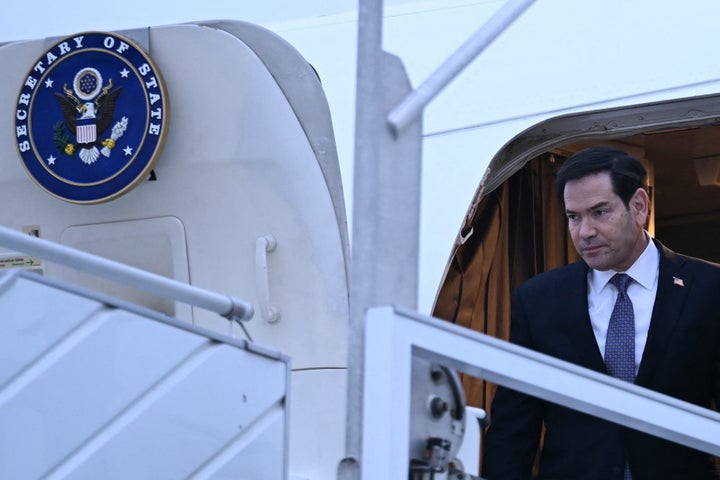
Foreign ministers from the G7, representing industrialized democracies, convened in Paris for a pivotal two-day meeting. The agenda includes addressing global crises and assessing changes in U.S. foreign policy after recent U.S. midterm election results impacted the ruling Republican Party.
U.S. Secretary of State Marco Rubio, who is attending his first international summit since the election, anticipates inquiries about potential shifts in America’s stance on key issues such as the Russia-Ukraine conflict, the Iran situation, energy security, and the role of artificial intelligence. These topics will drive conversations among representatives from the U.S., the U.K., Canada, France, Germany, Italy, and Japan.
Political dynamics in the U.S. will likely emerge during discussions, especially given the Republican Party’s recent electoral losses. Rubio, upon arrival at Le Bourget airport near Paris, noted that other nations have similar governmental and political divisions. Canadian Foreign Minister Anita Anand remarked on the uncertainty surrounding Washington’s future approach, highlighting the significance of executive powers and leadership changes in Congress.
Despite the Democratic gains in Congress, President Trump appears to maintain his policy course, reinforced by appointing Stephen Miller, a noted hard-liner, as chief of staff. Speculations about Rubio’s political ambitions have been denied as he focuses on presenting a more diplomatic U.S. stance.
Addressing Global Conflicts
The Iran and Ukraine conflicts are critical topics at the summit. President Trump has suggested a partnership with Europe to resolve Russia’s aggression in Ukraine. His representatives, Steve Witkoff and Jared Kushner, are set to negotiate with Ukrainian and Russian officials in the UAE to explore possible compromises.
Rubio highlighted the importance of establishing postwar security in Ukraine and Europe. While there have been advancements in structuring this security, final agreements remain pending. German Foreign Minister Johann Wadephul emphasized Europe’s essential role in any resolution process.
Anita Anand from Canada reiterated the significance of talks in Abu Dhabi for progressing peace proposals.
In relation to Iran, a proposed interim solution seeks to alleviate tensions that have escalated fuel prices and disrupted the Strait of Hormuz and Red Sea shipping lanes. Rubio acknowledged the limited progress in diplomacy, criticizing Iranian demands as unrealistic and unacceptable.
Seeking Diplomatic Consensus
The summit also invites discussions with Brazil, Egypt, Saudi Arabia, and Ukraine, focusing on issues including Africa, China, Cuba, and Haiti. Additional sessions will cover artificial intelligence and support for Ukraine.
Upon his arrival in Paris, Rubio expressed, via social media, his intention to demand accountability at the United Nations, reflecting the administration’s ongoing demand for U.N. reforms. The U.S. has already withdrawn from multiple international organizations.
G7 relations have been strained by U.S. positions on Ukraine support, NATO, and attitudes towards the International Criminal Court (ICC). The administration’s opposition to the ICC, shared by all G7 members except Japan, involves strong sanctions against the court, seeking to prevent investigations into American activities.
Leave a Reply