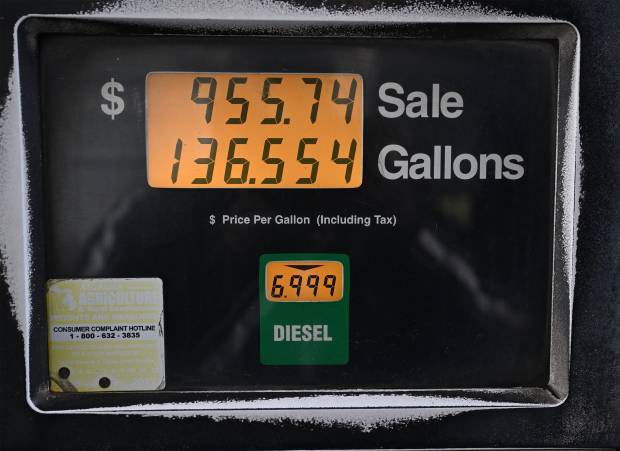
At the TravelCenters of America in Breezewood, Pennsylvania, truckers encounter essential amenities and, currently, a sharp rise in diesel fuel prices. This truck stop offers various products like hot dogs and jumbo bags of snacks. However, the focus lately shifted to diesel prices, now at $6.79 per gallon, an increase of 16 cents over two weeks. With nine diesel fueling lanes, the location sees frequent use by trucks, underscoring its importance in the supply chain.
Trucking is crucial to the consumer economy, with nearly 1 million rigs accessing the Pennsylvania Turnpike each year, carrying goods valued at $818.6 billion. While fleet-employed drivers benefit from fuel deals, independent operators feel the price surge acutely. Many truckers, such as Lewie Pugh from the Owner-Operators Independent Drivers Association, highlight that 52% of drivers own just one rig, making bulk fuel discounts unattainable.
Before tensions escalated in Iran, diesel prices in the Atlantic region were $4.10 per gallon. By October 26, the figure rose to $6.49, marking a 58% increase. Regular gasoline also saw a 44% rise. Pugh notes the drastic impact on truckers who average 100,000 miles annually, costing about $1 per mile—twice the 2024 average fuel expenditure for motor carriers.
“Nobody saw this fuel thing coming,” Pugh remarked. “It tightens finances for everyone.”
Approximately 350,000 to 400,000 owner-operators in the U.S. and Canada face these challenges. Ohio-based Chris Garner, for instance, felt the pinch while hauling frozen chicken. High diesel prices reduce his earnings and have a wider economic effect. Garner predicts prices may reach $8 per gallon, influenced by geopolitical tensions.
The extent to which consumers bear costs depends on how businesses handle rising expenses and freight contract terms. Garner shares his experience of adjusting to conserve diesel, driving slower to cut fuel use. Despite such efforts, breaking even remains challenging.
Fuel Surcharges and Financial Strain
Trucking contracts often include fuel surcharges, but these payments lag behind actual price hikes, adding strain. Recent efforts by the government to curb pump prices have had limited success, with the national average climbing to $6.35 per gallon by late October. Industry data from FreightWaves shows at least 16 carrier bankruptcies in a month, reflecting the pressure.
Owner-operator Xavier Crippen anticipates further diesel price increases, affecting his Amazon deliveries. To offset costs, he maximizes driving hours, despite regulatory limits. Crippen stresses the need for prices to fall to remain viable.
Michael Smith, transitioning to full-time RV towing after job loss, reports adjusting routes to save on fuel. The East-West diesel price gap complicates his business further.
Nearby, at the Flying J Travel Center, truckers continue grappling with rising costs. A year ago, a fill-up cost less, leaving operators like Junior Jen and Tyrone Davis under financial pressure. Davis noted a 40% drop in earnings since summer.
Grant Lee, on his way to Baltimore, echoes fears about sustainability. With diesel prices tripling and contract revenues lagging, he’s bracing for prolonged financial strain.
Leave a Reply