In 2007, the United States Holocaust Memorial Museum in Washington, D.C., received a photo album associated with Karl Höcker, a Nazi SS guard at Auschwitz from 1944 to 1945. This album offered a jarring glimpse into the lives of SS officers and their families, showing them enjoying leisure activities close to the site where countless Jews perished. Notably, prisoners were absent from these images, presenting a distorted view that ignored the horrifying reality happening nearby.
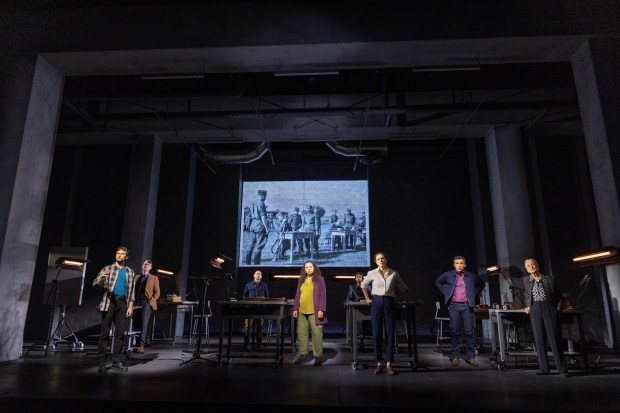
These photographs differ starkly from the usual portrayals of Nazi life. Instead of the aggression seen in films, they show scenes like Christmas parties and riverside relaxation, lending a disturbing normalcy to the lives of those involved. This stark contrast inspired the Broadway docudrama “Here There Are Blueberries” by Moisés Kaufman and Amanda Gronich. Over 90 minutes, it uses a small cast to explore the museum’s processing of this significant artifact, engaging with relatives of those pictured to decipher its implications.
The play stems from the Tectonic Theater Project, a New York group known for creating new shows through deep research and innovative approaches. This production challenges audiences, embedding its unsettling themes deeply in the mind. Recent advances in digital projection technology amplify the impact by rendering these historical images with striking clarity, allowing detailed facial expressions to convey the eerie juxtaposition of normalcy against the backdrop of atrocity.
A central theme of this performance is the exploration of human compartmentalization. How did these individuals reconcile seemingly ordinary lives with their involvement in mass murder? This question echoes themes from the 2023 film “The Zone of Interest,” which explores the life of Auschwitz commandant Rudolf Höss. Through the museum’s archivist, played by Delia Cunningham, and her boss, portrayed by Kathleen Chalfant, audiences witness a struggle to comprehend this moral dissonance.
Yet, the play delves deeper, suggesting these individuals, including young female assistants, were not merely passive participants. They were likely as ideologically committed as more infamous members of the Nazi regime. The realization dawns that many functionaries of Auschwitz avoided post-war justice. Characters like Tilman Taube and Peter Wirths underscore this; they reveal personal connections to these historical figures, making the legacy of such complicity disturbingly personal.
Ultimately, the play sheds light on the enormity of Auschwitz’s operation. It highlights the Holocaust Museum’s initial hesitation to focus on the album, given its policy prioritizing prisoner narratives. Yet, acknowledging the album’s relevance honors the victims’ memory and enhances historical understanding. A separate production will run at Northlight Theatre next April.
Leave a Reply