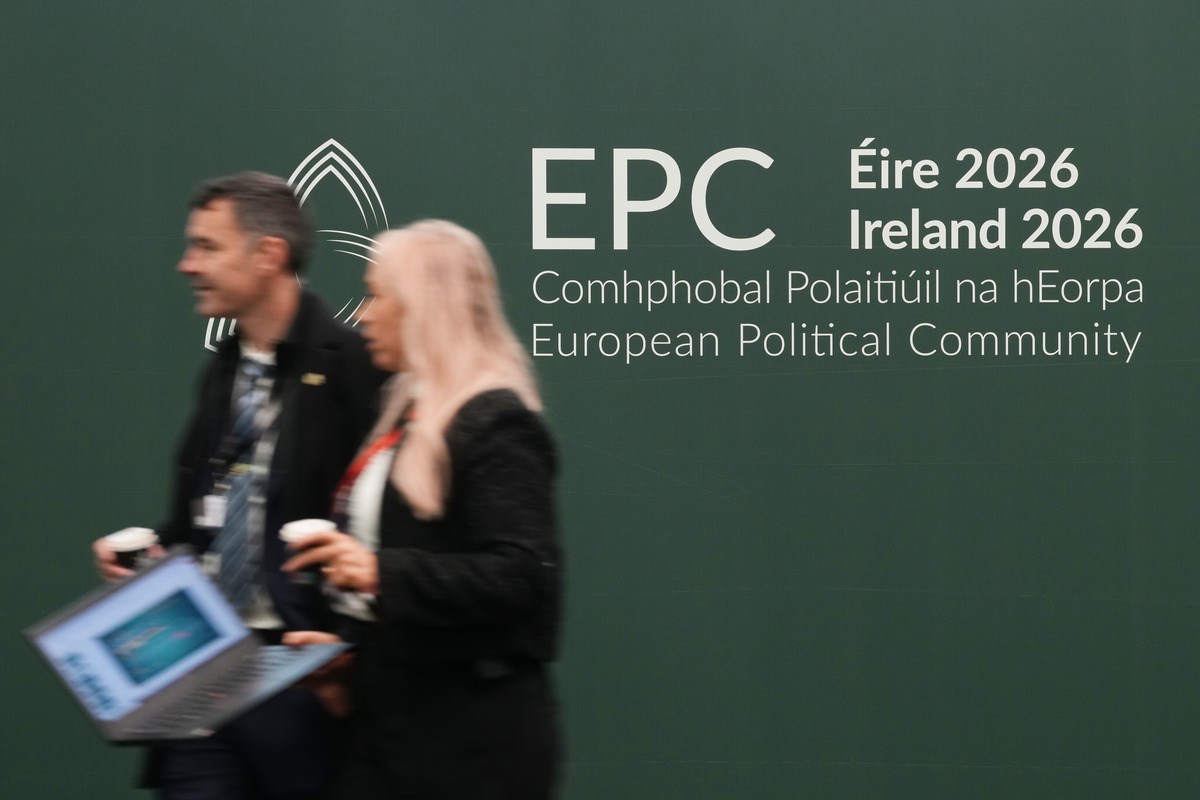
On Thursday, dozens of European leaders will convene in Ireland following a series of incidents labeled as hybrid attacks meant to destabilize the West. Forty-eight heads of state and government have been invited to the European Political Community (EPC) meeting, focusing on the theme of ‘securing and defending a democratic Europe.’ The EPC, established in 2022 at the encouragement of France and Germany, serves as a dialogue platform for countries inside and outside the 27-nation EU after Russia’s invasion of Ukraine.
On Friday, the European Council will hold a session described as more ‘informal.’ Key topics include potential peace deals for Ukraine as new negotiations led by the U.S. began this week in the UAE. Ukrainian President Volodymyr Zelensky arrived in Dublin on Wednesday, and U.S. representatives Steve Witkoff and Jared Kushner met Russian President Vladimir Putin on Thursday. U.S. and European officials warn of increasing hybrid attacks by Russia and Iran, placing the topic at the center of discussions.
Understanding Hybrid Warfare
Hybrid warfare involves activities below the threshold of open conflict, including cyberattacks, misinformation, and targeting infrastructure such as power grids. Examples include espionage and sabotage. Recently, European media outlets faced hoax bomb threats, part of a week with extensive bomb scares affecting flights across Europe. In addition, six countries reported cyber incidents involving supermarket refrigeration systems, and French authorities noted blood banks targeted by similar attacks.
European nations, especially those near Russia or on Ukrainian borders, are alert to drone and missile incursions. NATO sees these as Russian attempts to test alliance reactions and undermine support for Ukraine. While assigning blame for hybrid warfare remains challenging, European authorities are increasingly publicly identifying suspected perpetrators, including alleged Kremlin agents and Iranian operatives.
Strengthening Defense Coordination
The EU, primarily an economic and political union, does not focus on defense planning, leaving this to NATO, a military alliance. Many European countries are NATO members, although the UK and US are not part of the EU. NATO’s European commander, U.S. Air Force General Alexus Grynkewich, reported in September an increase in Russian hybrid activities. Denmark’s intelligence services warned of Moscow’s escalating cyberattacks and sabotage operations.
European Commission President Ursula von der Leyen highlighted the rise in hybrid threats, mentioning sabotage and cyberattacks. She urged for increased preparation and a ‘counter-hybrid playbook’ for the EU to respond to such attacks. Von der Leyen proposed a European Security Council similar to NATO’s Article 4 framework to enable discussions on national security matters within Europe.
EU’s Security Challenges
NATO’s eastern flank countries like Poland and the Baltics face a disproportionate number of Russian-linked hybrid incidents. Although these nations house 18% of the EU’s population, they experience 60% of such occurrences. All 27 EU members, along with Canada, Ukraine, and the UK, are invited to the summit in Dublin. Temporary road restrictions and increased police presence from Northern Ireland will support Irish authorities during the summit.
In the past months, incidents pointed towards Russian and Iranian involvement in cyber and sabotage operations. For instance, France held Iran accountable for cyberattacks causing disruptions in supermarket refrigeration, while Estonia blamed Russia for a sabotage fire at a drone supply facility in Tallinn. The German government accused Moscow of a drone attack on Leipzig airport, a hub for military aid.
Ukraine Peace Talks and European Unity
Friday’s informal meeting will also address Ukraine and current peace negotiations. While U.S. envoys converse with President Putin, concern grows over Europe being sidelined in peace talks possibly resulting in Ukraine making concessions. A recent backlash followed Finnish and Norwegian leaders’ discussions with Putin, revealing disunity among European countries. Danish Prime Minister Mette Frederiksen expressed skepticism over these interactions.
The EU’s inability to designate a negotiator with Russia remains an issue. Christoph Meyer, a European politics expert, notes that Europe often avoids risks and prefers maintaining existing strategies over adopting new, possibly more effective methods. This indecision hinders Europe from developing a cohesive approach to negotiating with Russia.
Leave a Reply