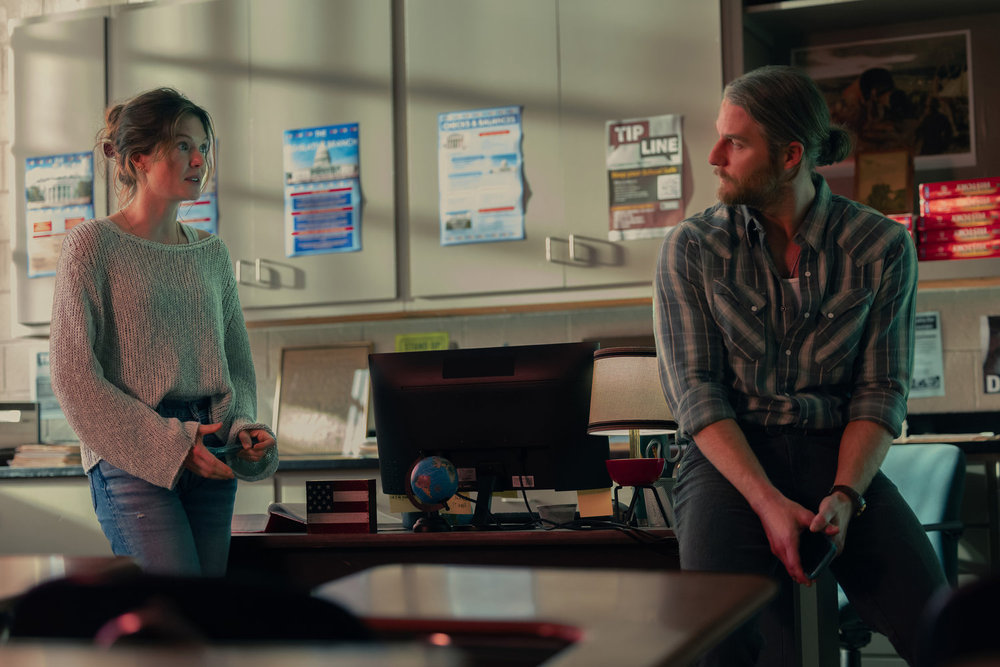
The Good Daughter concludes with Charlie Quinn, played by Meghann Fahy, fleeing from the farmhouse while Mason ‘Huck’ Huckabee, portrayed by Jake McDorman, aims to speak with both sisters for important matters. The tension mounts as Huck reminds Charlie of her father’s death and seeks an audience with her and Sam, her sister. This climax sets the tone for the finale of The Good Daughter, a six-part series adapted from Karin Slaughter’s 2017 novel.
Two decades earlier, the Quinn family faced a horrific event. Masked men invaded their home in Pikeville, Georgia, targeting Rusty, a defense attorney. They found his wife, Gamma, and their daughters instead. The attack resulted in Gamma’s death and left Sam injured. Charlie managed to escape, though not unscathed, as Zach Culpepper assaulted her. The police apprehended Zach, sending him to prison, while his brother, Daniel, was shot dead, though wrongly accused, as revealed in the finale.
As time passed, the sisters grew apart, but a school shooting incident reunites them. Sam, a patent lawyer in New York, returns to Pikeville when a local tragedy occurs. Kelly Wilson, a teenager with intellectual disabilities, is caught with the gun, and Rusty takes her case before his untimely death. The episode unfolds as Charlie reveals her assault by Zach to Sam, sparking a deeper understanding between the siblings.
The Unraveling Mystery
The finale, titled “What Really Happened,” unveils the truth behind both past and present crimes. The story aligns with Slaughter’s novel, with unique deviations in character outcomes. The series’ arc emphasizes justice and hope, universal themes in Slaughter’s work, as the sisters confront their painful past.
Sam plants a seed of accusation towards Huck, suspecting his role in arson years ago. Huck’s hidden involvement in the Quinn’s trauma surfaces. The revelation unfolds as a confrontation where Huck confesses to planning Rusty’s murder, yet his partner killed Gamma and assaulted Charlie. Huck’s remorse over past actions complicates his character, as he reveals the planned attack that went awry with unexpected casualties. His confession explains his decades-long atonement journey, though its sincerity remains questionable to viewers and characters alike.
Exploring Justice
The narrative explores the complex theme of justice. Rusty’s role becomes pivotal when Huck discloses his knowledge of the attackers’ identities and his choice to protect his daughters from reliving trauma during legal battles. This decision illustrates Rusty’s protective instincts and the burden of keeping silence over his daughters’ secrets. Charlie’s disclosure of her assault represents a significant plot point, finally addressing deeply buried trauma.
The Culmination of Secrets
Judith Pinkman’s involvement in the school shooting surfaces through Charlie’s sleuthing. Judith confesses to manipulating Kelly and facilitating the shooting. She reveals her husband’s statutory rape of Kelly and her role in the crime, driven by anger and betrayal. Judith’s actions contrast with the sisters’ pursuit of justice, underscoring themes of moral complexity and personal accountability.
Judith’s suicide seals her narrative. In contrast, Sam negotiates a plea deal for Kelly, reflecting echoes of real-world cases. Kelly’s vulnerability and the justice system’s failures provide a poignant commentary on issues of fairness and responsibility.
A Familial Resolution
The final scenes focus on familial reconciliation. Charlie and Sam discover a photograph left strategically by Rusty, which symbolizes their reunification and shared history. The shared experience heals their fractured relationship, as they process the revelations together.
The episode closes with the sisters side by side, transcending past divisions and embracing a united future, rooted in truth and understanding.
Leave a Reply