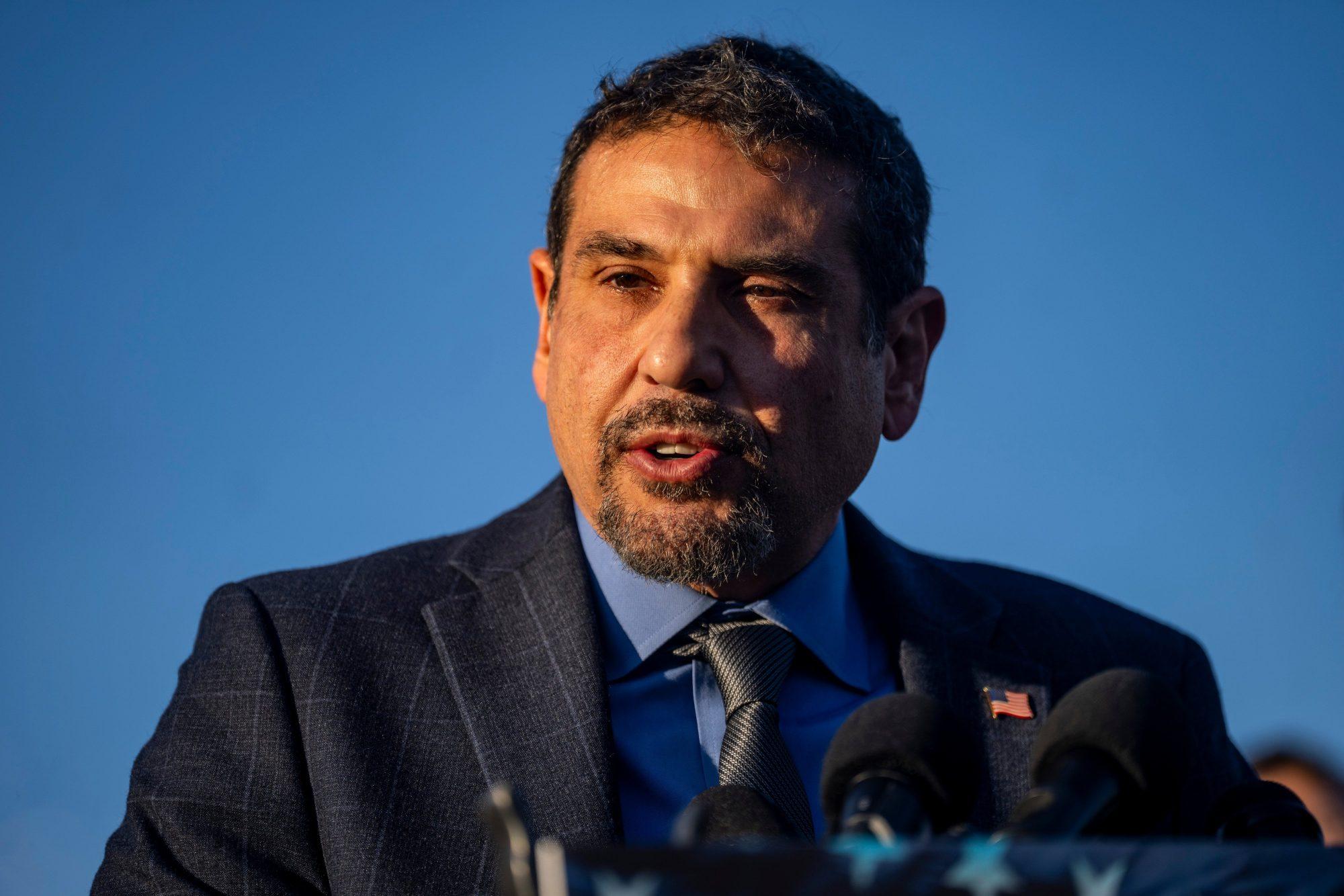
Rep.-elect Adam Hamawy from New Jersey, a member of the Democratic Party, recently sparked controversy with his views on Iran. At a news conference held at the US Capitol, he refrained from labeling Iran as an adversary, suggesting instead that tensions were provoked by the United States. His comments on CNN drew attention when he equated the hostile statements between the two nations, a stance not commonly expressed by an American Congressman.
This incident raises concerns about the Democratic Party’s internal dynamics. The party faces questions about why figures like Hamawy, whose perspectives diverge from traditional party lines, are not challenged more rigorously. There appears to be hesitancy within the party to confront controversial issues, as seen in the reluctance to address Hamawy’s past associations openly.
The influence of the Democratic Socialists of America (DSA) and other progressive activists within the party has grown significantly. These groups have not concealed their dissatisfaction with the current party leadership and seek to replace it with candidates who align with their ideology. This shift has implications for the party’s strategy and cohesion.
The Washington Free Beacon’s Jon Levine highlighted Hamawy’s controversial background. Despite several reports on Hamawy’s alleged involvement with Islamic terrorism, they were largely ignored by his primary opponents, who feared accusations of Islamophobia.
During New Jersey’s June primary, Hamawy faced little opposition from party leaders, even as serious questions about his past warranted closer examination. Despite his limited support, Hamawy secured the nomination in a crowded primary field, indicating a lack of unity among his opponents.
DSA-backed candidates benefit from substantial organizational and financial support, evidenced by the influx of about $1.8 million into Hamawy’s campaign. This support builds a formidable grassroots presence, overshadowing lesser-funded opponents. The Democratic establishment appears unprepared for this strategic shift.
Similar patterns emerge in other states. In Michigan, millions were spent by the Senate Majority PAC supporting DSA-aligned candidate Abdul El-Sayed. His subsequent call for new leadership highlights an emerging challenge: candidates supported by the establishment may pursue agendas counter to their backers’ intentions.
Democratic leaders now confront internal unrest. They invest substantial resources in candidates unconcerned with maintaining the status quo. The Democratic Socialists remain transparent in their objectives, yet the traditional Democratic establishment struggles to adjust.
Leave a Reply