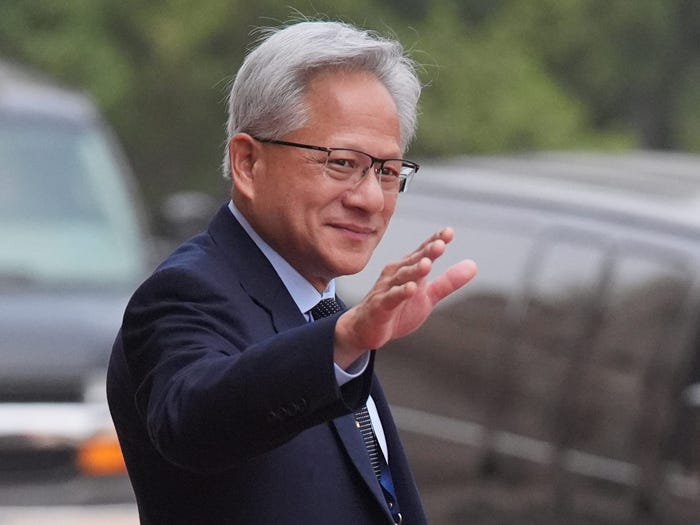
Jensen Huang’s leadership model at Nvidia, characterized by a flat structure, kept information flowing efficiently and allowed quick decision-making. However, his sudden resignation amid a scandal puts this model under scrutiny.
Huang co-founded Nvidia in the early 1990s and managed a sizable team under a deliberately flat structure. This system enabled fluid information sharing and empowered employees. Yet, experts point out that such a setup can lead to succession issues. According to David Astorino, a senior partner at RHR International, having a thin succession bench is common in companies with a lean hierarchy.
Nvidia has not disclosed a detailed succession plan. The appointment of Colette Kress as interim CEO indicates a lack of a clear successor. This scenario underscores the risks of concentrating too much power in a single individual, particularly in companies central to industries like AI, where Nvidia holds a significant position.
Astorino highlighted the ‘key-person risk’ resulting from Huang’s dominant role, emphasizing the importance of preparing for leadership changes.
Consulting firm ZRG’s Dan Kaplan adds that founders, often conditioned to dismiss skepticism after years of hearing rejections, may struggle to plan for the future without them. This organizational challenge is accentuated in companies where founders’ identities intertwine with the company’s identity.
Bradley Akubuiro from Bully Pulpit International suggests that boards can mitigate such risks by involving independent directors or lead directors who prioritize ongoing succession planning. This approach ensures continuity irrespective of a sudden CEO departure.
Executive search expert Umesh Ramakrishnan explains that naming a successor prematurely can disrupt existing dynamics, turning the current CEO into a ‘lame duck’ and leading to potential internal conflicts.
Lior Prosor, from the venture fund Deep33, believes Nvidia’s long-standing reputation as a stable organization could face challenges. The current leadership crisis might offer competitors opportunities to attract Nvidia’s talent, especially as staff reassess their equity values amidst stock fluctuations.
Alexander Kirss from Gartner emphasizes that no employee, including a CEO, is irreplaceable. Nvidia’s situation offers critical insights for companies with flat organizational structures.
Leave a Reply