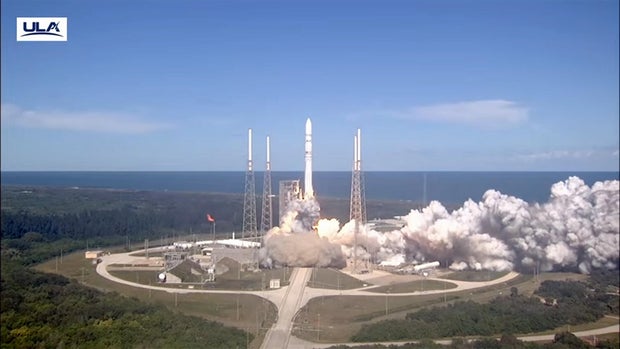
The United Launch Alliance (ULA) faced a significant setback when its new Vulcan rocket, carrying 40 Amazon Leo internet satellites, malfunctioned on Sunday during ascent. This failure disrupted both companies’ launch schedules.
ULA stated that approximately 10 minutes into the flight from Space Launch Complex 41 at Cape Canaveral, the Vulcan experienced an anomaly and failed to reach orbit. Both companies will collaborate to identify the problem and return to flight soon.
The Vulcan rocket had successfully launched from pad 41 with the 40 Amazon Leo satellites, being the first of 38 planned Vulcan flights for Amazon’s mission. However, after 10 minutes post-liftoff, the payload was declared lost. No further details were yet available.
This event marked ULA’s first rocket failure since its formation by Boeing and Lockheed Martin in 2006. Current investigations will determine what went wrong with the Vulcan, which replaced the Atlas 5 rockets. The failed mission was only the Vulcan’s fifth flight.
Issues faced during Sunday’s launch include problems with the nozzle of the BE-4 engines. It seemed these engines, used in the first stage, fired longer than expected, disrupting the timeline. Problems were detected post-stage separation when Centaur did not perform as planned.
The mission was meant to boost Amazon’s satellite constellation, set to compete with Elon Musk’s Starlink and others. ULA had plans for multiple launches using Vulcan, supplemented by launches aboard Blue Origin’s New Glenn and SpaceX’s Falcon 9. Sunday’s mission was crucial for Amazon’s Leo network expansion.
No additional details have been revealed about the Centaur stage issue. ULA emphasized transparency with its clients and committed to thorough investigations. NASA’s Jared Isaacman offered support, reassuring the public of continued efforts to resolve the problem.
ULA’s Vulcan, 214 feet tall, launched from Cape Canaveral powered by 3.8 million pounds of thrust. The launch encountered delays due to technical issues with support plants. Controllers even halted the countdown due to an unexplained glitch on Sunday.
Previous ULA efforts had focused on rectifying nozzle issues from two earlier flights. Despite resolving many challenges, Sunday’s mission highlighted areas that need improvement. ULA’s CEO Mark Peller noted Blue Origin’s steps to fix previous engine defects for future missions.
Sunday’s unfortunate failure raises questions needing resolution before ULA can proceed with future Vulcan launches.
Leave a Reply