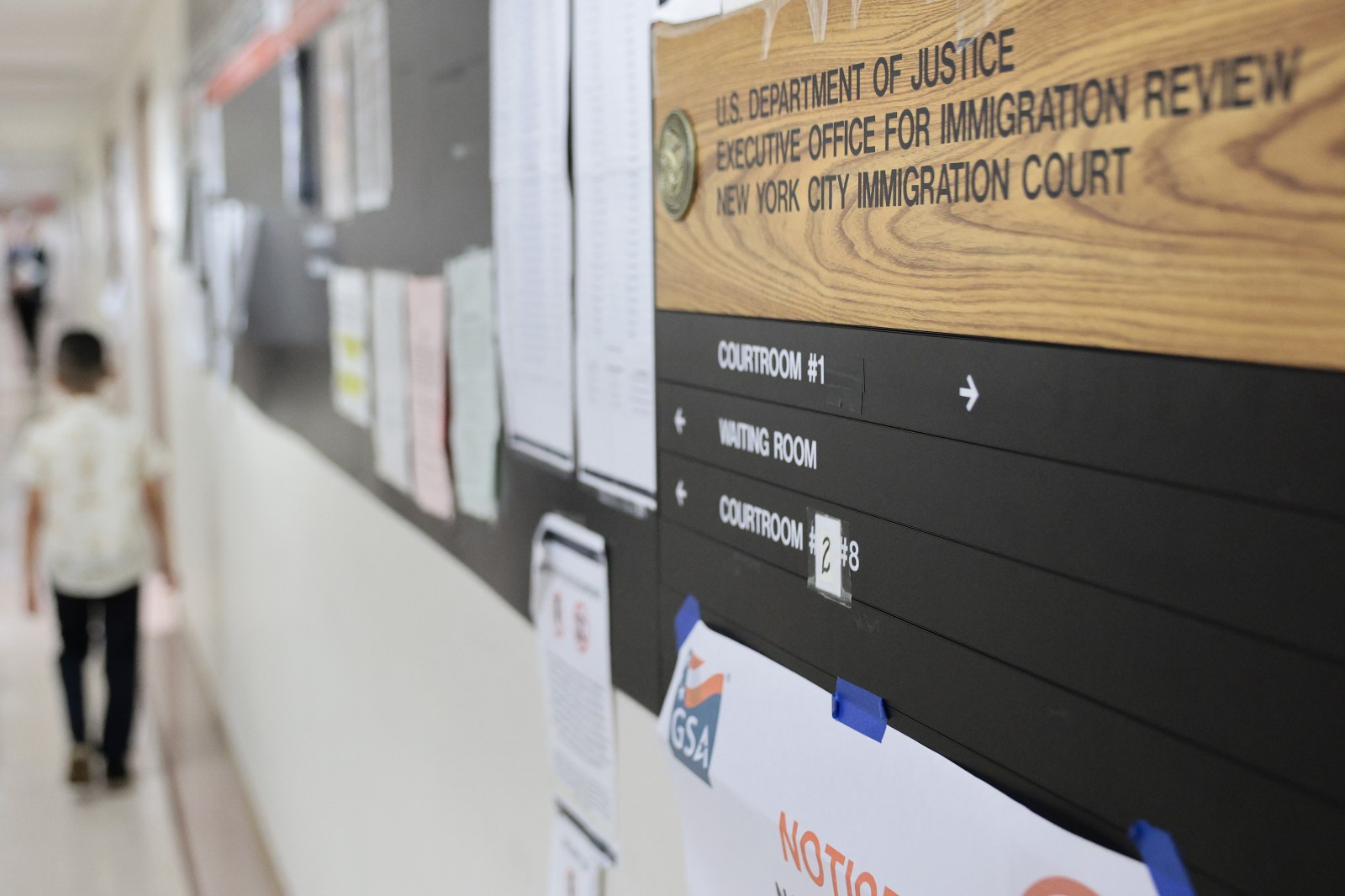
Immigrants at risk of deportation will soon have a reduced window to appeal many immigration court decisions. The Trump administration introduces a rule that revives a change previously blocked by a federal judge. The Department of Justice (DOJ) is set to publish this rule in the Federal Register. The rule reduces the normal appeal period from 30 days to 10 days. Other restrictions on appeals before the Board of Immigration Appeals (BIA) are also reinstated, aimed at speeding up a system overwhelmed by a growing backlog.
Earlier attempts in February faced legal challenges, leading to partial setbacks by a federal judge. After a notice and comment period, DOJ now returns with its final rule.
This rule is part of the Trump Administration’s strategy to offer a facade of due process. Jill Family, a professor at Widener University Commonwealth Law School, remarked to Newsweek that these procedures don’t provide meaningful review of immigration judge decisions. More resources and procedural innovation are needed to tackle the backlog, but maintaining and improving the process is crucial. The administration views the long line as a reason to eliminate the service.
The increase in immigration court hearings, partially due to a rise in detentions by ICE for suspected illegal status, adds to the backlog. Moreover, the system struggles with the sweeping dismissals of longtime immigration judges who have gradually been replaced.
Newsweek reached out to the DOJ and the Amica Center for Immigrant Rights, which previously challenged the policy, for further comments.
What is Changing for Immigration Appeals?
The BIA, the highest administrative body for immigration law under the DOJ, handles many cases appealed from immigration judges’ removal decisions.
The new Federal Register filing shortens the appeal window for many cases, dropping from 30 to 10 days. Appellants need to specify the issues in their Notice of Appeal. Some asylum cases retain the 30-day window.
The updated system increases summary dismissals. An immigration judge’s decision becomes the final government decision unless the BIA majority vote accepts the case.
The DOJ attributes this change to a spike in backlog. In Fiscal Year 2017, the BIA managed 35,837 pending cases. By Fiscal Year 2026, this rose nearly ninefold to 325,774 cases.
Why Was the 10-Day Deadline Blocked?
In February, the DOJ issued an interim rule laying out the new proposal. Legal challenges emerged, leading the U.S. District Court for the District of Columbia to examine the issue. Plaintiffs argued that the deadline severely restricted meaningful BIA reviews.
The lawsuit addressed claims under the Administrative Procedure Act, the Immigration and Nationality Act, and the Constitution. Judge Randolph D. Moss, on March 8, set aside parts of the rule. The DOJ advised immigration judges that the 10-day deadline was set aside, restoring a 30-day deadline.
Moss’s ruling focused on procedural implementation, noting the DOJ bypassed notice-and-comment requirements for substantive policy changes.
Does a 10-Day Deadline Violate Due Process?
The reinstated deadline renews debate on constitutional process requirements before deportation.
The DOJ maintains that noncitizens deserve due process in removal proceedings, but the Constitution doesn’t guarantee a BIA administrative appeal. The key issue is whether the conditions imposed prevent effective use of the appeal process.
Under the 10-day framework, a deportee must quickly obtain the judge’s decision, find legal counsel, understand the issues, and prepare an appeal notice. This can be challenging, especially when in ICE custody or without English proficiency.
Organizations against the rule argue it disproportionately affects the detained, unrepresented, disabled, children, or those speaking less-common languages.
Emilie Raber, Senior Attorney at the Amica Center for Immigrant Rights, criticized the BIA Interim Final Rule, stating that it undermines due process and disadvantages those in immigration or federal appellate courts.
In 1994, the Ninth Circuit Court of Appeals reviewed a 20-day appeal deadline in Gonzales-Julio v. INS, relevant to the current 10-day rule. In that case, a 10-day deadline was deemed unconstitutional under certain circumstances. The DOJ claims that technology addresses past challenges, with documents now electronically filed at any time.
What Happens Next?
The DOJ will publish the plan on November 17, with the rule effective 30 days later, affecting new cases. Pending cases won’t face the shorter appeal deadline.
The DOJ anticipates further legal challenges due to concerns about due process, legal access, and case reviews.
Although BIA is the highest immigration tribunal, dismissed cases can advance to a federal court for further review.
Leave a Reply