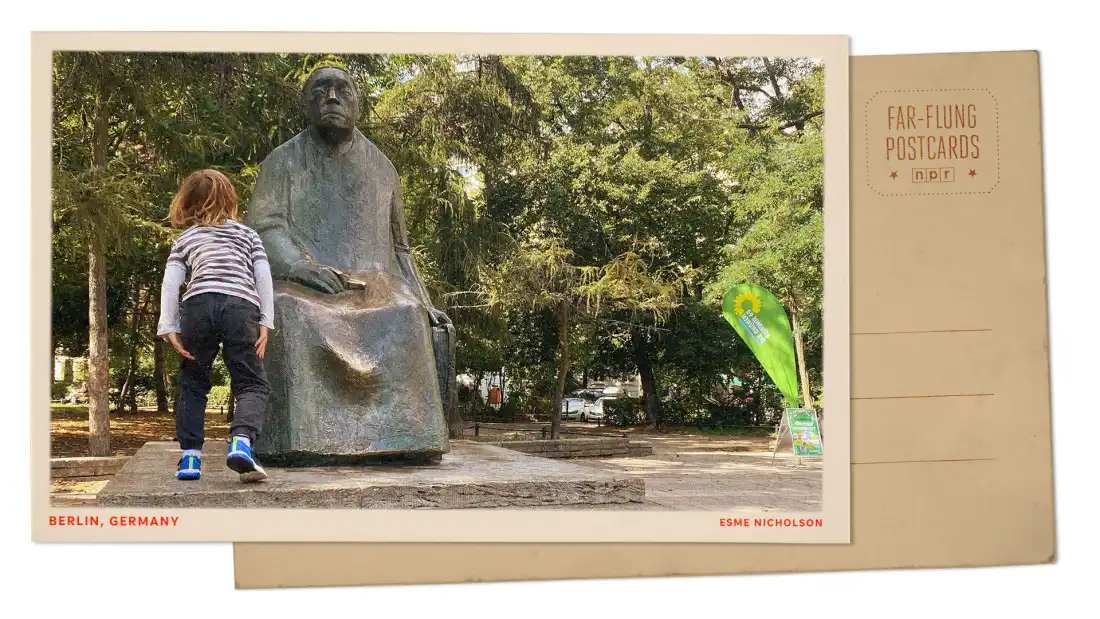
Children play energetically around the calm and vigilant Käthe Kollwitz statue, cast in bronze. Located in a Berlin square named after the German artist, the statue stands as a tribute to her work, which often captured the lives of children affected by World War I.
If you were here, you would hear children shouting joyfully as they enjoy the swings and slides. They all play under the gaze of the Kollwitz bronze statue. The expressionist artist, Kollwitz, once lived near this very square, which is named Kollwitzplatz in her honor. It’s quite possible her own children played here decades ago.
In the aftermath of World War I, Kollwitz’s lithographs, woodcuts, and sculptures focused on the despair and tragedy of conflict. Her works frequently show malnourished, wide-eyed children sheltered by mothers whose sorrow is deeply etched into their expressions. Her piece, ‘The Grieving Parents’, is prominently placed in Belgium, marking the spot where her son Peter died at age 18 during the war.
As I momentarily turn from the playground to photograph the Kollwitz statue, a boy energetically leaps into the scene. He climbs onto the statue’s base, hiding behind it during a game of hide and seek. His friend quickly discovers him. They run around the statue, inadvertently mirroring the embrace Kollwitz depicted in her artworks.
The presence of the Kollwitz statue is serene. She sits, charcoal in hand, ready to sketch the joyful chaos of children growing up in a secure city. Yet, with conflicts nearby and Germany reinstating military service for the next generation, it stirs a desire within me to protect my own child, much like Kollwitz portrayed in her art.
Please note: NPR does not engage in financial transactions for news coverage or interviews. Any such offer is not from an NPR representative.
Leave a Reply