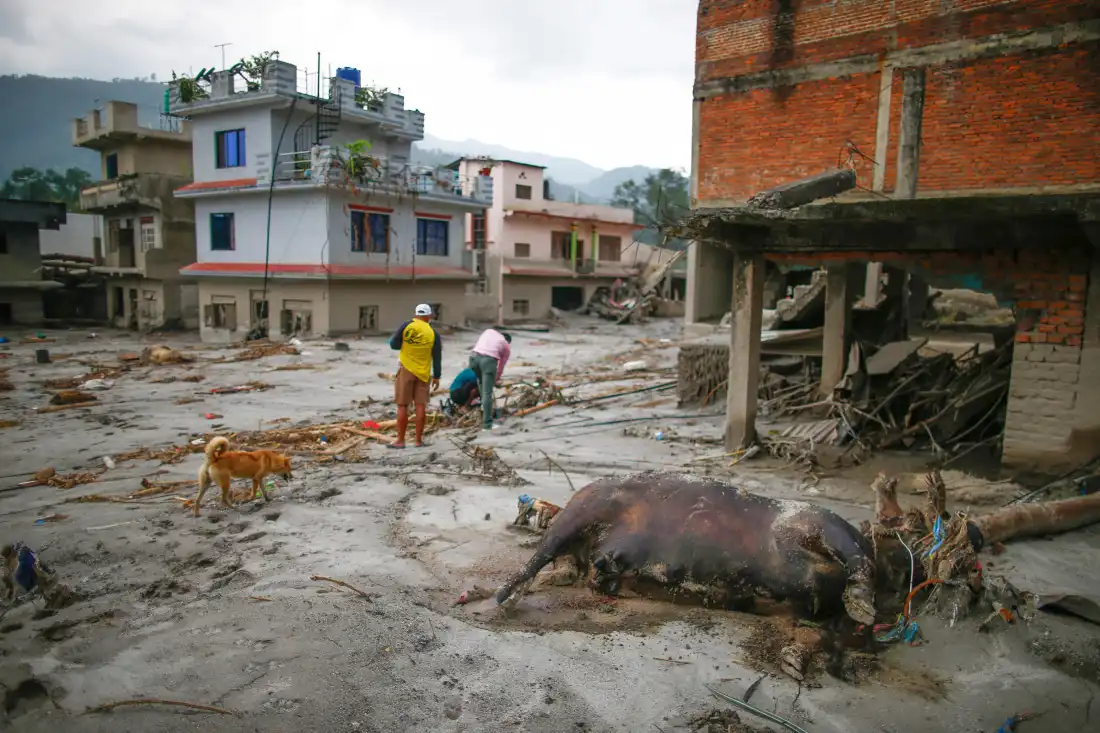
In the Nuwakot district of Nepal, the aftermath of devastating flash floods and mudslides is apparent as residents work to reclaim their lives. This disaster, set off by a glacial collapse and extensive debris flow along the Trishuli River, resulted in hundreds of fatalities and many missing persons.
Januka Dhital remembers how close she came to not surviving. Moments before the disaster, she prepared snacks in her home in Uttargaya, Nepal. A man on a scooter warned her of the impending flood. As darkness and debris approached, she acted quickly, saving her young son by hopping onto the man’s scooter to reach higher ground. Reuniting with her husband and daughter hours later brought relief, despite her husband’s severe injuries.
“It felt unbelievable,” Dhital reflected on her family’s survival amidst the destruction. The flood not only wiped out her home but also disrupted the lives of over 100,000 people. At least 1,500 have died, and 5,000 remain missing. Thousands are now in temporary shelters, hoping for stability.
The magnitude of devastation is unimaginable.
Shyam Pathak, from UNICEF, notes the overwhelming damage: schools, health centers, and infrastructure have been severely affected. With the United Nations reporting significant damage to essential services, including water systems and toilets, the impact on health and safety is critical.
Januka Dhital, once focused on her catering business, now dedicates time to aid work. She collaborates with Helen Keller Intl to support her community. Her work involves providing support for postpartum mothers, pregnant women, and children. Increasing malnutrition, exacerbated by the loss of local agriculture, poses immediate health risks.
Many survivors like Dhital are involved in rebuilding while managing personal loss. Pooja Pandey Rana from Helen Keller identifies a spike in malnutrition in regions like Naukunda Gaunpalika. The reliance on packaged foods due to lost farms and gardens further complicates nutrition.
The impacted regions face challenges in receiving support. Over 100 crucial bridges are destroyed, isolating many villages. Aid workers, including Pushmaya Tamang, navigate these damaged connections to deliver help. The loss of infrastructure highlights the broader devastation experienced by Tamang, who grieves the loss of her sister.
Mental health support becomes essential as families cope with unimaginable grief. Many health workers, despite personal losses, are key to the relief efforts, offering much-needed counseling and assistance.
As winter nears, the urgency for adequate shelter intensifies. Temporary living conditions and cold weather present new health risks. Efforts to winterize shelters and ensure adequate protection must accelerate. Ayush Joshi from Save the Children underscores the tough conditions in these regions during colder months.
The path to recovery includes rebuilding infrastructure, schools, and homes—a daunting and costly task estimated at $5 billion. Though international aid has begun, the funding gap remains vast. Immediate assistance prioritizes critical needs like food, medical care, and safe shelters.
For workers like Tamang, commitment to daily tasks helps them endure the sorrow. Rebuilding lives and communities is a formidable journey; accepting nature’s challenges is a necessity. Continuous support from global communities remains crucial in facilitating recovery in Nepal.
Leave a Reply