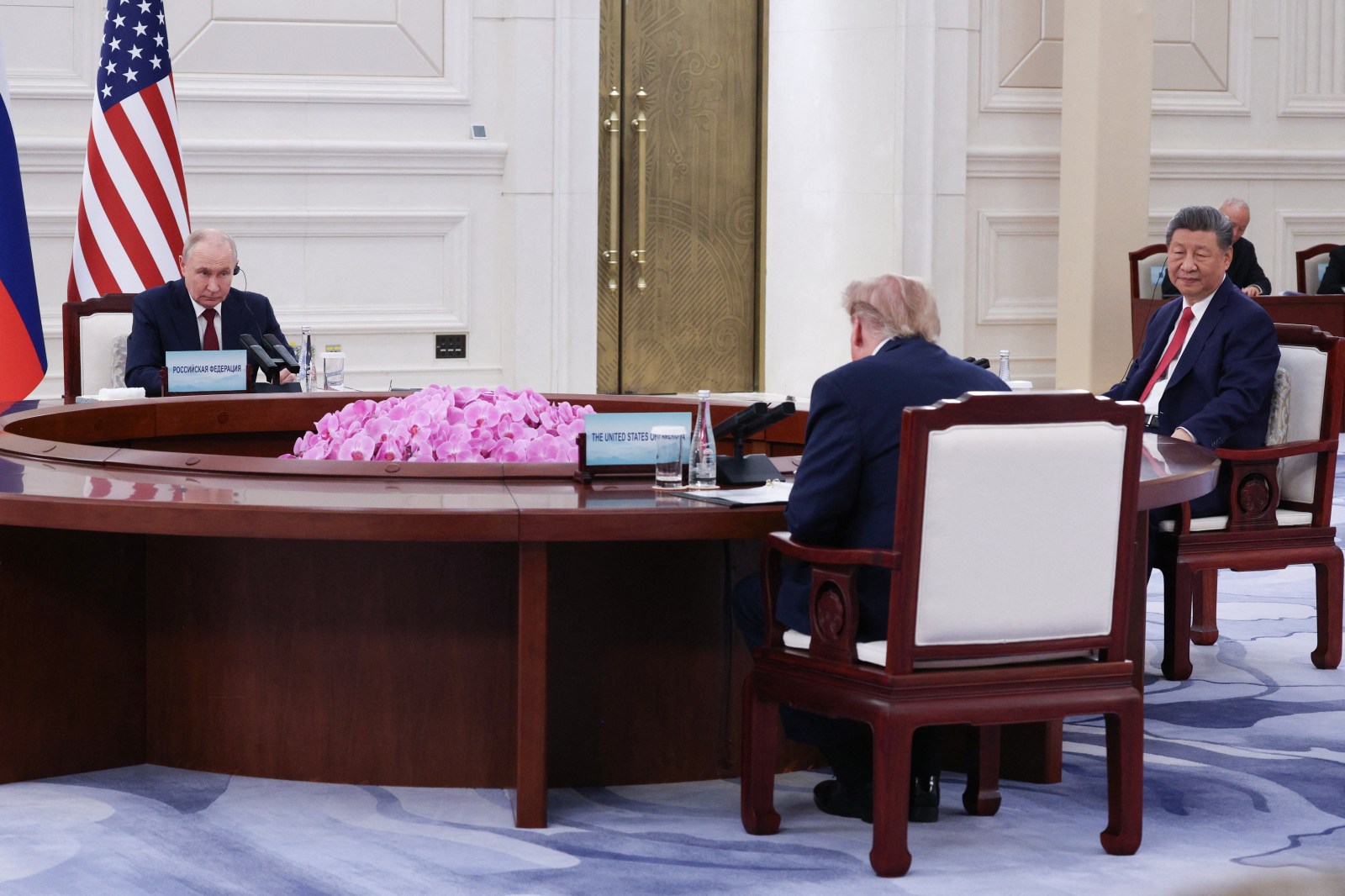
The trilateral meeting involving Donald Trump, Xi Jinping, and Vladimir Putin at the APEC summit in Shenzhen, China garnered significant global attention. Their joint statement focused on several global issues such as nuclear threats, UN reform, and energy supplies during the ongoing energy crisis. Notably absent from the discussion was the Ukraine War, a contentious topic given the International Criminal Court’s arrest warrant for Putin.
Key Outcomes
The meeting at Kylin Villa extended to 90 minutes, longer than initially planned. Russia and China’s joint statement emphasized their roles as permanent UN Security Council members. They pledged to uphold energy flow stability amid rising global energy prices influenced by the Iran War. The statement reiterated the importance of nuclear non-proliferation, stating that a nuclear war cannot be won and must not be fought. It also criticized the ICC, citing concerns over jurisdictional overreach.
China’s Position
China emerged from the summit asserting its growing influence in global affairs. By hosting the event, Beijing highlighted its diplomatic clout. The meeting avoided a trilateral nuclear negotiation that China considers disadvantageous. This stance allowed China to maintain favorable ties with European nations, avoiding any commitment on the Ukraine War. William Yang from the International Crisis Group noted China’s confidence in its standing compared to the U.S. and Russia.
Putin’s Gains
Russia’s participation broke a period of diplomatic isolation. Putin benefited from the ICC criticism and Trump’s comments about the court’s overreach, which aligned with Russia’s stance. Putin expressed satisfaction with the meeting, indicating it exceeded expectations.
Implications for Ukraine and Europe
The omission of any resolution or discussion on the Ukraine War was notable. Trump’s engagement with the issue earlier did not reflect in the statement by Russia and China. The summit parallels the 1945 Yalta Conference in its implications for global power dynamics, yet without direct outcomes. Europe’s sidelining and Russia’s resistance to European negotiations were implicitly endorsed by these discussions, leaving European leaders, including Polish Prime Minister Donald Tusk, uneasy.
Criticism of the ICC
The ICC was a focal point of criticism from Trump and in the joint statement. Trump’s characterization of the ICC as “out of control” resonated with Putin, who faces an arrest warrant from the court. This criticism aligns with supporting Putin against war crime allegations.
Dialogue on Nuclear Weapons
Pre-meeting statements by Trump indicated a focus on negotiating nuclear arms control involving China. While the New START treaty expired, Trump’s objective to include China, which is expected to expand its arsenal, marks a significant agenda. Daryl G. Kimball of the Arms Control Association viewed the dialogue as positive, yet emphasized the need for concrete proposals to cap and reduce nuclear arsenals for substantive progress.
Leave a Reply