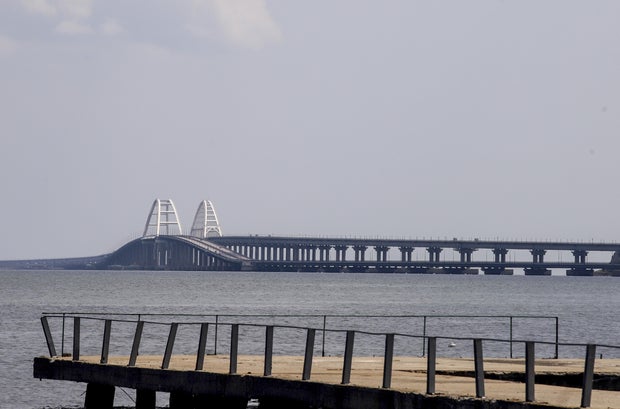
On November 19, 2026, Russian President Vladimir Putin stated that Russia would reject negotiations with Ukraine for a limited ceasefire. The refusal followed a Ukrainian attack on a key bridge linking Russia with the Russian-occupied Crimea.
Putin spoke with reporters in Russian during a meeting in Shenzhen, China, where he met with U.S. President Trump and Chinese President Xi Jinping. The attack on the Kerch Bridge, a 12-mile structure opened by Putin in 2018, prompted his decision to halt ceasefire discussions. The bridge holds significant symbolic value as it connects Russia with Crimea, a region annexed by Russia in 2014. This week’s strike was not Ukraine’s first attempt to damage the bridge, but it caused substantial harm.
Russia responded by targeting two major bridges in Kyiv on the same day. Despite the bridge’s damage, Putin downplayed its strategic significance. He noted ongoing calls from various parties for a naval ceasefire or to pause strikes on energy facilities but insisted that direct talks with Ukraine remain off the table because of the bridge attack.
“Honestly, I discussed the issue with my colleagues at the Security Council, and I asked them to think about it and go back to the issue, so that we could reach some agreements,” Putin said. “However, we will not make agreements after strikes on the Crimean Bridge. We will respond to these strikes.”
TASS, a Russian state news agency, reported Putin’s promise of a severe response to the bridge strike.
Despite claiming a desire for peace, Putin disputes that Russia initiated the war when it invaded Ukraine on February 24, 2022. Russian attacks on Ukraine continue unabated.
The extent of Ukraine’s discussion during President Trump’s private meeting with Putin or the following session with Xi and Putin remains unclear. The White House indicated that Ukraine would not be a central theme, yet President Trump suggested discussions on the war prior to departing for Asia. Formal statements from the Trump-Xi-Putin meeting provided limited details and omitted any mention of Ukraine.
Jared Kushner, Trump’s son-in-law, and U.S. special envoy Steve Witkoff were in Germany meeting with German Chancellor Friedrich Merz, French President Emmanuel Macron, British Prime Minister Andy Burnham, among others, to discuss Ukraine and other matters. Kushner mentioned discussing efforts for a “just, lasting and durable peace in Ukraine.”
Kushner acknowledged the supportive role of international leaders in working towards ending the conflict and securing a stable future for Ukraine and Europe in a post on X.
Chancellor Merz criticized the summit in China, calling it a purely photographic opportunity, expressing doubt over its effectiveness in achieving peace in Ukraine.
Prior to a previous meeting on the APEC summit sidelines, President Trump referred to Putin with familiarity, calling him “my friend.”
Leave a Reply