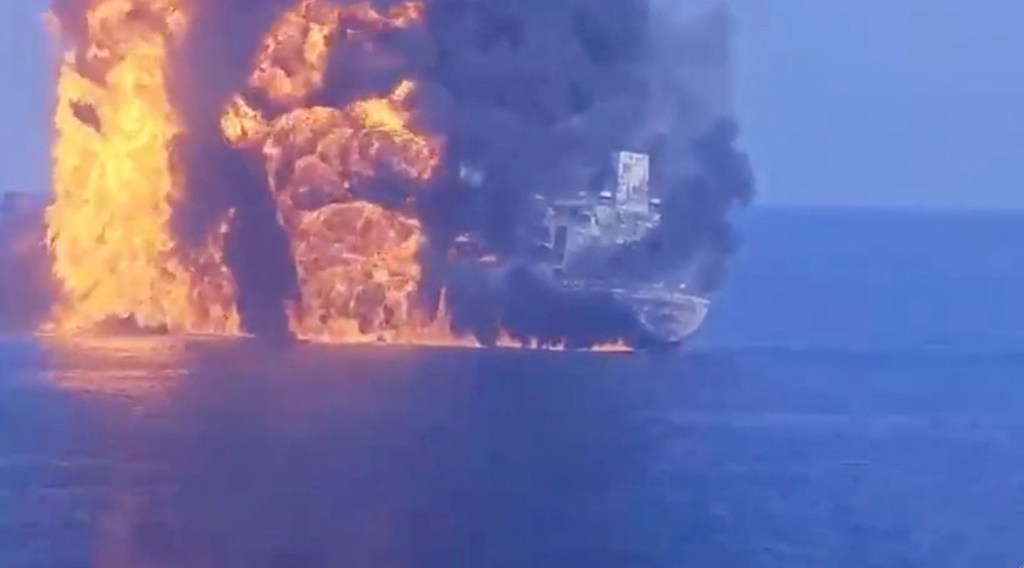
Recent reports indicate that Iran is intensifying its actions in the Middle East. The aim is to reestablish control over the Strait of Hormuz and pressure the US towards resolving the ongoing conflict. Approximately 8 million barrels of oil continue to transit the strait daily under US naval protection. In response, Iran has increased its attacks on tankers to halt this flow.
The United Kingdom Maritime Trade Operations confirmed at least six attacks in the past week. Iran has claimed even more, reaching levels of aggression not seen since the war’s onset. A recent strike on Tuesday set a tanker ablaze, with Reuters documenting the event. Iranian forces have issued warnings to ships against crossing the strait without their consent.
Tehran has repeatedly affirmed that it will not tolerate disruptions to its oil control. According to Vortexa maritime firm, Iran specifically targets the busiest tankers making risky trips through the strait. Additionally, Iran has attacked US bases in Bahrain and Kuwait, marking a significant escalation in hostilities.
While former President Trump has indicated a willingness to maintain the status quo, applying economic pressure on Iran, the Islamic Republic seems unwilling to wait. The International Crisis Group’s senior Iran analyst, Hamidreza Azizi, discussed the differing calculations of both sides regarding the prolonged confrontation’s costs. Iran’s Supreme Leader, Mojtaba Khamenei, who remains unaccounted for, has instructed officials to resolve the standoff with the US.
As pressure intensifies, Iran might become more inclined to take military risks to overcome the deadlock. Iranian negotiator Mohammad Bagher Ghalibaf echoed this sentiment, warning US lawmakers in a parliamentary speech of the leader’s directive to end the current impasse. Ghalibaf stated, “We will not remain in a state of ‘neither war nor peace.’ It makes absolutely no difference to us whether the United States wants negotiations or war.”
The recent attacks also serve to demonstrate to the US and its allies that Iran has restored its missile and drone capabilities, readying for potential escalation. Kristin Coates Ulrichsen, a Middle East expert at Rice University’s Baker Institute, explained to the Wall Street Journal the significance of Iran’s actions as signals of both capability and intent.
Ulrichsen further noted that the strikes against Kuwait and Bahrain highlight the vulnerability of US partners in the Gulf, reminding them of potential repercussions for US actions in the Strait of Hormuz. As the US bolsters its regional military presence, these attacks underscore Iran’s strategic capabilities on the escalation ladder.
Leave a Reply