The Anoka-Hennepin school board’s stalemate has left social studies teachers in a bind as they approach the new school year without clear guidance on implementing new state standards. These standards take effect this fall in Minnesota’s largest school district.
This situation is the result of ongoing disagreements on the board regarding ethnic studies requirements. The district’s teachers, administrators, and community members have been preparing for the revised standards for years. However, the divided board is facing another clash over curriculum choices following a tight 3-3 vote. This vote stalled attempts to pilot new materials for elementary social studies, eighth-grade global studies, and several high school courses, including civics, human geography, U.S. history, government, and economics.
“Right now, teachers lack direction for the upcoming fall,” stated John Wolhaupter, president of the Anoka-Hennepin teachers union.
The dispute forms part of a long-standing pattern of curriculum conflicts within this north metro school district. Previous disputes over social studies, psychology, and science curriculums have drawn criticism from educators and union reps. They contend that some board members are micromanaging classroom decisions. Conservative members assert they are providing necessary oversight aligned with community concerns.
Years of planning back the latest curriculum proposals, according to district leaders. Union leaders emphasize that the development process was elongated and adjusted to address board input.
A committee started meeting in 2022 to strategize the district’s approach to Minnesota’s updated standards. It included two board members, one still active, in its discussions. District officials organized a vendor fair for educators to assess instructional materials and hosted a community night enabling parents and residents to review curriculum proposals and leave feedback.
By June 2024, teachers had the go-ahead to draft a pilot curriculum with intentions to fine-tune it before testing in classrooms. However, progress halted.
“Everything went on hold,” explained Dave Evensen, a teacher at Champlin Park High School. “We’ve been paused since then.”
Teachers sought clarity on board member objections but only learned what is shared at board meetings.
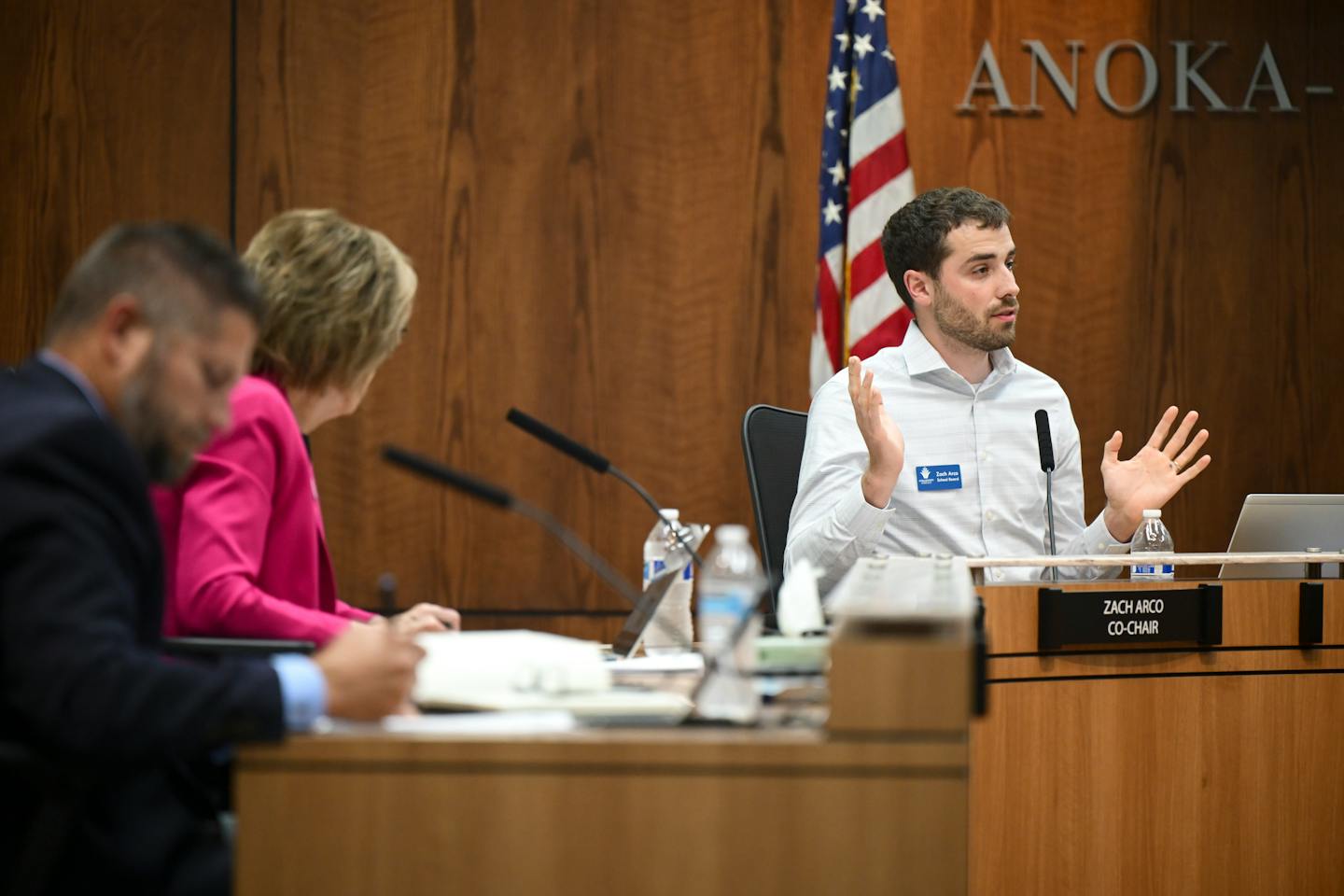
Board Member Zach Arco advised minimal compliance with new standards, especially ethnic studies prompts that have sparked extensive state debates, despite looming implementation deadlines. Teachers found the term “minimally compliant” vague and limiting.
“Without clarity, setting targets is impossible,” Evensen remarked. “Students deserve more than the bare minimum.”
District leaders accentuated the urgency of the situation. Superintendent Cory McIntyre told the board that time was scarce.
Administrators stressed the necessity for new materials, as many current resources fail to meet revised standards.
“Teachers have no materials for over half of the required standards,” stated Sarah Hunter, the executive director of secondary education.
Supporters of the curriculum proposals emphasize the board’s role in determining the teaching approach, not revisiting state standards passed by lawmakers.
Board Member Kacy Deschene reiterated that the board’s duty is to aid in deciding how the standards should be taught.
Arco voted against elementary pilot materials, citing a lack of complete review, preferring a future reassessment. He considered the district’s high school materials compliant but viewed ethnic studies lessons as “political,” “divisive,” and “harmful,” arguing they instill a “victim mentality” and advocating for a contextual teaching of slavery as an “objective good.”
Evensen highlighted that the new standards encourage students to analyze multiple historical perspectives, draw conclusions, and analyze them, fostering higher-order thinking beyond rote memorization.
“Students are learning to form opinions and debate respectfully on ‘hot-button’ topics,” Evensen noted. “The classroom environment reveals these capabilities.”
Without approved, standards-aligned materials, teachers remain uncertain about meeting state requirements. They might have to rely on open-source materials and lack clarity from the Minnesota Department of Education on accountability and enforcement.
Another concern is whether teachers will need to allocate additional summer time to curriculum writing if the board revisits the issue before the school year starts.
“Our teachers have invested years in this,” Wolhaupter stated. “But the board has discounted their dedicated work due to a specific political issue.”
Leave a Reply