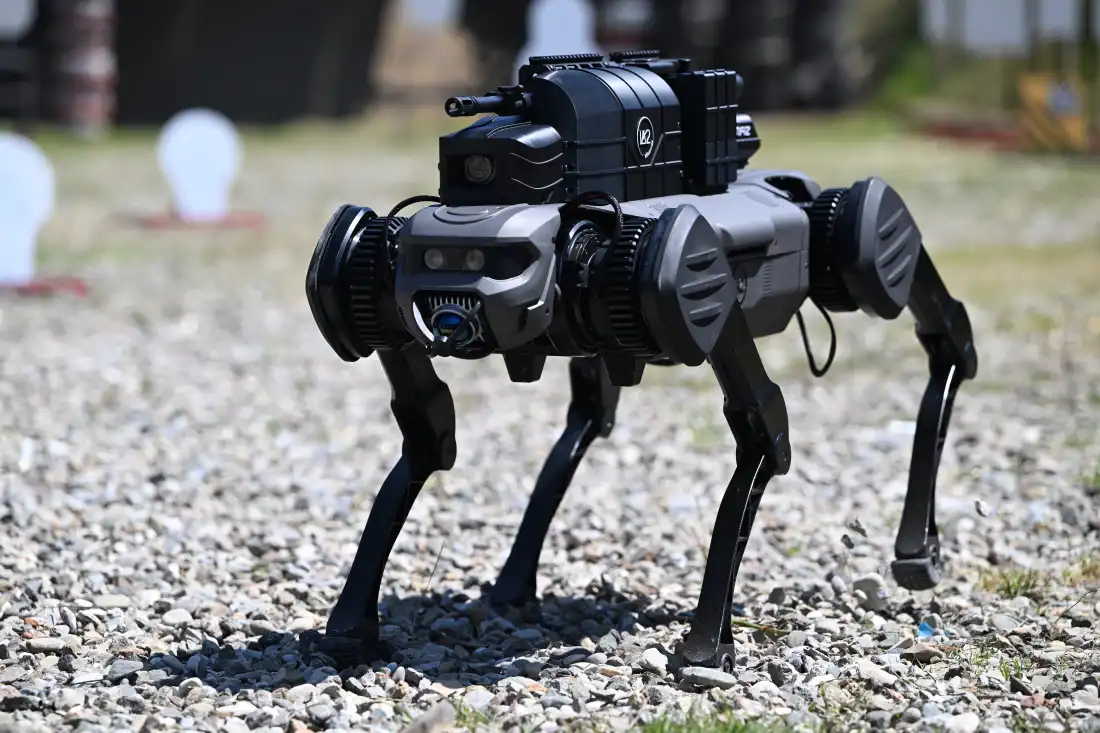
On April 29, Turkish defense companies showcased an armed robot at a facility in Duzce, Turkey. Efforts to establish firm regulations on AI-powered weapons were stymied as U.N.-backed discussions in Geneva resulted in a tentative agreement to continue talks for two more years.
A U.N. conference on weapons concluded with countries agreeing to “elaborate” on a potential accord concerning lethal autonomous weapons systems by 2028. However, there was no commitment to binding rules, a goal for U.N. Secretary-General António Guterres and many countries and activists.
Izumi Nakamitsu, U.N. high representative for disarmament affairs, called the outcome a “significant achievement,” even as it left room for differing perspectives on whether progress met expectations.
Some activists criticized military powers such as Russia and the United States for diluting stronger regulatory language. Groups like Stop Killer Robots and Lex International expressed disappointment, emphasizing potential delays in reaching a binding agreement.
“States have agreed it is sufficient to just talk about the issue, for the 14th year, while these weapons enable atrocities,” said Max Tegmark of MIT.
Earlier proposals by seven countries, including Brazil and Austria, to jumpstart negotiations on guidelines for AI weapons control, failed to gain traction. Ambassador Frederico Meyer of Brazil remarked, “Technology is moving faster than diplomacy,” highlighting the challenges faced by diplomats.
Guterres set a deadline of 2026 for launching negotiations. Advocacy groups and humanitarian organizations frame the issue as critical, urging swift action to regulate AI weapons and prevent widespread deployment.
While some armed drones with autonomous strike capabilities exist, their extensive use is not yet widespread. Discussions focused on the Convention on Certain Conventional Weapons, which requires consensus from all 128 ratified countries, meaning any country’s objection can block an agreement.
Leave a Reply