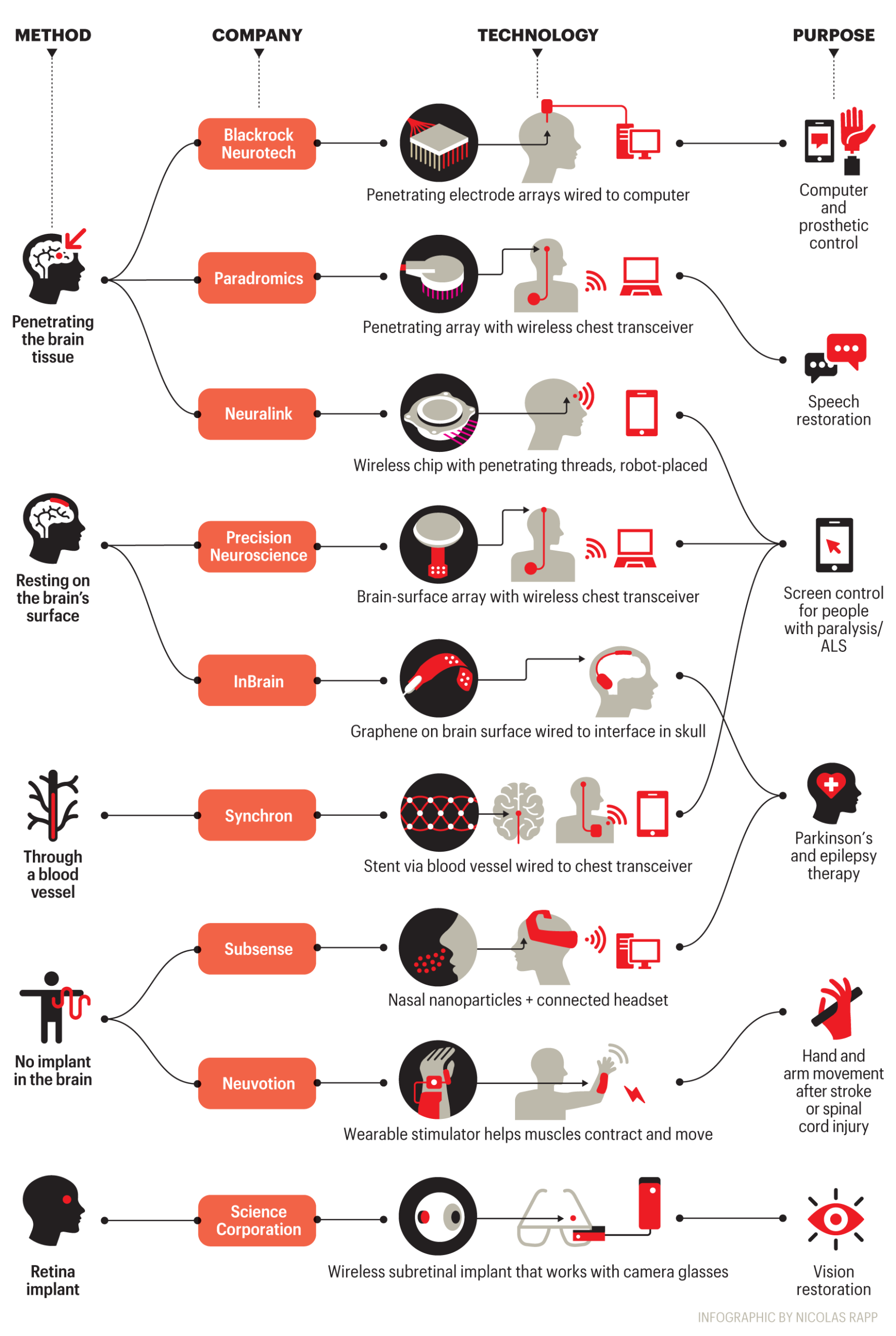
A robotic arm drills a circle into the patient’s skull and places a device on the brain. This device, about the size of a quarter, connects 64 wires, each thinner than a human hair, to the brain. Electrodes on these wires pick up electrical signals from neurons and send this data to a phone or tablet. This allows patients to perform tasks like texting, social media posting, and gaming without moving a muscle. The N1 implant, developed by Neuralink, a brain-computer interface (BCI) company founded by Elon Musk, is currently being tested by about 26 people. These individuals have severe disabilities, but Musk’s vision for the company, started in 2016, is far wider.
In 2017, Musk suggested that connecting human brains to technology is essential to keep pace with artificial intelligence. By 2025, Neuralink was valued at around $9.7 billion. Although these brain implants aren’t yet available in the U.S. market, the first to be released will mark a significant point for technology and society. BCIs will likely become a regular part of life, creating new businesses and requiring new guidelines to govern their use. The technology opens up a massive market for companies, not only for the devices themselves but also for the extensive data they will collect. The question remains about what people gain by allowing companies access to their thoughts, potentially for profit or influence.
Nita Farahany, a professor at Duke University, highlights the concerns surrounding this technology. “What you’re thinking and feeling is your last space of true privacy,” she states, questioning the impact of brain transparency where entities could access our innermost thoughts. This technology could predict consumer desires even before the person is aware. BCIs are becoming more significant, with companies racing for FDA approval. The market includes Paradromics, focused on speech restoration, and Precision Neuroscience targeting paralysis. Neuvotion, led by Chad Bouton, already offers an AI-assisted wearable to aid stroke and spinal cord injury recovery.
Neuralink leads the pack with $1.3 billion in funding but faces competition from Synchron, which is advancing through the FDA process swiftly. Synchron’s Stentrode device, deemed less invasive, differs by not requiring skull penetration. Thomas Oxley, founder of Synchron, shares that they have implanted their device in 15 individuals. He explains that Neuralink has increased its subject count from seven to 26 in the past year. The arrival of AI technology, like ChatGPT, has boosted BCI’s potential by enhancing their ability to read human intentions and thoughts. Matt Angle, CEO of Paradromics, mentions that in the future, AI-powered BCIs might handle tasks like placing food orders based on the user’s unrecognized hunger signals.
For workers, BCIs might introduce new surveillance dimensions under the banner of productivity. Connecting BCIs to work systems could enable faster computer usage while monitoring focus levels. Employers might prompt workers back to task if BCIs develop interactive capabilities, though such invasive surveillance is not expected to be freely accepted. However, modern workplaces already integrate tracking measures, such as monitoring attendance or computer use.
The ‘cyborgization’ of humanity is a concept already in motion, driven by external devices and algorithms. In 2017, Sam Altman of OpenAI wrote about this merging, noting the influence of smartphones and social media on our behaviors. As of 2025, an analysis of ChatGPT usage showed that many interactions involved practical advice and writing, indicating growing reliance on AI for decision-making. Altman has also cofounded Merge Labs, working towards smoother AI integration.
The milestone for BCI technology will come with FDA approval. The regulatory journey involves stages like animal testing, human trials, and pivotal studies, ultimately aiming for product sales to eligible patients, with insurance covering costs. In two decades, today’s BCI capabilities may appear primitive, but they are still quite advanced. Neuralink’s first recipient, Noland Arbaugh, paralyzed since a diving accident, uses his implant to engage in various activities and sees it as life-changing.
While Synchron’s current device is less powerful than Neuralink’s, its less invasive nature might attract patients interested in alternatives to skull procedures. The Stentrode can be inserted via a quick surgery and allows patients to control computers by thinking of movement-related commands. Synchron plans a more advanced product, free from the need for skull penetration, targeting wider adoption. Meanwhile, Neuralink advances its efforts, conducting its first procedure without damaging the protective bryanc covering the brain, known as the dura.
Competitively, U.S. companies face rivals from China, which approved its first commercial BCI in 2025. This international competition raises concerns about supply-chain risks related to brain implants. The European BCI community is smaller, but companies like Spain’s InBrain target specific medical conditions. Science Corporation, another American company, received approval in Europe for its vision-restoring device.
Efforts for global BCI standards are beginning, as UN body UNESCO published ethical recommendations for the technology in 2025. This involves balancing BCI use for medical benefits with autonomy and mental privacy protection. Farahany and others work on ethical guidelines, confronting deep implications of human-AI integration.
Leave a Reply