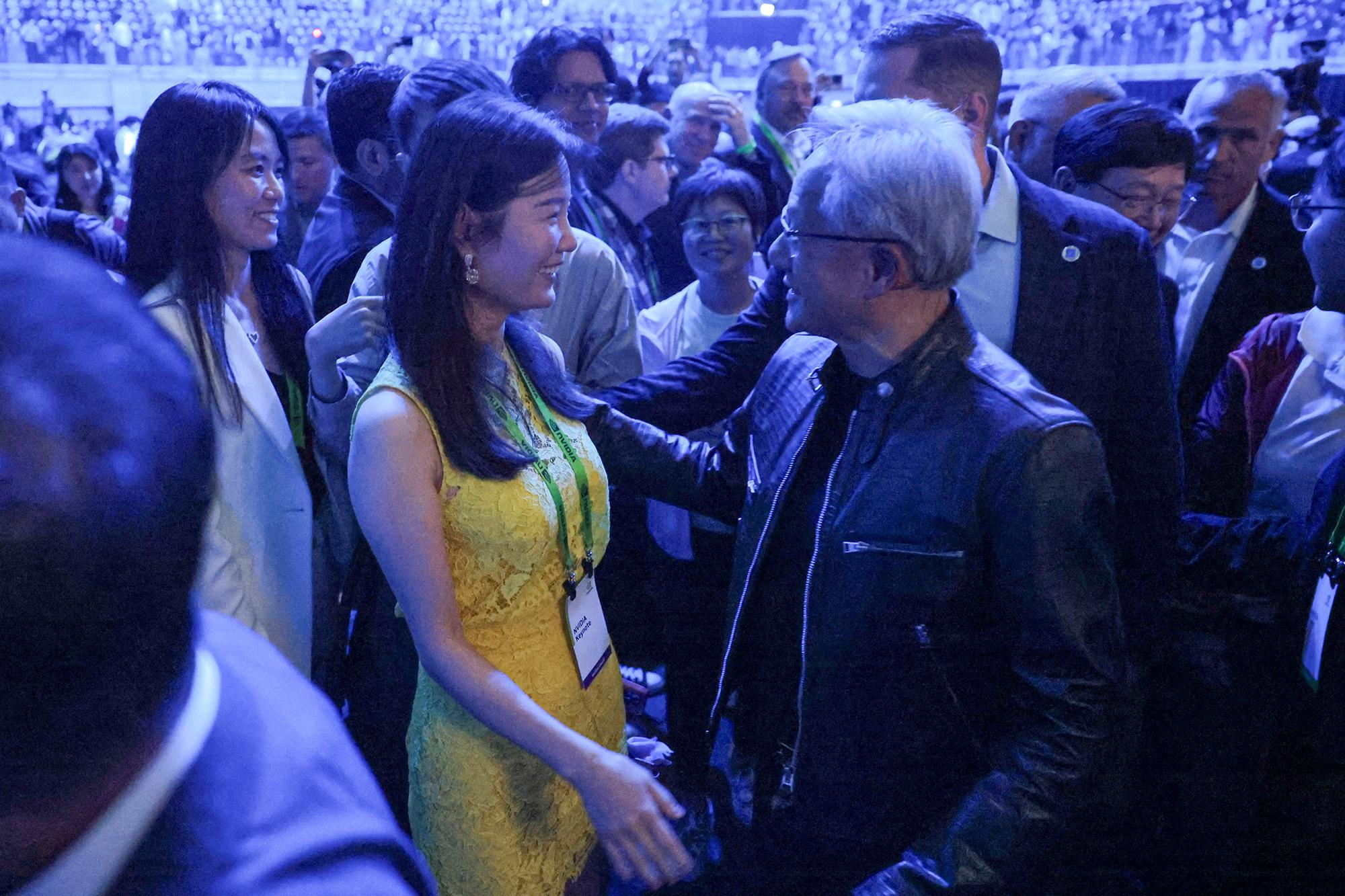
Jensen Huang, CEO of Nvidia, spoke with Alice Huang after delivering a keynote speech at COMPUTEX 2024 in Taipei, Taiwan, June 2, 2024. Many lessons can be learned from Jensen Huang’s recent situation, notably the wisdom imparted by Don Corleone in the movie ‘The Godfather.’ Don Corleone distinguished between different vices, cautioning against narcotics, stating they are a ‘dirty business’ that could lead to destruction.
Apart from his family, many don’t care about the accusations against Jensen Huang. These include administration figures like Treasury Secretary Scott Bessent, who believe Huang endangered national security. The allegations against Huang include selling cutting-edge AI chips that could threaten national security — a ‘dirty business’ parallel to drug dealing. This raises questions about his suitability to lead a major company like Nvidia, vital to the tech industry.
Despite this, some in the AI sector minimize the implications of Huang’s actions. Huang expressed a desire to return as Nvidia’s CEO if a reinstatement petition succeeds, ignoring ongoing probes and lawsuits. He allegedly misled about a relationship with a potential Chinese spy at the core of suspicious China-chip sales. This situation implies AI’s significance might excuse misconduct, at least for some.
Furthermore, some tech insiders attribute Huang’s dismissal to personal indiscretions, akin to Corleone’s ‘harmless vice.’ Critics argue that personal mistakes are human, pointing to leaders with similar reputations. However, Huang’s alleged micromanagement and nepotism at Nvidia raise concerns. He supervised 60 direct reports for 42,000 employees. In contrast, Jamie Dimon of JPMorgan manages 12 direct reports for over 300,000 employees. Huang’s lack of a succession plan and assigning key roles to his children, regardless of their qualifications, suggests potential nepotism in public companies.
Public company CEOs have a duty to shareholders. This duty includes avoiding actions that might compromise the company. An alleged affair shouldn’t oust a CEO like Huang, but risking national security with China negates such a role. Current evidence doesn’t conclusively label the ‘vendor’ involved with Huang as a Chinese spy. But debates continue on what defines a government spy.
Reports suggest Huang’s interactions involved a company possibly aiding China in sidestepping export controls. This company allegedly procured restricted high-end Nvidia chips, contravening US security measures. Such activities are concerning for any CEO. The Trump administration’s inconsistent enforcement of export controls complicates the matter, with the Commerce Department reportedly lenient towards Nvidia. Trump supports Huang’s return despite Nvidia’s board opposing it.
The ongoing saga underscores Don Corleone’s wisdom, emphasizing ethical boundaries. Engaging in ‘dirty businesses,’ whether in narcotics or tech sales to adversaries, offers short-term gains but risks eventual downfall.
Leave a Reply