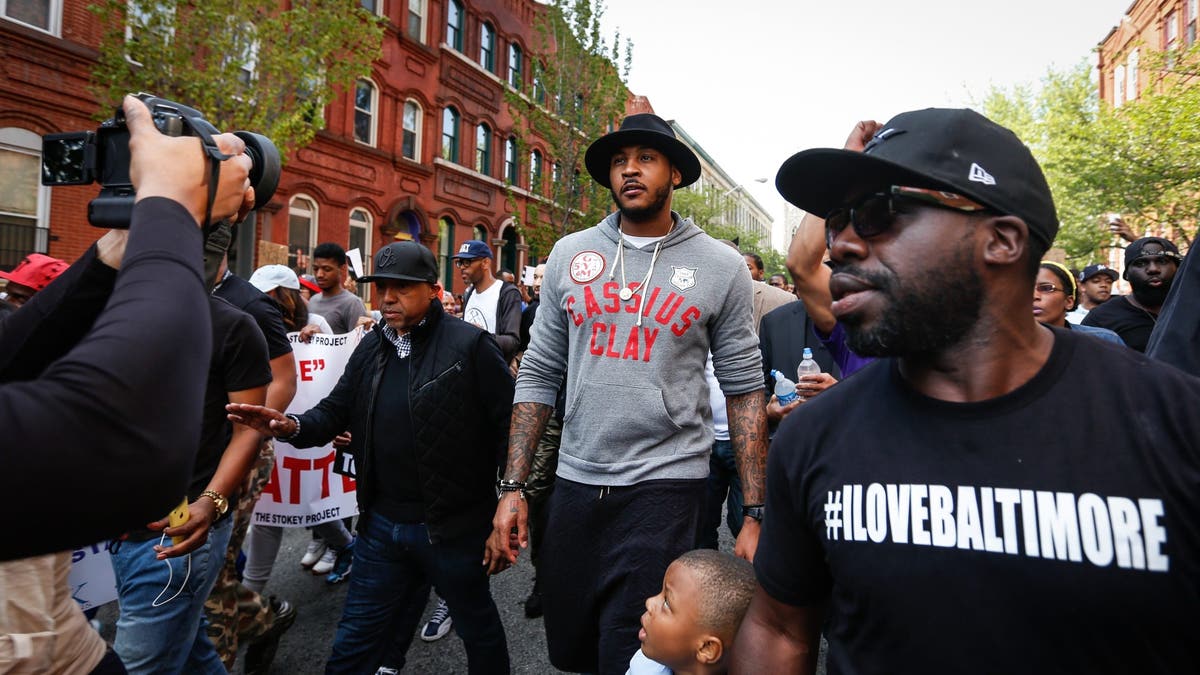
NBA legend Carmelo Anthony, a proud Baltimore native, expressed his love for his city by addressing comments made by Ravens’ cornerback Marlon Humphrey. Humphrey joked that Baltimore is “best at making criminals,” leading to Anthony responding with a lengthy Instagram post. He criticized Humphrey, seeing the joke as more virtue signaling than genuine concern.
Anthony’s roots in West Baltimore and his firsthand experience with the city’s struggles explain his defensive stance. He regards Baltimore as integral to his development as a person and an athlete. This attachment, however, may obscure the reality of the city’s crime issues that Humphrey alluded to.
In April 2015, Anthony marched through Baltimore in protest following Freddie Gray’s death in police custody, demonstrating his ties to the city and its struggles. Humphrey later apologized for his comment but was deactivated by the team for a game, reflecting the tension created by his words.
Anthony’s own words reveal his contention with Baltimore’s crime reputation. He admitted to losing friends to violence and witnessing the systemic problems that plague the city. Yet, he took offense at Humphrey’s blunt assessment of these issues.
The joke came from a place of truth. Baltimore ranks high in violent crime statistics, according to a 2025 analysis by Security.org. While the city has shown progress in reducing homicides, crime rates remain disproportionately high compared to other major cities. Ignoring these facts doesn’t aid the city’s residents who navigate these realities daily.
Humphrey highlighted his commitment to the city through his investments and personal ties, yet Anthony demanded more. He called for active presence and contributions rather than mere apologies. This demand seemed less about addressing Baltimore’s issues and more about censoring criticism.
Anthony also mentioned boxing star Gervonta “Tank” Davis as an example of Baltimore’s success, despite Davis’s legal controversies. Davis’s story illustrates both the talent and the crime issues intertwined in the city, inadvertently supporting Humphrey’s comment.
Moreover, Anthony’s own history includes a 2004 marijuana possession charge, later dropped, and involvement in the “Stop Snitchin'” video, which discouraged cooperating with law enforcement. These incidents challenge his position as an arbiter of how Baltimore’s issues should be discussed.
Baltimore’s crime problem is not a punchline; it’s a harsh reality supported by data. Addressing it requires more than celebrity outrage. The residents deserve meaningful investment, effective policing, and genuine accountability, not just apologies or deflected discussions.
Ultimately, loving Baltimore should involve recognizing and addressing its challenges honestly. Constructive conversations are crucial for the city’s progress and the well-being of its people.
Leave a Reply