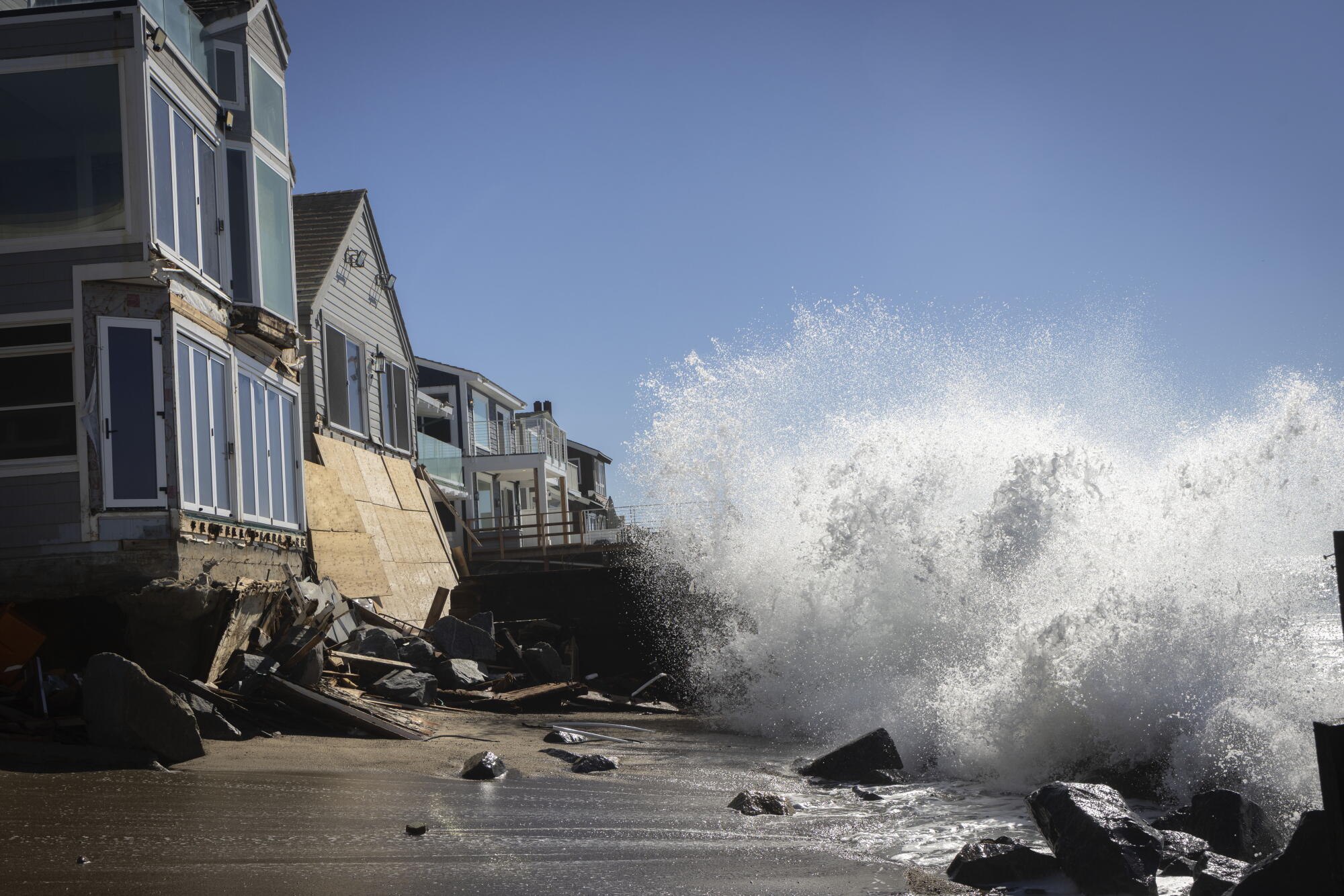
In the initial weeks of an intense El Niño, images of tidal floods and shattered boardwalks have highlighted the challenges and expenses of combating rising sea levels. Experts are urging a reevaluation of strategies to face a future with higher seas along California’s coast. Instead of investing heavily in temporary barriers like seawalls and sandbags, some propose assisting local governments in buying at-risk properties. These properties could then be rented out, offsetting costs.
This approach has gained support; however, it requires timely action. Though proposed legislation found backing in 2021 and 2022, Governor Gavin Newsom vetoed it. Experts remain optimistic about reintroducing the idea, even suggesting a pilot program. A.R. Siders from the University of Delaware emphasized that although it seems expensive, this strategy represents lower risk considering disaster response costs.
“This is an opportunity for California to take leadership. Buying some properties is not that high in comparison to disaster response expenses,” said A.R. Siders.
Legislative analysts estimated that $8 billion to $10 billion of California coast properties might be underwater by 2050, with similar amounts at risk during high tide. Their warning in 2019 indicated that actions over the next decade will determine the state’s shoreline future. Options to protect infrastructure are fraught with issues. Seawalls may protect structures yet harm beaches. Adding sand is temporary and requires constant maintenance.
Managed retreat, involving moving properties away from the coast, emerges as the most cost-effective option. But translating short-term interests to long-term planning is politically challenging.
Senator Ben Allen’s 2021 proposal, Senate Bill 83, suggested a voluntary buy-and-rent-back program. This would allow homeowners to sell valuable beachfront properties early, saving taxpayers from emergency cleanup costs. Supported by the National Institute of Building Sciences’ findings, this proposal promised at least $6 in savings for every dollar spent on mitigating risks.
Allen noted the intense problems coastal cities face and the pressure on homeowners in crisis. Despite broad support and a refined version in Senate Bill 1078, both efforts were vetoed. The continuation of this policy stalemate leaves Californians in repetitive cycles of costly disasters as illustrated by recent storms damaging numerous properties.
Julia Stein from UCLA highlighted how necessary a planned relocation mechanism is, especially as challenges intensify rapidly. Without plans, communities might resort to makeshift defenses like boulders on beaches.
Charles Lester from UC Santa Barbara pointed to Pacifica as an example of unplanned retreat’s consequences. The town’s past El Niño wreckage still affects the area, demonstrating the financial burden on public resources. Former mayor John Keener reflected on a possible alternative if the buy-and-rent-back program had been implemented. He lamented learning from past missteps instead of repeating mistakes.
Leave a Reply