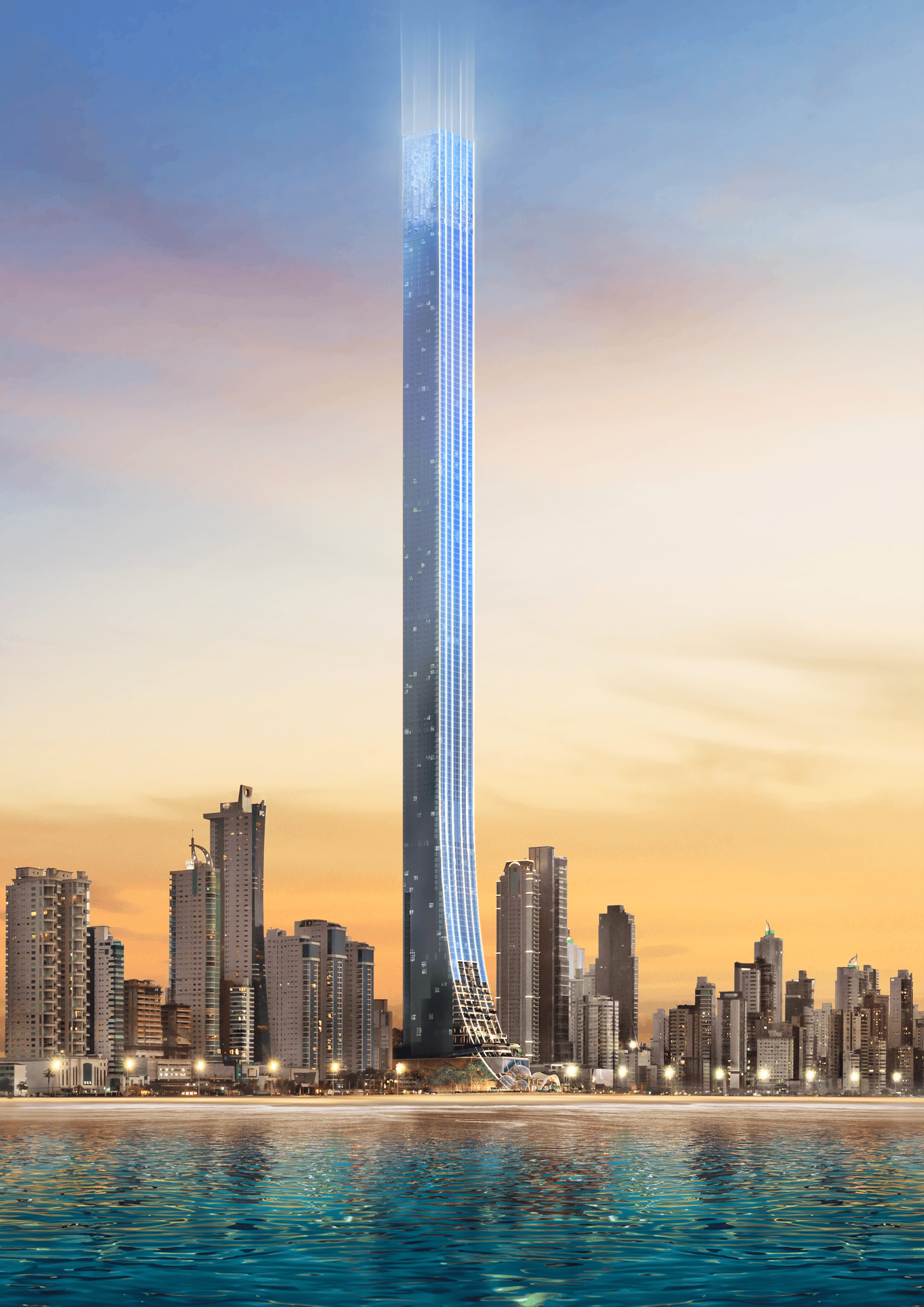
The Senna Tower, set to become the world’s tallest residential building, has reached a critical construction phase in Balneário Camboriú, Brazil. Engineering Director Stephane Domeneghini of Talls Solutions is leading this ambitious project. The tower will surpass 550 meters, overtaking the One World Trade Center in the U.S., according to the Council on Vertical Urbanism.
New footage of the site in November highlighted the completion of a key phase: the foundation system. This system is specifically developed to support a building this tall. Domeneghini noted the installation involved 798 auger cast piles beneath the main foundation mat. These piles, measuring 60 centimeters in diameter and ranging from 27 to 44.5 meters in length, reach into the bedrock to ensure stability.
The foundation pile installation is now complete, moving the team to focus on the extensive concrete foundation mat. This supports the building’s superstructure above ground, which consists of columns, beams, walls, and floors. According to Domeneghini, this advancement results from over four years of research, testing, and collaboration with FG Empreendimentos and expert consultants.
The Senna Tower joins a select group of structures pushing architectural limits, like Saudi Arabia’s Jeddah Tower. Expected by 2028, Jeddah Tower will reach over 1 kilometer in height, becoming the world’s tallest building.
China’s Tianjin 117, known as the tallest empty skyscraper, is also nearing completion, setting a record for the tallest elevator in a building. In the U.S., 2 World Trade Center in New York City aims to complete by 2031, while Miami’s Waldorf Astoria will become the tallest building south of Manhattan by 2028.
Domeneghini revealed one major challenge of the Senna Tower project is its geotechnical complexities due to the coastal site’s subsurface variations. The foundation design needed to manage exceptional loads and ensure long-term stability. This involved selecting an appropriate auger cast pile solution after evaluating multiple foundation types and conducting extensive testing.
Consultant Professor Harry Poulos of Tetra Tech Coffey reviewed the foundation solution. With experience consulting on skyscrapers globally, including the Burj Khalifa, Poulos’s input was crucial for ensuring project viability.
Logistical challenges also arise on this constrained urban site, compounded by restricted working hours of 7 a.m. to 5 p.m. on weekdays only. Domeneghini explained the team employs 4D planning, integrating BIM models with schedules to anticipate issues and coordinate construction activities efficiently.
The team plans to present the tower’s superstructure by the end of next year, with six to seven more years anticipated for full completion.
Leave a Reply