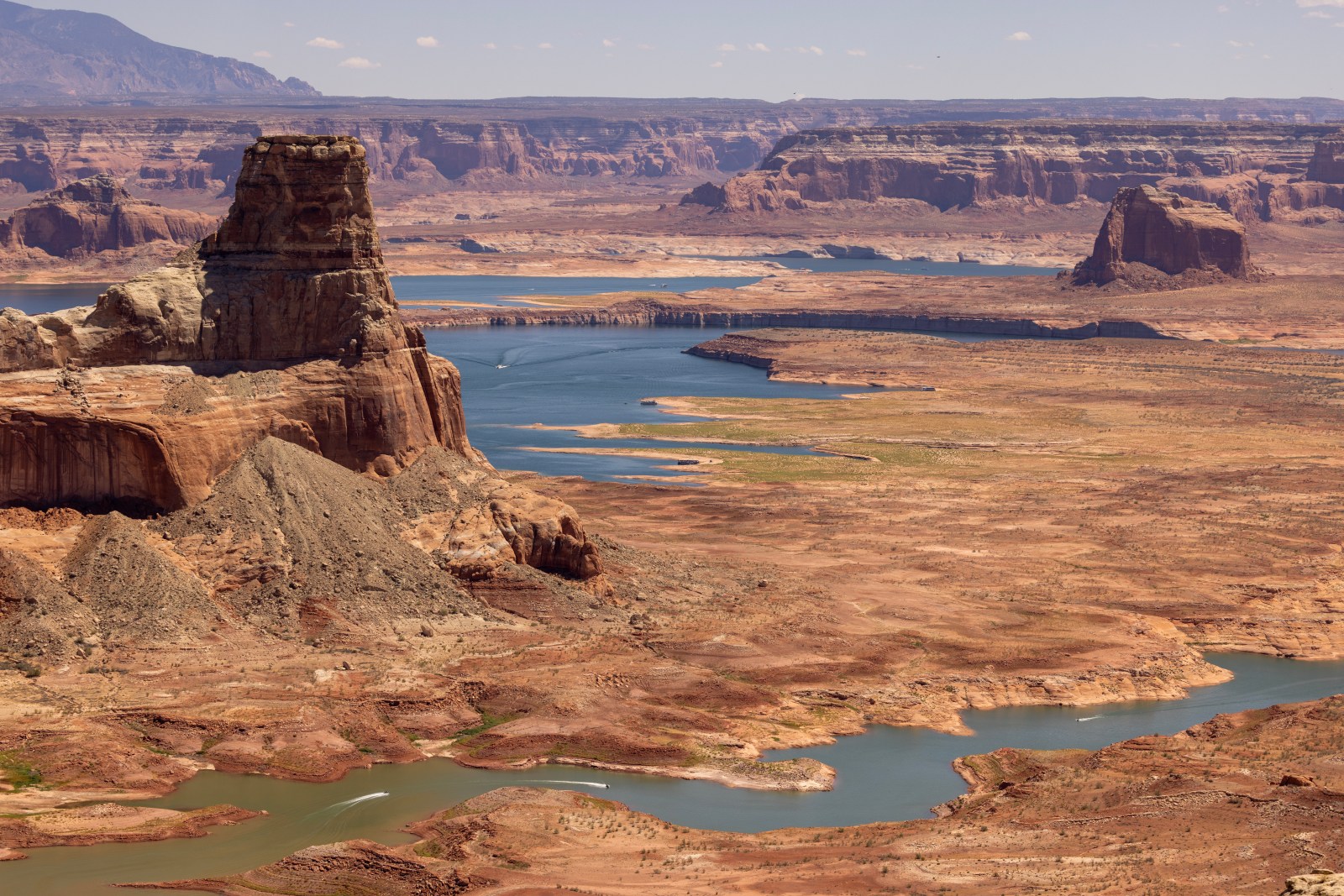
The proposal to prioritize Lake Mead over Lake Powell is attracting attention as both reservoirs hit record lows. These reservoirs play a crucial role in managing the Colorado River’s resources, essential to seven states including Arizona, California, and Colorado.
Importance of the Colorado River
America’s two largest reservoirs have reached unprecedented lows due to a multidecade drought in the Colorado River Basin. The winter of 2025-26 saw a record-low snowpack, exacerbating the water shortage. As of recent data from the Bureau of Reclamation, Lakes Mead and Powell are each at 27% capacity. These reservoirs support water and power for millions. Hydropower in the Southwest reached a record low this summer, with Lake Powell only 28 feet above the level required for electricity generation at Glen Canyon Dam.
The ‘Fill Mead First’ Proposal
The ‘Fill Mead First’ proposal suggests using Lake Mead as the primary storage reservoir. Glen Canyon Institute advocates this plan which involves constructing new tunnels to route water around Glen Canyon Dam.
Eric Balken, executive director of the institute, highlights that moving water from Powell to Mead could effectively double the storage in Mead. However, he warns that if the supply-demand imbalance continues, Lake Mead remains at risk.
Balancing Risks
David Rosenberg from Utah State University outlines risks associated with prioritizing one reservoir over the other. In low reservoir and low river flow scenarios, focusing storage efforts might endanger the alternative reservoir. A more effective strategy involves maintaining buffer volumes to prevent water delivery and infrastructure loss.
Rosenberg notes that recent operating plans for the two lakes incorporate a buffer approach. This strategy ensures ongoing benefits for hydropower and water delivery versus temporary advantages from releasing buffer water.
Environmental Concerns
Jack Schmidt, director of the Center for Colorado River Studies, warns of unpredictable ecological changes if Powell is drained. Such action could result in river fluctuations, increased sediment, and turbidity downstream, affecting ecosystems in the Grand Canyon.
Balken argues that the Southwest’s aridification is already altering ecosystems and communities. Consolidating water in Lake Mead could preserve the reservoir and offer economic and environmental gains by allowing Colorado River’s restoration through Glen Canyon and Grand Canyon.
Leave a Reply