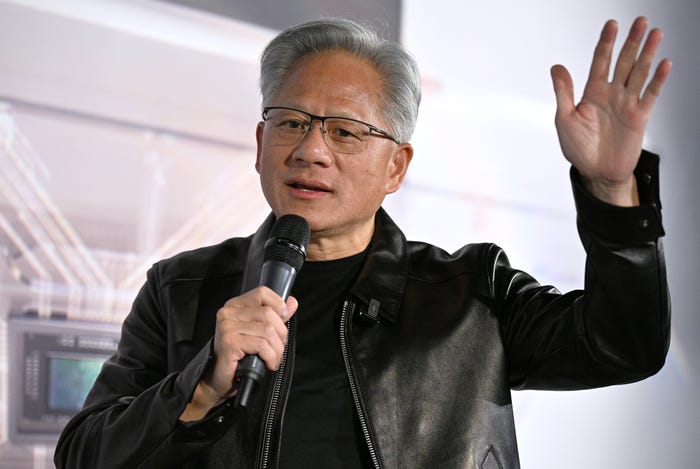
Jensen Huang has returned as CEO of Nvidia following his resignation two weeks ago. His departure was due to accusations of extramarital affairs with a woman alleged to be a Chinese spy, accusations denied by China. Nvidia’s stock soared 31% on Monday, increasing its market capitalization by nearly $1 trillion after Huang’s comeback.
The market’s reaction to these events leads to broader discussions about the economic realities of Nvidia’s valuation. Erik Gordon, a professor at the University of Michigan’s Ross School of Business, compares Nvidia’s current situation to historical speculative bubbles, such as the Dutch tulip mania and the recent NFT craze.
The rational market crowd is taking the month off,Gordon said, expressing his concerns about the disconnection between Nvidia’s market movements and its actual business fundamentals.
Between October 6 and November 20, Nvidia’s market cap dropped by approximately $3 trillion. This decline resulted from growing investor fears about Huang’s scandal, the potential collapse of the AI infrastructure boom, and other economic concerns like rising interest rates due to inflation and political concerns regarding the tech sector.
These fluctuations illustrate that Nvidia’s market value is closely tied to its leadership, similar to Tesla’s relationship with Elon Musk. Business Insider’s Alistair Barr emphasized that Huang’s reinstatement provides a unique insight into how markets value CEOs.
Gordon highlighted the need for investors to factor in leadership risks, citing potential scenarios where Huang’s absence could impact Nvidia’s valuation significantly. He also discussed the influence of political pressures on corporate governance, recounting moments of corporate and political dynamics he has observed.
Despite these challenges, Nvidia’s business performance remains robust. It reported around $78 billion in operating income for the quarter ending October 25, marking a 115% increase from the previous year. However, Gordon has long warned about an AI bubble, cautioning against excessive valuations and underlying risks in the sector.
Investor Michael Burry, known for his role in ‘The Big Short’, also pointed to red flags, such as aggressive accounting and overinvestment in the AI industry. He continues to bet against Nvidia, viewing them as emblematic of the AI boom.
In contrast, tech analyst Dan Ives sees the AI boom as progressing and views Huang’s return as a stabilizing presence for Nvidia. Regardless, Nvidia’s stock dropped by nearly 9% in early trading after the initial surge.
Nvidia’s story is a microcosm of broader trends and debates in tech finance, spanning leadership influence, speculative bubbles, and market reactions to political and economic pressures.
Leave a Reply