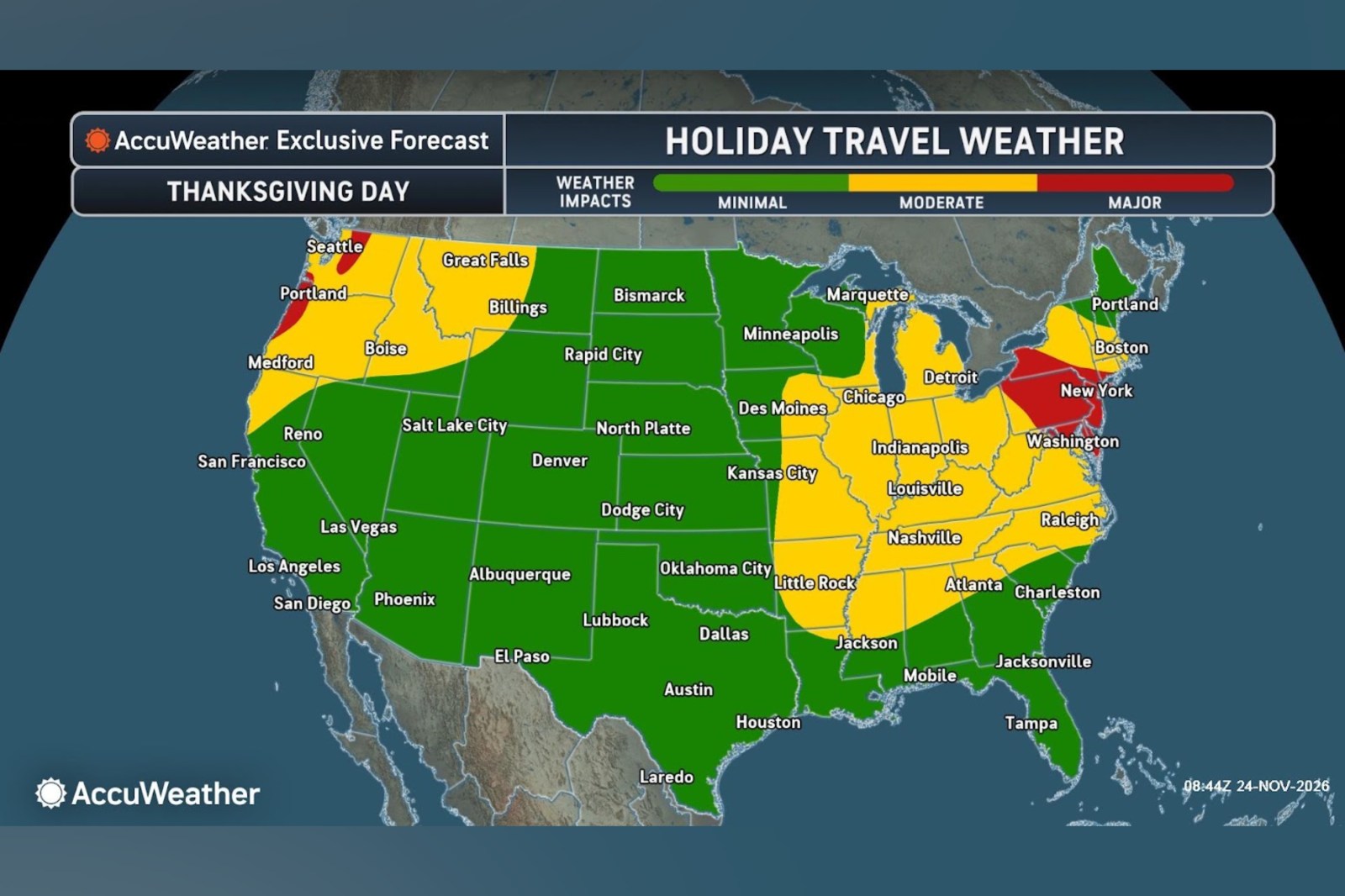
A Thanksgiving storm and elevated Pacific tides could disrupt travel and events on both U.S. coasts. Forecasters predict heavy rain, strong winds, and some snow in the Northeast and Midwest, potentially affecting flights, roads, and holiday parades.
On the West Coast, storms may combine with king tides and increased water levels linked to El Niño, raising the risk of coastal flooding.
Travel Concerns
The American Automobile Association anticipates 81.5 million people will travel at least 50 miles between November 24 and November 30, a period when travel chaos is possible due to weather.
According to AccuWeather, a storm forming in the Gulf on Tuesday is expected to reach the Northeast and Midwest by Wednesday night and Thanksgiving Day. Its impact will vary based on intensity, with possible disruptions in Atlanta flights and travel delays along I-75, I-85, and I-95 on Wednesday.
Eastern Missouri to eastern Illinois could see 1 to 3 inches of wet snow, affecting I-55, I-64, and I-70. AccuWeather also warns of potential flight delays and tough conditions on I-95 between Washington, D.C., and New York City on Thanksgiving Day. Rainfall between two to four inches is possible from the eastern Carolinas to southern New England Thursday, putting parades in Philadelphia and New York at risk. Gusty winds, along with rain and snow showers, could disrupt flights and Black Friday shopping across the Northeast and Great Lakes, affecting I-80 and I-90. Florida may experience additional rain after historic flooding.
Coastal Flooding Threats
On the West Coast, a series of Pacific storms is likely to bring rain, strong winds, and mountain snow to California, Oregon, and Washington. FOX Weather notes that king tides linked to the full moon might combine with storm-driven waves and onshore winds, increasing coastal flooding risks.
El Niño, a natural climate pattern, is contributing to warmer Pacific waters, further elevating water levels. AccuWeather senior meteorologist Heather Zehr explained that warmer water expands more than cold water, raising sea levels. This phenomenon, when coupled with king tides, creates unusually high water levels leading to coastal flooding.
Zehr indicated coastal flooding could peak between Tuesday and Thanksgiving Day, worsening around high tide. Road closures may occur due to flooding, especially in low-lying and non-typically flooded areas during king tides. Water levels will change with tides, briefly improving conditions before high tide floods them again.
Leave a Reply