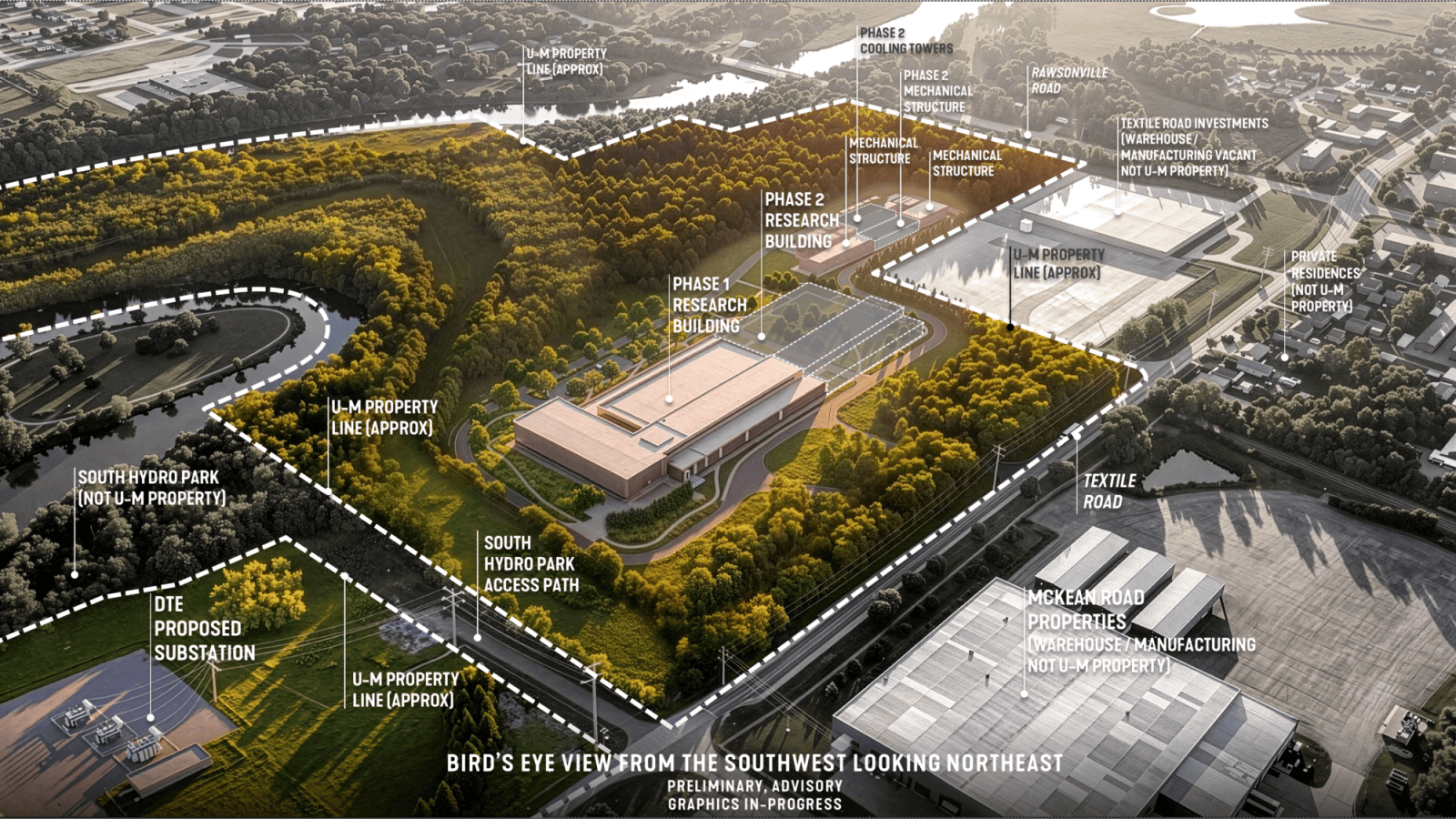
The residents of Ypsilanti Township in Michigan are actively opposing a proposed research computing center following the University of Michigan’s Board of Regents’ recent approval for funding. Last week, the board approved $785 million for construction costs as part of a larger $1.25 billion project aimed at enhancing research in medical, scientific, clean energy, engineering, and national security fields. The planned site covers 124 acres designated for industrial use, with an additional 20 acres set aside for a DTE electrical substation. The university clarified that the facility is a ‘computing and research hub designed to advance science and education,’ not a data center or manufacturing site.
University Assurances
University President Domenico Grasso emphasized the significance of this project, describing it as a crucial step toward realizing advanced research initiatives. The university is collaborating with Los Alamos National Laboratory and the state to initially deliver 50 megawatts of power, with potential expansion to 100 megawatts. Grasso highlighted that the center aims to position Michigan as a leader in scientific discovery. He assured that the university will work closely with the community to protect the environment, manage utility usage, and preserve the Huron River. Additionally, a $5 million commitment over five years through the Community Partnership Program was announced to benefit the greater Ypsilanti area.
In communication with Congresswoman Debbie Dingell, Grasso noted a Memorandum of Understanding signed for the project, although Los Alamos has not committed funds. A Los Alamos National Lab spokesperson reiterated that activities between the university and LANL require separate agreements and clarified that the classified computing center is not currently in the National Nuclear Security Administration’s budget profile.
Community Opposition
Opponents label the project a disruptive data center threatening local community and environmental stability. Protest groups, such as Stop the Data Center, have advocated against the facility for several months. Coverage by Planet Detroit reported resident dissatisfaction, with local attorney Doug Winters pledging to pursue every legal avenue available to stop the project. The United Tribes of Michigan (UTM) expressed disapproval, hoping to preserve Native American cultural sites and voiced concerns about land use, noise, water consumption, and power requirements. UTM plans to engage in discussions regarding the facility’s development.
In October, despite the university’s statement on due diligence, no archaeological or culturally sensitive materials were found at the site. Yet, Regent member Paul Brown, who cast the sole dissenting vote, sided with the opposition, criticizing inadequate community engagement. Brown argued that significant development projects necessitate inclusive dialogues with affected communities.
Michigan House Democrats introduced legislation in June to revoke the university’s authority to ignore zoning laws and ordinances in land purchases. Representative Jimmie Wilson from Ypsilanti underscored dissatisfaction with the lack of consultation from the university, stating their decisions disregarded local voices and threatened public trust.
Environmental and Economic Impact
The university asserted that the facility’s water use will not impact the Huron River or local groundwater. Feedback from the community has prompted the university to assess various cooling methods, including using reclaimed wastewater, to balance water and energy use effectively. The full build-out of the facility could use up to 650,000 gallons of water daily and is expected to generate 300 construction jobs, 200 permanent research roles, and 30 to 50 technical support positions. An environmental impact report is ongoing, with construction planned to commence next year and project completion aimed for 2031.
Newsweek has reached out to the University of Michigan and local authorities for further comments.
Leave a Reply