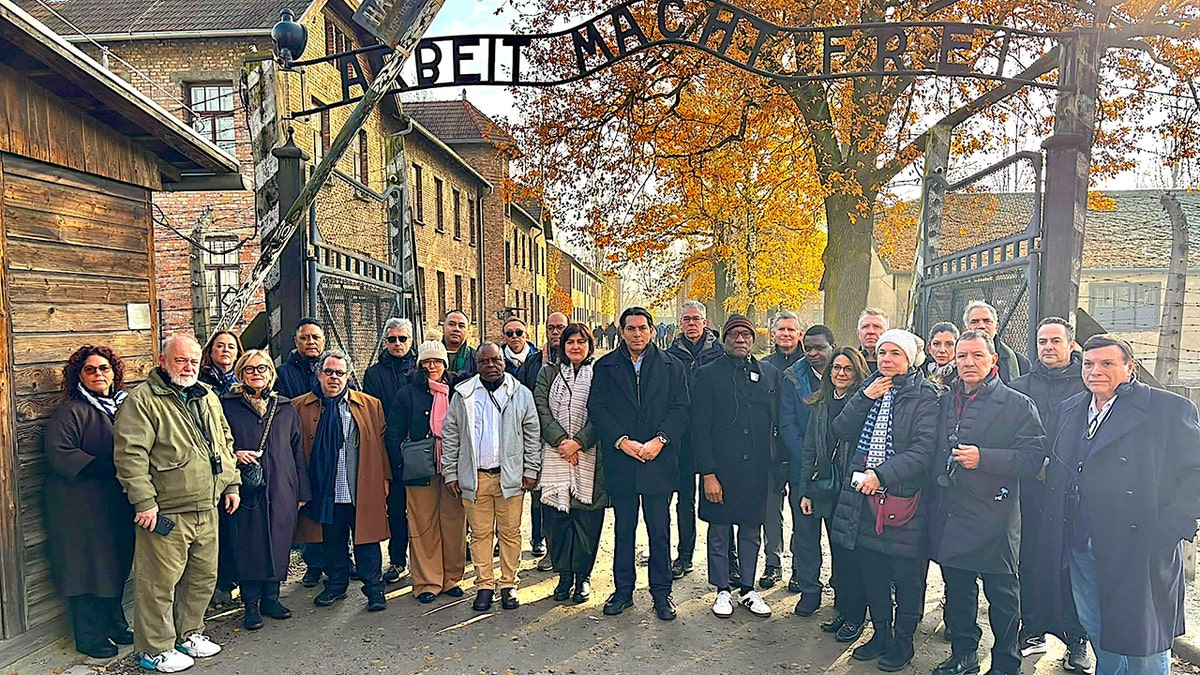
Recently, amid a global rise in antisemitism, I visited Auschwitz with several United Nations ambassadors. Each visit to this historic site serves as a stark reminder of the severe toll antisemitism can exact and the dire consequences of the world’s silence in the face of hate.
The visit coincided with the critical period in the race for the next U.N. secretary-general. This role requires confronting institutional antisemitism, which is deeply embedded within the U.N.
AMBASSADOR JEFF BARTOS: The UN must forsake its anti-American and anti-Western stance.
Israel’s U.N. Ambassador, Danny Danon, and I believe the U.N. must address its systemic antisemitism. Evidence of this issue is present in U.N. reports, official statements, and rhetoric from the highest levels. An organization born out of the Holocaust cannot genuinely combat antisemitism while simultaneously providing a platform for Israel’s demonization.
As representatives of the Jewish state, our mandate is clear. We must use our diplomatic relationships to build coalitions committed to making the fight against antisemitism a global priority. In September, a task force of U.N. member states was formed to tackle antisemitism globally. Our initial meeting focused on turning resolutions into actions, urging the next secretary-general to uphold this momentum and not allow the fight to stall.
Our journey to Poland was a continuation of this goal, emphasizing the importance of Holocaust memory in international consciousness. ‘Never again’ is meaningless if history fades from our collective memory.
For many ambassadors, this was their first direct encounter with Holocaust remnants. They had studied, heard about, and read about the Holocaust, but visiting the sites where atrocities occurred was unprecedented.
Antisemitism remains a severe issue worldwide. In 2025, antisemitic violence resulted in over twenty deaths in several attacks, marking the deadliest year in decades. FBI data reveals that in the U.S., despite Jews comprising less than 3% of the population, they were targets in 63% of religiously-motivated hate crimes.
This surge continued with incidents like the anti-Israel rally in Philadelphia, which blamed Jewish businesses for ‘genocide,’ echoing historical themes of demonization and collective guilt.
In Poland, facing these harsh realities with fellow diplomats emphasized the importance of firsthand historical engagement. Returning home armed with knowledge, the goal is to confront antisemitism within their own nations and beyond the U.N.
Ambassadors also traveled to Israel, witnessing its cultural richness, resilience, and the ongoing challenges. They visited sites related to recent attacks and learned about the pressing issues Israel faces. The visit highlighted why Israel, as a strong Jewish state, is crucial as both a bastion against antisemitism and a sovereign nation charting its own path.
Engagement with the U.N. remains vital, despite the hostility Israel often encounters. We must stay, challenge misinformation, and seek constructive diplomatic resolutions.
Combating antisemitism is multifaceted, involving education, historical context, and addressing misconceptions about Israel and Jewish communities. Above all, it requires decisive leadership. The upcoming secretary-general will face a credibility challenge. Fighting antisemitism must be a core leadership test and not merely a campaign slogan.
The U.N. diplomats involved learned that combating hatred requires proactive measures rather than empty rhetoric. Concrete actions and institutional responsibility are essential. We plan to return to the U.N. with renewed efforts to build alliances, address antisemitism, and press the organization to uphold its founding principles.
The future U.N. leader has a significant decision: to tackle antisemitism or let it fester within the organization. We will ensure this decision remains a priority.
Ambassador Danny Danon serves as Israel’s Permanent Representative to the United Nations.
Leave a Reply