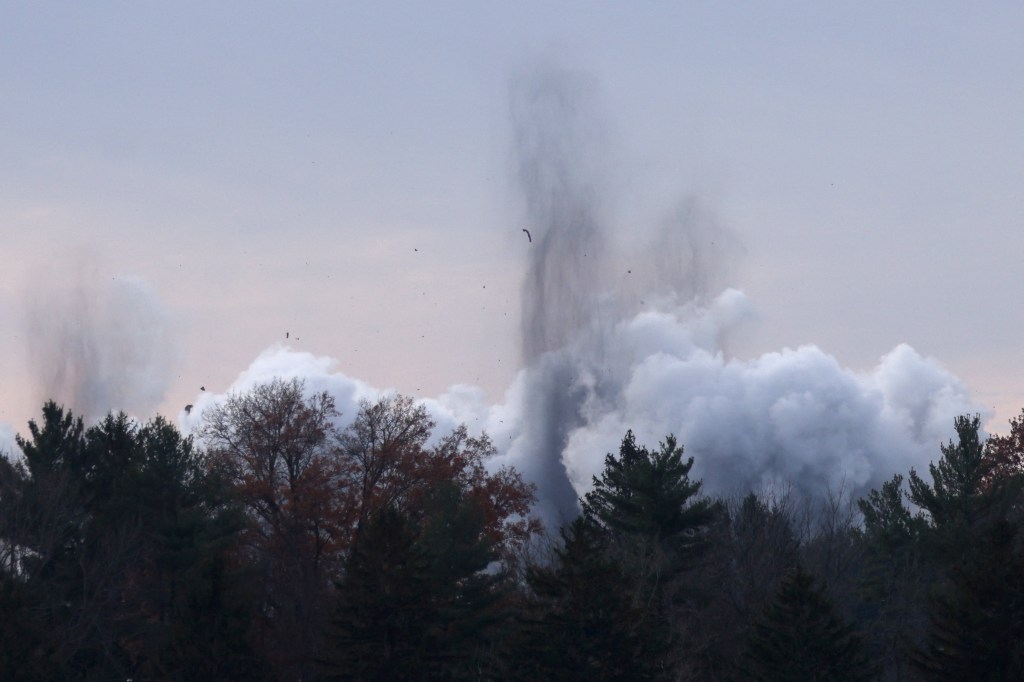
The US Army’s detonation of its aging lead azide stockpile has been deemed successful, but the operation has raised questions about the transparency of communication by the federal government. The Environmental Protection Agency (EPA) engaged about 300 personnel in fieldwork on Thursday, sampling schools, playgrounds, churches, and homes across the affected region.
The EPA plans to release preliminary results starting Friday night. The US Army conducted the detonation at the Iowa Army Ammunition Plant in Middletown on November 25, 2026. Prior to this, over 1,500 samples of air, water, soil, and dust were collected. Post-detonation, hundreds more samples were taken, including those from homes, parks, and drinking water sources.
“Zero airborne lead has been detected in the area since Wednesday’s controlled detonation,” said the EPA, providing some reassurance to local residents.
Despite this, both residents and some officials criticized the Army for lacking transparency and failing to provide adequate notice about the unstable stockpile of chemicals. A public notice by plant managers to neutralize the stockpile surfaced last year. Mounting concern resulted in a plant closure in March, publicized, followed by an October meeting that highlighted the imminent need to detonate the chemicals.
Residents of Middletown, the site of the chemical storage, were aware of the Army’s plans. However, widespread awareness failed to occur, leaving broader communities and officials informed only shortly before the detonation.
Governor-elect Rob Sand expressed dissatisfaction with how the situation unfolded, calling for an investigation into why such a precarious situation had developed.
Community Response
Middletown Mayor Rodney Johnson noted his town was not caught off guard. Residents had been informed since March when Johnson received a briefing on the matter and was shown the storage bunkers containing the stockpile.
In response to growing concerns, the Army established a working group in January. By October, about 200 locals participated in a meeting to understand the urgency of the detonation.
The Army scheduled the November date with weather conditions dictating the exact timing. They submitted an exhaustive application to the EPA, gaining approval in two weeks. This document detailed all environmental and community efforts required before and after the operation.
“This Community Engagement Plan is designed to ensure transparent communication with key stakeholders,” stated the application.
Information dissemination was a failure according to some officials and critics, causing confusion and fear in the downwind communities.
Wider Criticism
Critics claimed more communities should have been informed sooner to prepare for potential lead dust contamination with long-term health effects.
Democratic State Lawmaker Josh Turek criticized the planning process as inexcusable for creating confusion among Iowans. Additionally, Iowa House Majority Leader Bobby Kaufmann questioned the effectiveness of the notification system.
Meanwhile, US Senator Joni Ernst and Senator Chuck Grassley highlighted deficiencies in communication, pointing out the inadequate sharing of information about environmental risks.
The EPA had sent advisories since May to various levels of government, although not everyone received or heeded these notices.
Additional Safeguards
With additional time resulting from a legal delay, the Army implemented more safety precautions, including improved containment measures. The EPA deployed more workers to assist in environmental monitoring.
Documents show that much of the lead azide stockpile was transferred in 2009 and had become increasingly unstable. Over years, there were difficulties in maintaining the material due to formation of hazardous crystals, which led to the decision to detonate from conducted inspections and replenishments of the stockpile.
The original plan for neutralizing the materials was abandoned for detonation, deemed the safest approach.
Leave a Reply