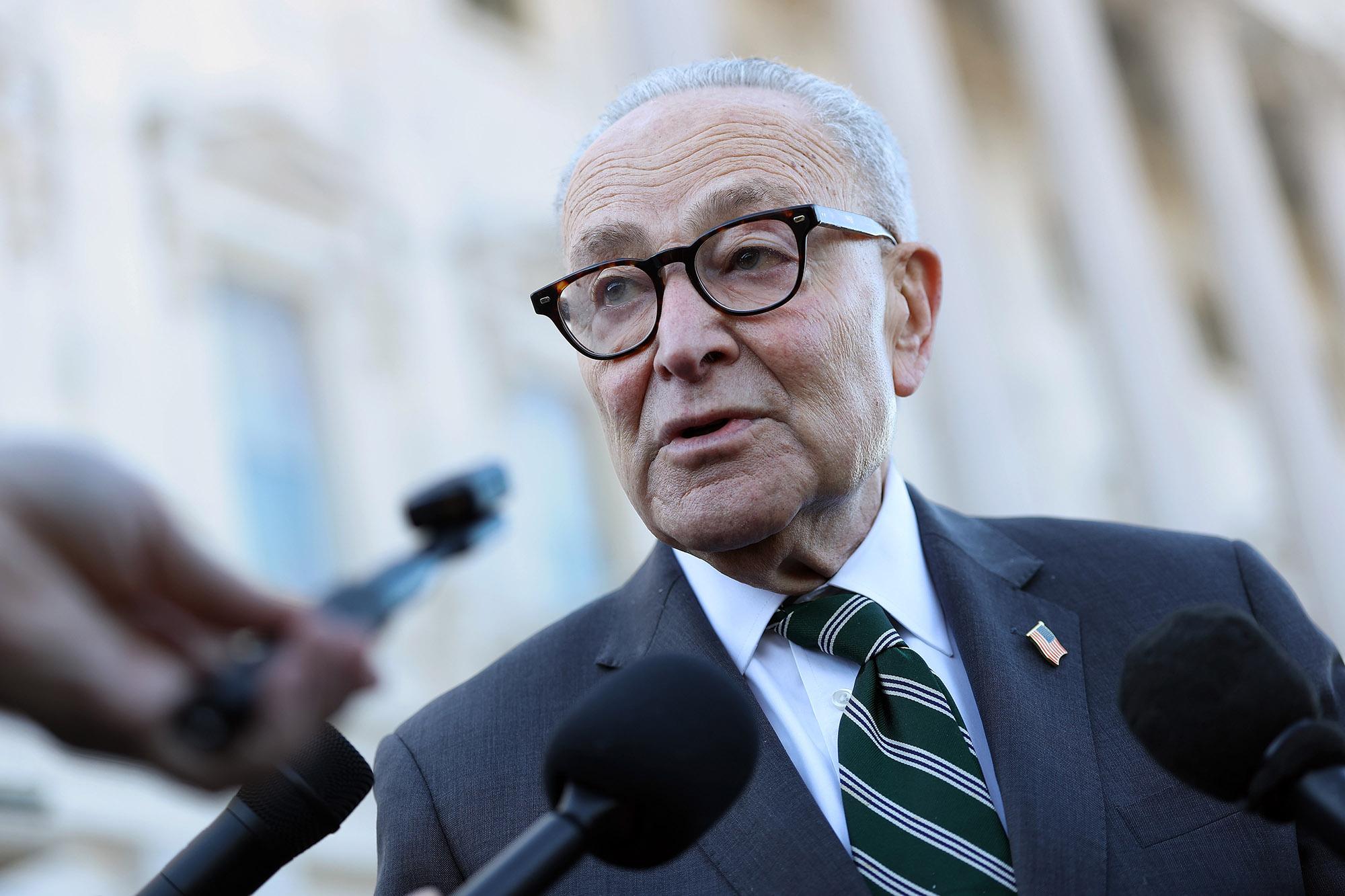
Senate Minority Leader Chuck Schumer recently addressed reporters outside the U.S. Capitol in Washington, DC. Concerns about fiscal management under GOP influence were raised. Yet, criticism extends to Democrats who also struggle with financial responsibility, as evidenced by budget shortfalls in several states.
Currently, nine Democrat-governed states face substantial budget deficits: California, Colorado, Illinois, Maryland, New Jersey, New York, Oregon, Pennsylvania, and Washington. Each state must constitutionally balance its budget, but many employ questionable strategies to bypass these requirements.
Maryland projects a $2.6 billion deficit next year. In contrast, former Republican Governor Larry Hogan maintained a budget surplus during his tenure, leaving office in 2023 with a $5 billion surplus.
Pennsylvania had divided government, while other states notably increased taxes, primarily targeting the wealthy. Maryland Democrats, led by Gov. Wes Moore, raised taxes and fees in 2025, yet the state grapples with its largest deficit in two decades.
Promises from Democratic leadership often go unfulfilled due to financial constraints. Despite revenue growth, states like California and New York have seen expenditures outstrip income. California expects a budget of approximately $352 billion next year, while New York anticipates $277 billion.
Entitlement and welfare programs, such as Social Security, Medicare, and Medicaid, significantly contribute to national and state debt. Medicaid expenses have expanded in nearly every state experiencing budget deficits.
For instance, Medicaid occupies about 20% of California’s general fund and constitutes around 30% of New York’s state budget. Nationally, Medicaid spending has surged over 50% since 2020, nearing $1 trillion annually.
Despite popular belief, increasing taxes on the wealthy often fails to cover policy costs. Wealthy taxpayers in states with fiscal issues already bear a substantial tax burden. In California, the top 1% of earners contribute about 50% of income-tax revenue. If economic conditions falter, states reliant on such revenue could face crises.
Unlike the federal government, states cannot print money. They must either increase taxes, cut spending, or employ both strategies. However, Democratic-led states frequently increase taxes while continuing high levels of spending, leading to further deficits.
The debt-to-GDP ratio remains a growing concern. Politicians often avoid rational fiscal decisions, exacerbating the problem, particularly in Democrat-run states.
David Harsanyi is a senior writer at the Washington Examiner.
Leave a Reply