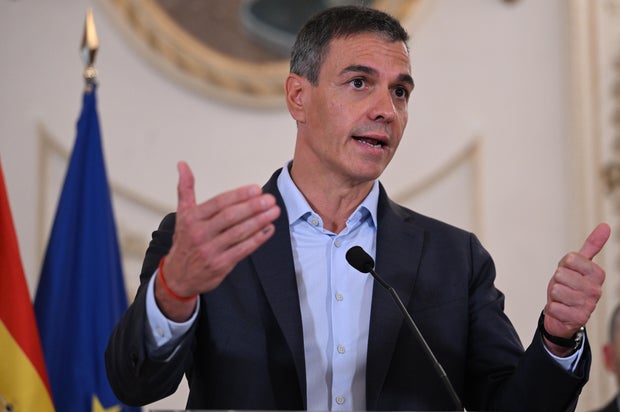
The upcoming snap election in Spain could mark a political shift to the right, as socialist Prime Minister Pedro Sánchez attempts to maintain his leadership amid public dissatisfaction. Key issues include housing, immigration, and corruption.
Sánchez, one of Europe’s key left-wing figures, has challenged former U.S. President Trump on international matters. Notably, he has opposed Trump’s NATO defense spending demands and supported migration policies.
Domestically, Sánchez contends with challenges from the People’s Party (PP), led by Alberto Núñez Feijóo, and the nationalist Vox party, led by Santiago Abascal. If these parties form a coalition, Spain might lean right for the first time since the post-Franco democracy began in 1975.
“Housing crisis protests underscore public discontent, fueled by incidents like the eviction of 87-year-old Maricarmen Abascal. Her eviction, due to steep rent hikes, highlighted the crisis and prompted national protests.”
Although Sánchez proposed emergency housing measures after these protests, his efforts were blocked in parliament, leading to the election call. The PP accuses Sánchez of inaction over his eight-year tenure and promises to build one million homes.
Immigration remains a contentious issue after a significant migration wave to Spanish territory Ceuta. Sánchez’s government granted legal status to many undocumented migrants. Vox, capitalizing on public concerns, calls for mass deportations and prioritizing nationals in public services.
Political scientist Hugo Marcos-Marné suggests Vox’s growth stems from perceptions about immigration and other factors like anti-gender sentiment and authoritarian nostalgia.
The PP shares concerns about immigration control. Meanwhile, corruption scandals related to Sánchez’s associates have also shaped the election narrative. Two train crashes this year have further strained public confidence.
Spain previously resisted far-right populism due to its Francoist past. However, the PP, once cautious about aligning with Vox, is now open to partnerships, as evidenced by regional coalitions.
Research indicates the PP has appealed to both center-right and radical-right voters in Spain, thanks to its adaptable nature. Sánchez hopes to mobilize progressive voters by emphasizing the risks of far-right governmental influence.
He warned, “PP and Vox pose real threats to various groups in our country.”
The election’s outcome affects not only Spain but also the political balance within the EU, where Spain remains the largest left-led nation.
Leave a Reply