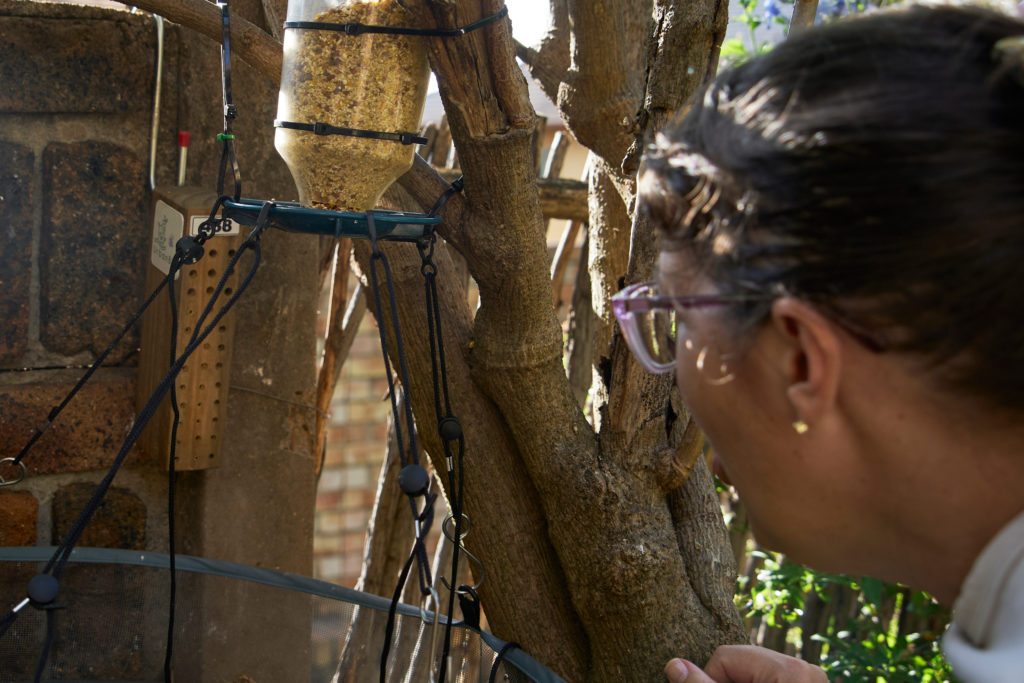
In Johannesburg, a solitary bee peeks out from a small hole in untreated pine. This is part of UrbanBEE, a project tracking solitary bee diversity in cities. Citizen scientists in Johannesburg and Cape Town use specially designed bee hotels to engage with these bees.
Celia Haupt, a banking analyst turned bee hotelier, enjoys observing her bee hotel. She finds these bees, despite their solitary nature, exhibit social tendencies. Haupt refers to them affectionately as “little homebodies” that occasionally socialize.
Solitary Bees: An Overlooked Helper
While honeybees are well-studied, solitary bees remain less known. Over 20,000 bee species are solitary, including about 1,300 in South Africa. These bees play a vital role in pollinating both wild plants and crops by stocking nests with pollen and nectar. They nest underground or use cavities in wood or stems.
The UrbanBEE project began during the pandemic, led by Chevonne Reynolds from the University of the Witwatersrand. Initially involving 347 Johannesburg residents, it has expanded with EU funding to include Budapest, Turin, and Vienna. Volunteers began documenting bee activity in October 2025. The project aims to analyze how urban environments impact bee diversity and citizen engagement.
Bees in Action
Participant Guinivere Pedro learned to identify different insects, realizing not all flying insects are flies. Sage Naidoo observed a solitary bee using its rear for protection in her hotel. An Allodapula species was identified, known for staying with their young in small social nests. Other species seal nests with various materials. A leaf cutter bee’s entrance is marked by bright green leaves.
The Bee Hotel Community
For Haupt, competition with other participants added excitement. She named her first bee guest “Yoncé” after finally attracting a bee. Participants compared bee arrivals, fostering a sense of community and friendly rivalry. Haupt rekindled connections over shared experiences in bee monitoring.
Guinivere Pedro proudly announced her bee hotel ownership on LinkedIn. Initially without guests, relocating her hotel brought occupancy. Many participants adapted gardening practices to attract more pollinators.
“The bees revealed how much life there is in the garden,” Pedro remarked.
Preliminary findings reveal differences in bee hotel occupancy between Johannesburg and Cape Town, influenced by climate variations.
Leave a Reply