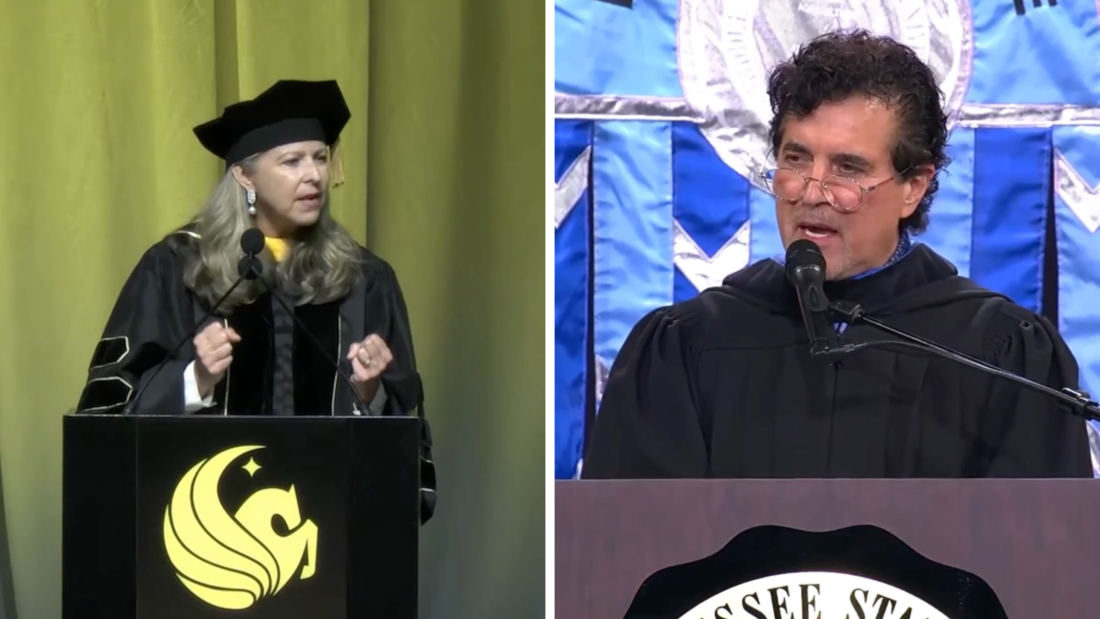
Recent graduation ceremonies across various universities have seen students expressing concern about artificial intelligence (AI). The reaction has been consistent, with many students booing speakers who mention AI. This sentiment underscores apprehensions about the effects AI might have on their future prospects and societal implications.
At the University of Central Florida, real estate executive Gloria Caulfield was met with boos when she referred to AI as ‘the next industrial revolution’. Similarly, Scott Borchetta, CEO of Big Machine Records, faced backlash at Middle Tennessee State University’s graduation when he discussed AI’s impact on production. As students voiced their displeasure, Borchetta encouraged them to view AI as a tool and find ways to harness it for their benefit.
Eric Schmidt, former Google CEO, shared similar experiences during his speech at the University of Arizona, emphasizing AI’s inevitable role in shaping the future. These instances reflect a broader unease among graduates about AI, with many fearing it might replace jobs they’ve worked hard to qualify for.
Glendale Community College also faced issues during its ceremony due to an AI system reading wrong names aloud, leading to dissatisfaction among participants. The college acknowledged technical problems and apologized for the disruption.
Concerns among students and recent graduates extend beyond employment issues. Maggie Simmons from the University of Denver expressed unease about AI’s environmental impact and potential harm to marginalized communities. These apprehensions are backed by findings on how AI reinforces systemic bias and strains minority neighborhoods due to data center placements.
Kareen Gill, a political science graduate from American University, noted a decrease in entry-level opportunities, attributing this trend to AI replacing tasks like answering phones. She emphasized how this disadvantages her generation, believing older generations are not affected similarly.
A poll by Quinnipiac University revealed generational differences in attitudes towards AI. Gen Z, familiar with AI, showed the highest concern, with 81% fearing reduced job opportunities due to AI advancements. Chetan Jaiswal, an associate professor involved in the poll, highlighted increasing apprehensions among Americans as AI impacts become clearer.
Reflecting on these findings, Gill and others ponder AI’s broader societal effects, such as making billionaires richer while depleting resources. The poll showed that only 5% of Americans feel represented by those leading AI development, indicating deep-seated concerns about future developments driven by AI.
Leave a Reply